
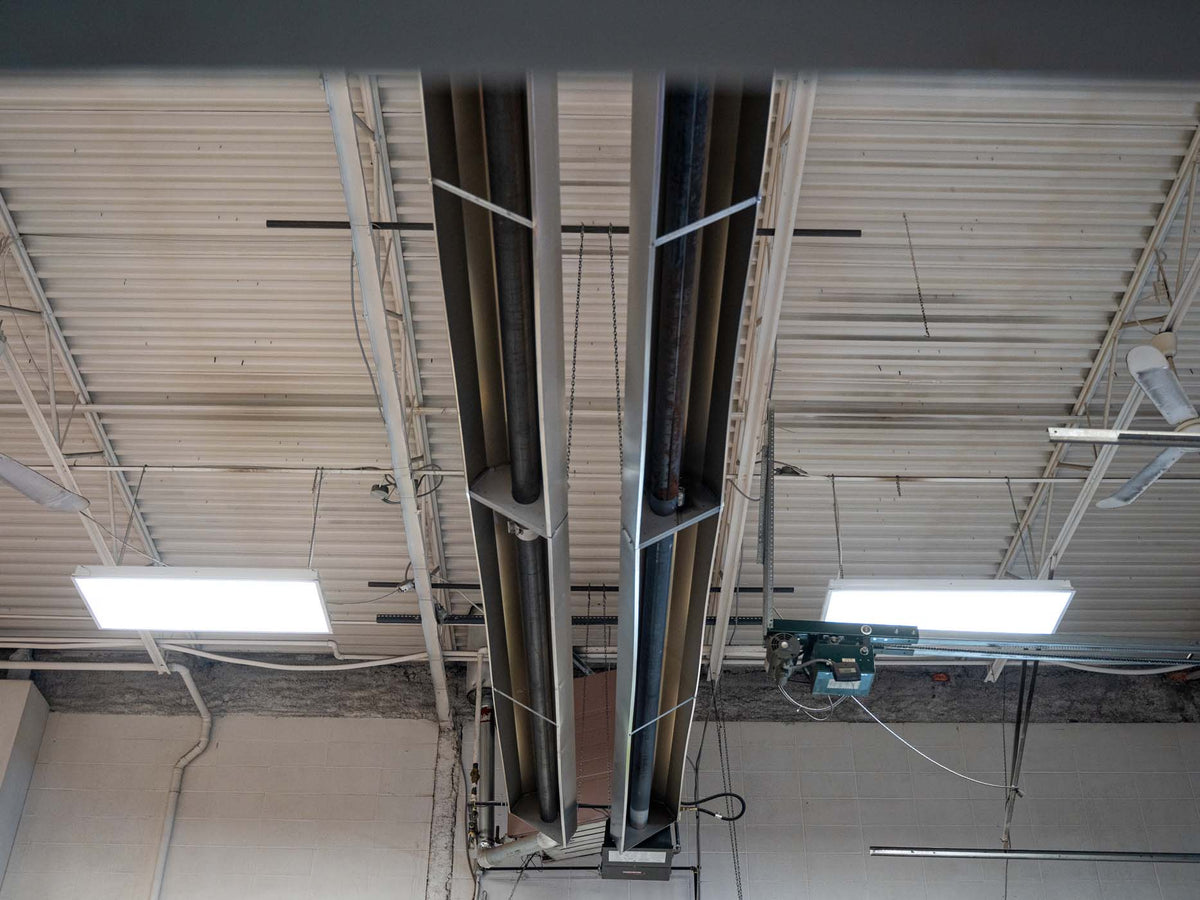
When winter arrives, keeping an airplane hangar warm becomes an important consideration for aircraft owners, private pilots, aviation businesses, and maintenance facilities. Cold temperatures can make pre-flight inspections less comfortable, create challenging working conditions for maintenance crews, and increase the difficulty of completing routine tasks. In regions where freezing temperatures, snow, and strong winds are common, maintaining a suitable indoor environment throughout the winter requires careful planning.
However, heating an airplane hangar presents different challenges than heating a home, office, or conventional workshop. Hangars often feature expansive floor areas, high ceilings, large aircraft doors, and building envelopes that can be difficult to insulate effectively. Opening the hangar door to move an aircraft in or out can quickly change indoor conditions, while heat naturally rises into the upper portion of the building.
Choosing the right heating approach involves more than simply selecting a heater with sufficient output. Building design, insulation, ventilation, fuel availability, operating schedules, and aviation-specific safety requirements all influence the best solution.
Infrared heating may be worth considering for suitable hangar applications because it delivers radiant energy directly to people, aircraft surfaces, equipment, and other objects within its coverage area. When properly selected and installed, a radiant heating system can help provide targeted warmth without relying entirely on heating the entire volume of air inside a large building.
In this guide, we'll explore common winter heating challenges in airplane hangars, practical ways to improve heat retention, and important considerations when evaluating infrared heating for an aviation facility.
Why Heating an Airplane Hangar Can Be Challenging: Common Winter Heating Issues & Solutions
Airplane hangars are designed primarily to provide aircraft storage, access, and workspace. Their size and layout can make winter heating more complicated than it is in smaller buildings.
Understanding these challenges is the first step toward developing a heating strategy that balances comfort, operating costs, and safety.
Large Interior Spaces & High Ceilings
Many airplane hangars have high ceilings to accommodate aircraft tails, wings, and other equipment. Although this vertical clearance is essential for aviation operations, it creates a considerable volume of air to heat when using conventional systems that primarily warm the surrounding air.
Warm air can rise toward the ceiling, leaving the occupied areas below cooler than expected. In buildings with particularly high ceilings, maintaining comfortable conditions at floor level may require a carefully designed heating system and appropriate air distribution.
Heating the entire building to the same temperature may not always be necessary. A private hangar used primarily for aircraft storage has different requirements from a maintenance facility where technicians spend several hours working around an aircraft.
Identifying the areas that need warmth, the activities taking place inside the building, and the temperatures required for those activities can help determine the most practical heating approach.
Large Hangar Doors & Frequent Opening
Hangar doors are another significant consideration. Their large surface area can contribute to heat loss, particularly when insulation is limited or weather seals have deteriorated.
Every time a door opens, outdoor air can enter and displace some of the conditioned air inside. Wind can make this exchange more pronounced, especially during cold weather. Facilities that frequently move aircraft in and out may experience substantial changes in indoor temperature throughout the day.
Even a powerful heating system cannot prevent all temperature fluctuations when a large opening exposes the interior to freezing outdoor conditions.
Reducing unnecessary door openings, maintaining door seals, and considering the effects of wind exposure can help limit heat loss. The heating system should also be selected with the building's actual operating conditions in mind rather than assuming the doors will remain closed throughout the day.
Insulation & Air Leakage
Some hangars are relatively modern and well insulated, while others have older metal siding, aging roof assemblies, limited insulation, or gaps around doors and other openings.
Poor insulation allows heat to transfer through the building envelope, while air leakage introduces cold outdoor air. These issues can increase heating demand and make indoor conditions less consistent.
Before upgrading a heating system, it is worth examining the condition of the roof, walls, doors, windows, and weather seals. Addressing practical building-envelope improvements can reduce the amount of heat the facility loses and help any heating system operate more effectively.
Choose a Heating System That Fits Your Hangar
There is no single heating system that works best for every airplane hangar. The right choice depends on the building's size, layout, insulation, fuel availability, operating schedule, and intended use.
Common options include forced-air heating, radiant infrared heating, and combinations of different heating technologies.
Forced-Air Heating
Forced-air systems heat air and distribute it through the building using fans, ducts, or other air-delivery equipment. Depending on the system design, they can provide broad temperature control and may be suitable for hangars where maintaining a relatively consistent indoor air temperature is important.
However, high ceilings and large volumes of air can make distribution challenging. Warm air may accumulate near the roof, and the system may need to operate for extended periods to maintain the desired conditions, particularly when doors open frequently or the building has significant heat loss.
Air movement, equipment placement, maintenance requirements, and the building's heating load should all be considered when evaluating forced-air equipment.
Infrared Radiant Heating
Infrared heaters use radiant energy to warm people, objects, and surfaces within their coverage area. Rather than relying primarily on heating and circulating air, they transfer energy directly to the surfaces that absorb their radiation.
This approach can be useful in certain high-ceiling buildings because the heating effect is not dependent solely on bringing the entire volume of indoor air to a target temperature first.
For example, a properly designed radiant heating system may help provide warmth in a designated aircraft maintenance area, a work zone beside an aircraft, or another suitable occupied portion of a hangar. The goal is to direct heat where it is needed instead of assuming every cubic metre of the building must be maintained at the same temperature.
Radiant heating does not eliminate heat loss, and its effectiveness depends on heater output, mounting height, placement, the surfaces being heated, and the conditions inside the building. Air temperature and overall comfort may also differ from what would be expected with a system designed to heat and circulate air throughout the space.
Gas-fired infrared heaters, including industrial heating solutions from Calcana, may be considered for appropriate applications. However, aircraft hangars have specialized fire and life-safety requirements. A heater that is suitable for a conventional industrial building is not automatically suitable for an aircraft hangar. Equipment selection and installation must be reviewed against applicable aviation, building, mechanical, gas, and fire codes before proceeding.
Combining Heating Approaches
Some hangars benefit from more than one heating strategy. A system might provide general background heating while a separate approved system supplies additional warmth to a designated work area.
This can be useful when a facility includes both aircraft storage and a maintenance workspace, provided the arrangement is permitted by the applicable codes and appropriate for the building's use.
The important consideration is to evaluate the complete heating requirement rather than selecting equipment based on square footage alone. Ceiling height, insulation, door operation, local winter temperatures, required indoor conditions, and safety restrictions all affect the final design.
Improve Heat Retention Before Increasing Heating Output
Installing a larger heater is not always the most effective first step when a hangar struggles to stay warm. If substantial heat escapes through the building envelope, the additional heating capacity may simply compensate for avoidable losses.
Improving heat retention can reduce heating demand and make indoor conditions easier to manage.
Inspect Hangar Doors & Seals
Begin with the largest openings in the building. Inspect door seals, joints, tracks, and other areas where outdoor air may enter. Damaged seals and poorly fitting panels can contribute to drafts and heat loss during winter.
The condition of the doors is especially important for facilities that experience frequent aircraft movements. Although opening a hangar door will always affect indoor conditions, reducing air leakage while the door is closed can help limit unnecessary heat loss between operations.
Where practical, establish procedures that avoid leaving doors open longer than necessary without interfering with safe aircraft movement, ventilation, or required operational practices.
Evaluate Roof & Wall Insulation
A building assessment can help identify areas where insulation is missing, damaged, or inadequate for the local climate. Roofs and exterior walls are important parts of this evaluation, particularly in older hangars where the original building envelope may not meet current expectations.
Insulation upgrades should account for condensation, moisture management, structural conditions, and the intended use of the facility. In aviation environments, any changes to the building must also preserve required fire protection, ventilation, and access provisions.
It is worth assessing these improvements alongside the heating system rather than treating them as separate projects. A well-designed heater still has to contend with the building it serves.
Address Drafts & Air Leakage
Cold air entering through gaps around personnel doors, windows, service penetrations, and other openings can affect comfort and increase heating demand.
Sealing appropriate gaps can help, but the work must not obstruct required combustion air, mechanical ventilation, exhaust systems, or other safety-related openings. These systems should never be blocked or modified simply to reduce drafts.
A qualified building or mechanical professional can help distinguish unwanted air leakage from ventilation that is necessary for safe operation.
Consider How the Hangar Is Used Throughout Winter
Heating requirements are closely tied to the activities taking place inside the facility. Understanding how the hangar is used can help determine whether the priority is general temperature control, localized comfort, or a combination of both.
Aircraft Storage
A hangar used primarily for aircraft storage may not require the same heating schedule as a full-time maintenance facility. The appropriate temperature depends on the aircraft, its materials and systems, manufacturer guidance, stored equipment, and the owner's operating requirements.
It is important not to assume that a comfortable temperature for people is automatically the correct storage temperature for an aircraft. Certain materials, fluids, batteries, and onboard systems may have specific temperature limits or handling requirements.
Follow aircraft manufacturer guidance and applicable maintenance documentation when establishing storage conditions. A heating system should support those requirements rather than substitute for them.
Aircraft Maintenance & Inspection
Maintenance facilities often need to provide workable conditions for technicians performing inspections, servicing, repairs, and other tasks.
In these settings, heating the entire hangar uniformly may not always be necessary. Depending on the work being completed, certain approved work zones may benefit from targeted heating.
Infrared heating can provide radiant warmth to people and objects within its coverage area, which may be useful in some large, high-ceiling workspaces. The system must still meet the temperature, ventilation, and safety requirements of the work being performed.
Special attention is needed during activities involving fuel systems, flammable liquids, vapours, welding, grinding, painting, or other processes that can introduce ignition hazards. Heating equipment must be suitable for the specific environment and must not create an unacceptable risk during maintenance operations.
Personal & Recreational Hangars
Private hangars may be used intermittently for aircraft storage, hobby work, cleaning, or pre-flight preparation. If the building is occupied for only a few hours at a time, a different heating strategy may make sense than one designed for a continuously staffed aviation business.
Consider how quickly the space needs to become comfortable, how often the hangar doors open, and whether maintaining a constant temperature is necessary. These factors influence both equipment selection and operating costs.
Before choosing a system, clarify whether the objective is to maintain a specified indoor temperature around the clock or provide suitable warmth during planned periods of occupancy.
Understand the Importance of Aviation Hangar Safety
Safety is one of the most important considerations when selecting a heating system for an airplane hangar. Aviation facilities can contain fuel systems, flammable liquids, aircraft batteries, maintenance materials, and other hazards that require careful management.
Heating equipment must be selected and installed with these risks in mind.
Check Applicable Codes & Requirements
Aircraft hangars may be subject to specialized fire protection and building requirements that differ from those governing ordinary industrial buildings. The applicable rules depend on the jurisdiction, hangar classification, aircraft use, construction, and other site-specific factors.
Before installing or replacing a heating system, consult the authority having jurisdiction and qualified professionals familiar with aircraft hangar design. Depending on the project, this may involve fire protection, mechanical, electrical, gas, and aviation specialists.
Confirm that the proposed equipment is approved for the intended application and that its location, ignition sources, clearances, ventilation, and exhaust arrangements comply with all applicable requirements.
Do not assume that a heater's suitability for a warehouse, garage, or manufacturing facility means it is approved for use in an aircraft hangar.
Maintain Appropriate Clearances
Heaters must be installed with the clearances specified by the manufacturer and required by applicable codes. These requirements may account for combustible construction materials, stored items, aircraft components, and other potential hazards.
Aircraft wings, tails, and other surfaces can extend into areas that might otherwise appear clear when the hangar is empty. The heater's location and coverage should therefore be evaluated with the aircraft in its normal parked position and with doors, equipment, and maintenance activities taken into account.
Never reduce required clearances or reposition equipment without confirming that the change is permitted.
Account for Combustion Air & Exhaust
Gas-fired heating equipment requires appropriate combustion air and exhaust arrangements. These requirements must be incorporated into the building's mechanical design and maintained throughout the system's service life.
Combustion products must be handled according to the equipment specifications and applicable codes. Ventilation should also be evaluated in the context of the hangar's activities, including any processes that may generate hazardous vapours or airborne contaminants.
A heater should never be selected or installed on the assumption that general hangar ventilation alone will resolve every combustion or ignition concern.
Keep Heating Equipment Clear of Aircraft Operations
Heaters, controls, gas lines, electrical equipment, and related components should be located so they do not interfere with aircraft movement, servicing, or emergency access.
The installation must account for aircraft dimensions, door travel, lifting equipment, maintenance platforms, and other operational requirements. It should also preserve access for inspections and routine maintenance.
These considerations are particularly important in hangars where the aircraft stored inside may change in size or configuration over time.
Manage Heating Costs During the Coldest Months
Winter heating costs can become a significant operating expense, especially in large buildings exposed to prolonged cold weather. While the best approach depends on the facility, several practical steps can help improve energy management.
Match Heating Capacity to the Building
A heating system should be sized according to the actual heating load, not simply the floor area. Ceiling height, insulation levels, air leakage, outdoor design temperatures, door-opening frequency, and desired indoor conditions all influence the amount of heat required.
An undersized system may struggle to maintain suitable conditions during cold weather, while an oversized system may be unnecessarily expensive or operate inefficiently under certain conditions.
A qualified heating professional can calculate the building's heating load and evaluate the most appropriate equipment and distribution strategy.
Use Controls & Schedules Thoughtfully
Where permitted by the equipment and the facility's operating requirements, programmable controls can help align heating operation with occupancy and maintenance schedules.
For example, a facility that is not occupied continuously may have different heating needs overnight or during periods when no maintenance work is scheduled. However, temperature setbacks must not conflict with aircraft storage requirements, freeze protection, material limitations, or manufacturer recommendations.
Avoid making abrupt temperature changes without considering the aircraft, stored products, and building systems.
Monitor Performance Over Time
Tracking indoor temperatures, outdoor conditions, heating runtime, and energy consumption can help identify opportunities for improvement.
If the hangar consistently struggles to reach the desired temperature, investigate possible causes before assuming that the heater lacks capacity. Air leakage, insulation deficiencies, equipment maintenance issues, poor heat distribution, and excessive door opening can all contribute.
Regularly reviewing system performance also helps facility managers make better-informed decisions about repairs, upgrades, and future heating requirements.
Maintain the Heating System Before & During Winter
Preventive maintenance helps keep a heating system operating as intended and can identify problems before they become more disruptive during the coldest part of the year.
The maintenance schedule should follow the manufacturer's recommendations and applicable inspection requirements. Depending on the equipment, servicing may include inspecting burners, checking gas connections, examining exhaust components, verifying controls, and confirming that safety devices operate correctly.
For infrared heating systems, inspections should also account for the condition of reflectors and other components that influence heat distribution. Any maintenance work must follow the manufacturer's procedures and applicable safety requirements.
Keep the area around heating equipment free of unauthorized storage and maintain access for inspection and servicing. If a system shows signs of damage, unusual operation, exhaust problems, or a suspected gas leak, follow the appropriate shutdown and emergency procedures and contact qualified service personnel.
Maintenance should be carried out by personnel with the necessary qualifications for the equipment and the hangar environment. A routine service visit is also an opportunity to review whether the current system continues to meet the facility's needs as aircraft, operating schedules, and building conditions change.
Is Infrared Heating Right for Your Airplane Hangar?
Infrared heating can be worth evaluating for certain aviation facilities, particularly where high ceilings and designated work areas make targeted radiant warmth attractive. However, the suitability of any specific heater depends on more than its heating performance.
The first step is to establish what the hangar needs to achieve. Is the goal to maintain a particular storage temperature, provide comfortable conditions for maintenance personnel, support intermittent occupancy, or heat a combination of storage and workspace areas?
Next, assess the building's insulation, air leakage, ceiling height, hangar-door operation, fuel supply, ventilation, and existing mechanical systems. The intended aircraft activities and applicable fire safety requirements must also be considered.
With this information, a qualified professional can determine whether infrared heating, forced-air heating, or a combination of approaches is appropriate. They can also assess whether a particular model is approved for the hangar's classification and intended use.
Calcana manufactures gas-fired infrared heating solutions for commercial and industrial applications. For projects involving aircraft hangars, it is essential to confirm suitability with the manufacturer, the project engineer, and the relevant authorities before specifying or installing equipment. Product selection must reflect the particular requirements of the facility rather than relying on general claims about infrared heating.
Prepare Your Hangar for Winter
Keeping an airplane hangar warm through winter requires a thoughtful approach to heat retention, equipment selection, operating schedules, and safety. Large interior volumes, high ceilings, substantial doors, and changing outdoor conditions can all affect heating performance, making it important to evaluate the building as a complete system.
Start by addressing avoidable heat loss, inspecting insulation and door seals, and identifying the temperatures required for aircraft storage and maintenance activities. From there, compare suitable heating options based on the building's heating load, operational needs, energy requirements, and applicable aviation safety standards.
Infrared heating may offer an effective way to provide targeted radiant warmth in suitable applications, but the right solution must always account for the unique demands of an aircraft hangar.
Look up and feel the heat. Contact Calcana to learn more about infrared heating solutions for commercial and industrial spaces and discuss the considerations involved in selecting a heating system for your facility.

Leave a comment
This site is protected by hCaptcha and the hCaptcha Privacy Policy and Terms of Service apply.