
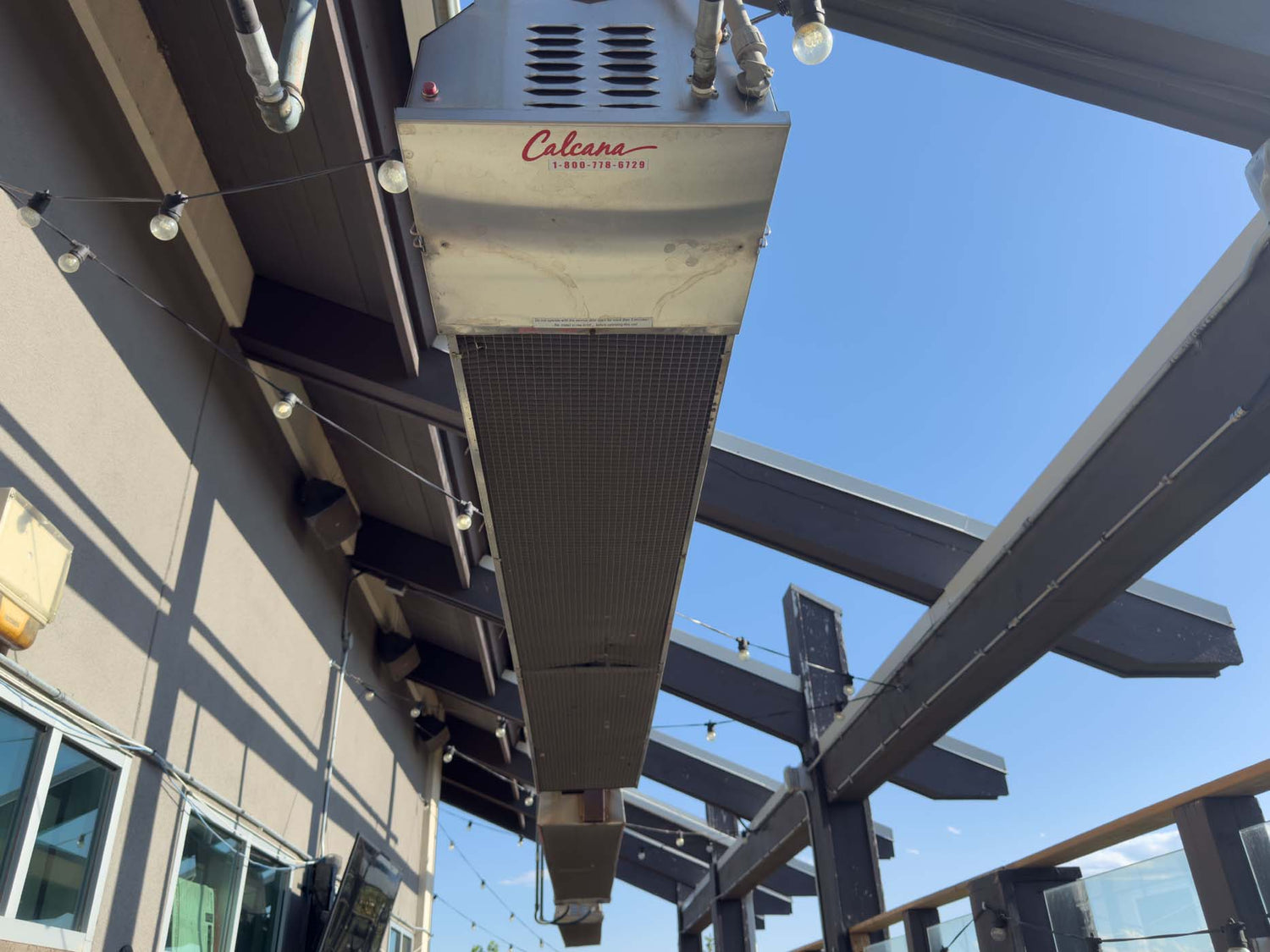
When researching or planning an infrared heating system, whether for restaurants, patios, garages, warehouses, or large outdoor gathering spaces, you’ll come across two words that are often used interchangeably: mounts and brackets. While they may sound similar, they are not the same thing, and understanding the difference is essential when selecting and installing a heating system like a Calcana infrared heater.
Mounts and brackets both play an important role in heater placement, stability, safety, and performance. But each has a very different purpose. Knowing which is which will help you ensure a safe installation, achieve optimal heat distribution, and select the right configuration for your space, especially with a mounted, fixed heating solution like Calcana’s infrared systems.
This comprehensive guide breaks down the difference between a mount and a bracket, where each one is used, how they relate to heater performance, and why choosing the correct installation components matters more than many people realize.
Understanding the Basics: Mount vs. Bracket & Why It Matters for Heater Installation
Before getting into heater-specific applications, let’s define the two terms clearly.
What Is a Mount?
A mount is the primary installation method that attaches the heater to a stable structure such as a ceiling, wall, post, or overhead support.
Think of a mount as the main connection point between the heater and the structure.
A mount:
-
Locks the heater into its intended position
-
Determines height, angle, and overall placement
-
Must support the full weight of the heater
-
Must meet safety clearances
-
Must withstand long-term heat exposure
-
Must comply with local building codes
For Calcana heaters, garage, industrial, and patio, the mount type is the foundation of the entire installation. Without the proper mount, a heater cannot be safely or effectively installed.
Common Mount Types for Infrared Heaters:
-
Ceiling mounts
-
Wall mounts
-
Suspended chain mounts
-
Post mounts
-
Custom-engineered mounts for unique structures
-
Swivel/angle-adjustable mounts
-
Indoor vs. outdoor-rated mounts
The mount dictates where the heater physically lives.
What Is a Bracket?
A bracket is a supporting or positioning accessory used in combination with a mount.
It does not replace the mount, it enhances it.
A bracket:
-
Supports specific angles
-
Adjusts tilt or direction of the heater
-
Stabilizes the heater at a defined position
-
Helps achieve optimal radiant coverage
-
Adds reinforcement for structural integrity
-
Allows customized configurations in unique spaces
Brackets are the “fine-tuning” components.
If the mount attaches the heater to the structure, the bracket makes sure it’s aimed exactly where it needs to be.
Common Bracket Types:
-
Angle brackets
-
Swivel brackets
-
Extension brackets
-
Offset brackets
-
Adjustable pendant brackets
-
Ceiling-to-wall conversion brackets
The bracket dictates how the heater performs within the space.
Why the Difference Matters for Infrared Heating Systems
In everyday language, people often say “mounting bracket,” which blurs the distinction.
But in heater installation, especially for mounted-only systems like Calcana, the difference is essential.
Reason #1: Heat Direction & Coverage
Infrared heaters do not heat the air, they heat objects and people.
This means angle and placement determine whether a space feels perfectly warm or uneven.
-
The mount positions the heater
-
The bracket adjusts the heater’s aim
Incorrect mounting height or angle can reduce heater effectiveness by up to 40%.
This is why Calcana designs and recommends specific brackets:
To ensure heat is delivered exactly where it should be, downward, outward, or at a calculated angle for commercial patios, garages, or industrial bays.
Reason #2: Safety Clearances
Infrared heaters require defined clearances from:
-
Ceilings
-
Walls
-
Combustible materials
-
Walkways
-
Furniture
-
Equipment
-
Vehicles
Your mount is what ensures these clearances are met.
But a bracket helps maintain those clearances even when adjusting angles.
A bracket keeps the heater secure, preventing sagging or shifting, which could otherwise violate safety codes over time.
Reason #3: Structural Stability
Calcana heaters are durable, commercial-grade heaters built from stainless steel, high-quality components, and engineered frameworks. They are intentionally mounted, not portable, meaning the structural load is permanent.
The mount carries:
-
Heater weight
-
Vibration
-
Environmental exposure (wind, snow load, moisture for patio units)
-
Long-term thermal cycling
The bracket adds reinforcement and prevents strain at stress points.
Without the correct combination, the heater may be improperly supported.
Reason #4: Compliance With Local Codes
Commercial spaces, restaurants, event venues, garages, shops, warehousing, agricultural buildings, must adhere to mechanical and fire codes.
Mounting components must be:
-
Code-approved
-
Rated for the heater model
-
Installed according to manufacturer instructions
Brackets ensure that even after adjusting direction, the heater still meets those standards.
Improvising with non-approved hardware is a major safety risk.
How Mounts Work in Calcana Heater Installations
All Calcana heaters are designed to be mounted, not portable, which means the mount is a core part of the system.
Different environments require different mount types:
Ceiling Mounts
Ideal for:
-
Garages
-
Large shops
-
Industrial facilities
-
Warehouses
-
Agriculture structures
Ceiling mounts provide the best overhead coverage and maximize radiant efficiency. Infrared heating works best when heat is cast downward onto people and objects, so overhead mounting is optimal.
Calcana ceiling mounts include:
-
Fixed ceiling plates
-
Suspended chain systems
-
Low-profile mounts for height-restricted areas
Wall Mounts
Often used for:
-
Restaurant patios
-
Commercial outdoor spaces
-
Small bay garages
-
Walkways
-
Loading areas
Wall mounts are common where ceiling structures are not available or where you need angled directional heat.
Post or Beam Mounts
Useful for outdoor applications:
-
Open patios
-
Rooftop spaces
-
Courtyards
-
Transit shelters
-
Pergolas
Post mounting allows flexible placement when conventional structures aren’t suitable.
Custom Mounting Solutions
Calcana heaters often require custom mounts for unique environments such as:
-
Curved rooflines
-
Sloped ceilings
-
High vaulted ceilings
-
Structural steel I-beam installations
-
Enclosed patios with overhead building obstructions
Custom-engineered mounts ensure structural integrity and proper heater spacing.
How Brackets Are Used With Calcana Heaters
Brackets provide the precision needed for optimal heater performance.
Angle Brackets
These allow fine control of tilt, helping direct radiant heat exactly where people sit or stand.
Common for:
-
Restaurant patios
-
Outdoor lounges
-
Residential patios
-
Loading docks
Elevation or Extension Brackets
When the mount location is not perfectly aligned with the ideal heater placement, extension brackets allow the heater to “reach” the correct position safely.
Used when:
-
Obstructions exist
-
A post isn’t centered
-
Ceiling joists limit alignment
Reinforcement Brackets
These strengthen the mount in high-stress applications:
-
Wind-exposed outdoor patios
-
High-vibration industrial areas
-
Heavy-use commercial environments
Swivel or Directional Brackets
These allow multi-directional adjustment, which is helpful for:
-
Multi-zone patios
-
Variable seating arrangements
-
Seasonal layouts
The ability to adjust direction is a major advantage for commercial venues.
Why You Can’t Use a Bracket Instead of a Mount
A common misconception is that brackets can replace mounts.
They cannot, here’s why:
-
Brackets are not designed to carry the full heater load
-
They do not replace the structural attachment
-
They do not ensure proper clearance
-
They are not approved as primary fasteners
-
They adjust angle, not support weight
Skipping the proper mount and relying only on a bracket is unsafe and violates installation guidelines.
How Calcana Ensures the Right Mounts & Brackets for Every Heater
Calcana provides model-specific, purpose-designed mounting components. These are engineered to:
-
Support the heater’s weight
-
Maintain long-term alignment
-
Resist corrosion
-
Withstand outdoor conditions
-
Ensure compliance with all safety clearances
-
Maintain warranty requirements
Each heater series, patio, garage, industrial, has recommended mounting options based on:
-
Ceiling height
-
Spacing
-
Clearance requirements
-
Indoor/outdoor location
-
Atmospheric exposure
-
Performance design
Calcana dealers and installers ensure that the correct mounting system is chosen for every project.
Choosing the Right Mount & Bracket Based on Your Space
Selecting the correct mount and bracket combination depends on:
Ceiling Height
Higher ceilings may require:
-
Chain suspensions
-
Extended brackets
Lower ceilings require:
-
Low-profile mounts
-
Tight-clearance brackets
Room Shape & Layout
Long, narrow spaces (like garages or barns) may need:
-
Multiple heaters
-
Staggered mounting patterns
-
Bracket angle adjustments
Wide, open spaces may require overhead central mounting.
Indoor vs. Outdoor Use
Outdoor installations must consider:
-
Wind
-
Rain
-
Snow
-
Exposure
-
Seating layouts
Outdoor spaces almost always require more bracket adjustments.
Heat Distribution Requirements
Are you targeting:
-
A dining patio?
-
A workspace?
-
A garage bay?
-
A storage zone?
-
An industrial process area?
Each uses different angles and mounting heights.
Common Misconceptions About Mounts & Brackets
Misconception #1: All hardware is interchangeable.
False. Only manufacturer-approved components should be used.
Misconception #2: Wall mounts and ceiling mounts are equal.
Incorrect. They produce different heat patterns and clearance requirements.
Misconception #3: Brackets can handle full heater weight.
Not true. Brackets enhance positioning; they do not carry load.
Misconception #4: DIY brackets or hardware are safe.
Never. Heater installations must meet code and safety requirements.
Why Proper Mounting Improves Heater Efficiency
Infrared heat is directional. The angle, tilt, height, and distance will directly impact:
-
Warmth
-
Fuel efficiency
-
Coverage width and depth
-
Heat absorption by surfaces
-
User comfort
A correctly mounted and bracketed heater can achieve:
-
Faster heat-up
-
Larger coverage area
-
Smoother heat distribution
-
Reduced energy waste
Incorrect mounting reduces performance and wastes fuel.
Final Thoughts: The Right Mount + Bracket = Safer, Better, Longer-Lasting Heat
While mounts and brackets might seem like small components compared to the heater itself, they are essential for:
-
Safety
-
Longevity
-
Efficiency
-
Heat coverage
-
Code compliance
-
Warranty protection
For a high-quality, permanently installed heating system like Calcana’s, choosing the proper mount and bracket ensures your heater performs exactly as designed, year after year.
Mounts secure the heater.
Brackets perfect the positioning.
Together, they create the ideal environment for comfortable, effective infrared heat.

Leave a comment
This site is protected by hCaptcha and the hCaptcha Privacy Policy and Terms of Service apply.