
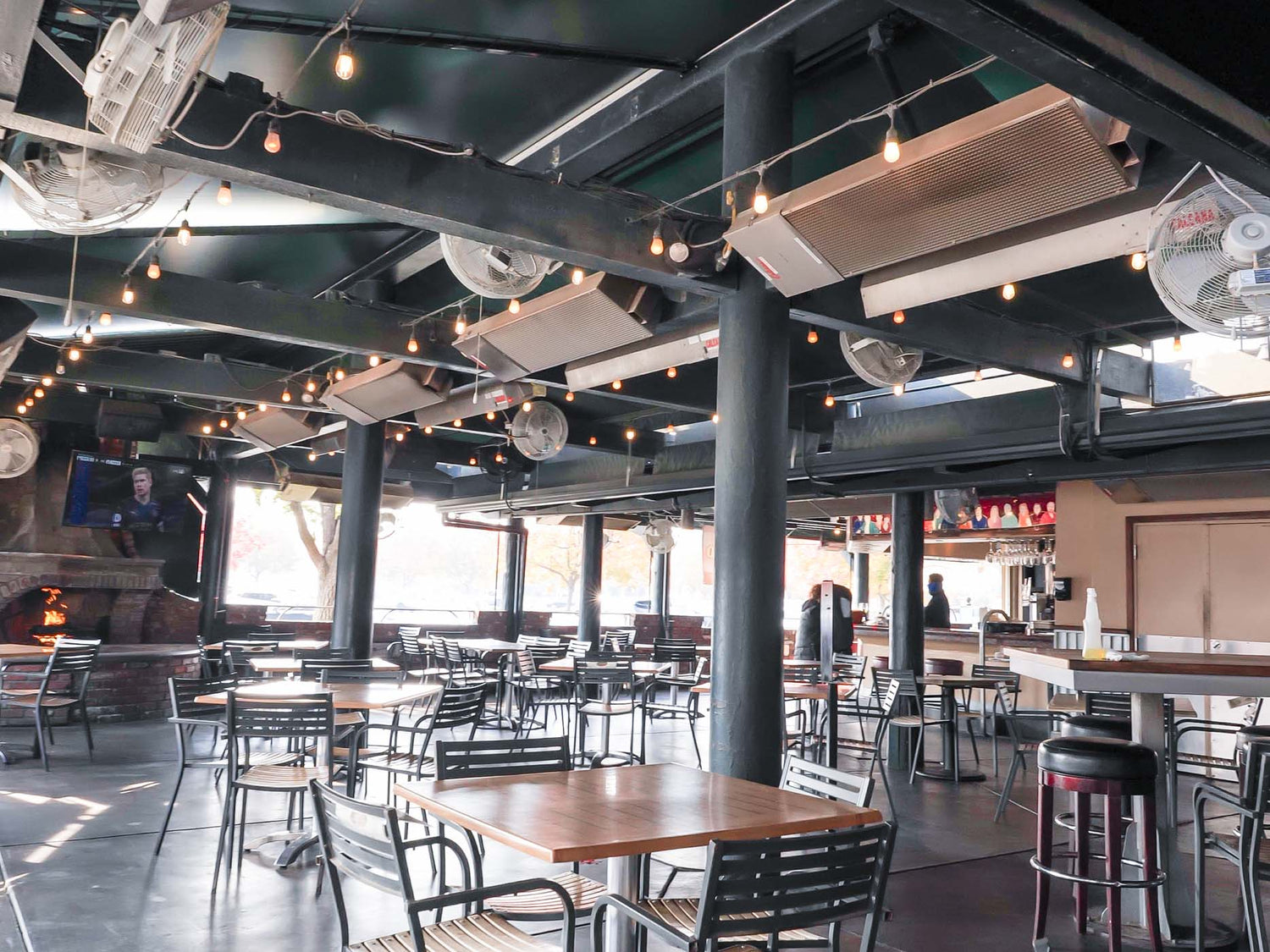
Energy efficiency is one of the most important considerations when choosing a heating solution. Whether you're heating a commercial patio, a garage workspace, or a backyard outdoor living area, the goal is always the same: stay warm while keeping energy consumption and operating costs under control.
This is where infrared heaters stand out. Unlike traditional heating systems that attempt to warm the surrounding air, infrared heaters operate using radiant heat technology that directly warms people, surfaces, and objects in their path. This targeted heating approach makes infrared systems incredibly efficient compared to many conventional heating methods.
But what exactly makes infrared heaters energy-efficient? And how do they compare to other heating options commonly used in outdoor and semi-outdoor environments?
In this article, we’ll explore how infrared heaters work, why they are considered one of the most efficient heating technologies available today, and how they can help homeowners and businesses maximize comfort while minimizing energy waste.
What Makes Infrared Heating Different & How It Can Make Your Venue More Energy Efficient
To understand the energy efficiency of infrared heaters, it’s important to first understand how they operate.
Most traditional heating systems rely on convection heating. These systems warm the air around them, and that warm air circulates throughout the space. While this method can work well in enclosed indoor environments, it is far less effective in open or outdoor spaces where warm air can quickly escape.
Infrared heaters work differently. Instead of heating the air, they produce infrared radiation, a type of energy that travels through the air and is absorbed by solid surfaces such as people, furniture, floors, and walls.
When these surfaces absorb infrared energy, they warm up and begin radiating heat themselves. This process creates a comfortable warming effect that feels similar to standing in sunlight on a cool day.
Because infrared heat warms objects directly, it eliminates many of the energy losses associated with traditional convection heating.
This fundamental difference in how heat is delivered is the key reason infrared heaters are widely recognized as an energy-efficient heating solution.
Direct Heat Means Less Energy Waste
One of the biggest advantages of infrared heaters is their ability to deliver direct, targeted heat.
Traditional heating systems waste energy by attempting to heat the entire volume of air in a space. In outdoor environments or spaces with high ceilings, this warm air often rises or dissipates before it can provide meaningful comfort.
Infrared heaters avoid this problem by directing heat exactly where it is needed.
Instead of warming unused air, infrared heaters focus their energy on the areas where people gather. This targeted heating approach dramatically reduces wasted energy and improves overall heating efficiency.
For example, in a restaurant patio setting, an infrared heater can be mounted overhead to warm the seating area below. Guests feel immediate warmth, even though the surrounding outdoor air temperature remains cool.
This ability to heat specific zones without warming the entire environment is one of the primary reasons infrared heaters are considered highly energy efficient.
Quick Heat Eliminates Warm-Up Time
Another factor that contributes to infrared heater efficiency is their quick heating capability.
Many traditional heating systems require time to warm up before they can begin delivering noticeable heat. During this warm-up period, energy is being consumed without providing immediate comfort.
Infrared heaters begin producing heat almost instantly after being turned on. The radiant energy travels through the air at the speed of light and begins warming surfaces immediately.
This rapid response allows users to heat spaces only when needed, rather than running heaters continuously.
For example, a restaurant patio heater can be turned on shortly before guests arrive and turned off once the patio closes for the evening. There is no need to run the heater for long periods in advance just to build up warmth.
By eliminating warm-up delays, infrared heaters help reduce unnecessary energy consumption.
Infrared Heat Works Better Outdoors
Outdoor heating is one of the most challenging heating applications because traditional methods struggle to maintain warmth in open-air environments.
Convection heaters that warm the air are particularly inefficient outdoors. Wind and natural air movement quickly carry heated air away from the intended area, forcing the heater to work harder to maintain comfort.
Infrared heaters excel in these conditions because radiant heat travels through the air without being significantly affected by wind.
Instead of trying to trap warm air in an open space, infrared heaters deliver energy directly to people and objects.
This makes infrared heaters one of the most efficient outdoor heating solutions available, especially for spaces such as:
-
Restaurant patios
-
Rooftop lounges
-
Outdoor bars
-
Covered decks
-
Residential patios
-
Commercial outdoor seating areas
Because the heat is delivered directly to occupants rather than the surrounding air, energy is used far more efficiently.
Zone Heating Improves Efficiency
Infrared heaters are also ideal for zone heating, which is another key factor in energy efficiency.
Zone heating involves warming only the specific areas where people are located rather than heating an entire building or outdoor space.
For example, in a large patio environment, multiple infrared heaters can be positioned above seating areas while leaving walkways or unused spaces unheated.
This approach reduces energy consumption by focusing heat only where it is needed.
Zone heating is particularly beneficial in commercial settings such as restaurants and hospitality venues, where seating areas are often concentrated in specific sections of the patio.
By heating only those zones, businesses can maintain guest comfort while minimizing energy usage.
Infrared Heaters Reduce Heat Loss
Heat loss is one of the biggest challenges for any heating system.
Traditional heaters lose heat in several ways, including:
-
Air leakage
-
Poor insulation
-
Warm air rising to the ceiling
-
Wind carrying heat away
Infrared heating significantly reduces these losses because radiant energy travels directly to surfaces instead of relying on circulating air.
Even in spaces with high ceilings or open walls, infrared heaters can deliver consistent warmth to occupants without losing large amounts of energy.
This ability to minimize heat loss is another reason why infrared heaters often outperform conventional heating systems in terms of efficiency.
Efficient Fuel Use with Gas Infrared Heaters
Gas-powered infrared heaters are widely used in commercial and outdoor applications because they provide powerful heat output while maintaining excellent fuel efficiency.
High-quality gas infrared heaters are engineered to maximize the conversion of fuel into usable radiant heat.
Instead of wasting energy heating large volumes of air, these systems direct the majority of their heat output toward the intended area.
Many modern infrared heaters also incorporate modulating technology, which allows the heater to adjust its heat output based on demand.
This helps maintain consistent comfort while preventing unnecessary fuel consumption.
By operating at the appropriate heat level rather than running at full power all the time, modulating infrared heaters can achieve even greater energy efficiency.
Lower Operating Costs
Because infrared heaters use energy more efficiently, they often result in lower operating costs compared to traditional heating systems.
The exact savings will vary depending on factors such as heater size, installation layout, fuel type, and climate conditions. However, many businesses find that infrared heating allows them to maintain comfortable outdoor environments while reducing energy consumption.
For restaurants, this efficiency can translate into significant savings over time, especially during colder months when outdoor heating is used frequently.
Additionally, the ability to heat specific zones rather than entire spaces allows businesses to maintain flexibility and control over energy usage.
Lower operating costs make infrared heaters an attractive investment for both residential and commercial applications.
Infrared Heaters Require Less Maintenance
Energy efficiency isn’t just about how much fuel a heater consumes. It also involves long-term reliability and maintenance requirements.
Infrared heaters are known for their simple, durable design, which often requires less maintenance than many conventional heating systems.
Because infrared heaters do not rely on complex fans, blowers, or air circulation systems, there are fewer moving parts that can wear out or require repair.
This durability contributes to overall efficiency by reducing downtime and maintenance costs.
When properly installed and maintained, high-quality infrared heaters can provide reliable heating performance for many years.
Infrared Heating Supports Sustainable Energy Use
As businesses and homeowners become more conscious of energy consumption and environmental impact, efficient heating technologies are becoming increasingly important.
Infrared heaters support more sustainable energy use by minimizing wasted heat and delivering warmth exactly where it is needed.
Because they use energy more efficiently, infrared heaters help reduce overall fuel consumption and lower greenhouse gas emissions compared to less efficient heating systems.
For businesses that prioritize sustainability, infrared heating can be an important part of an energy-conscious design strategy.
Infrared Heating for Commercial Outdoor Spaces
Commercial outdoor spaces present unique heating challenges, particularly for restaurants and hospitality venues.
Guests want to enjoy fresh air and outdoor dining, but they also expect comfort during cooler temperatures.
Infrared patio heaters provide an ideal solution because they deliver powerful radiant heat without the inefficiencies of traditional outdoor heaters.
By mounting infrared heaters overhead, businesses can create comfortable outdoor environments that encourage guests to stay longer and enjoy their experience.
This not only improves guest satisfaction but also helps restaurants maximize the value of their outdoor seating areas.
Infrared Heating for Residential Outdoor Living
Homeowners are also discovering the benefits of infrared heating for backyard patios, pergolas, and outdoor living spaces.
Outdoor living areas are often used for entertaining, relaxing, and spending time with family and friends. However, cooler temperatures can limit how often these spaces are used.
Infrared heaters allow homeowners to extend their outdoor season by providing comfortable warmth without excessive energy consumption.
Because the heat is delivered directly to people and surfaces, homeowners can enjoy cozy outdoor gatherings even on chilly evenings.
How Calcana Maximizes Infrared Heating Efficiency
At Calcana, energy efficiency is a core part of our infrared heating design philosophy.
Our infrared heaters are engineered to deliver powerful radiant heat while minimizing energy waste. By focusing heat exactly where it is needed, our heaters provide consistent comfort in both residential and commercial environments.
Calcana heaters are also designed for ceiling-mounted installation, which allows radiant heat to spread evenly across patios and seating areas.
This overhead positioning maximizes heat coverage while keeping the heater safely out of the way.
In addition, our heaters are built using durable materials and precision engineering to ensure long-lasting performance and reliable operation.
The result is an infrared heating solution that combines comfort, efficiency, and durability.
Final Thoughts: Are Infrared Heaters Energy-Efficient?
So, are infrared heaters energy-efficient?
The answer is a clear yes.
Infrared heaters are widely considered one of the most efficient heating technologies available, especially for outdoor and semi-outdoor environments where traditional heating methods struggle.
By delivering direct radiant heat, eliminating warm-up delays, reducing heat loss, and enabling targeted zone heating, infrared heaters make better use of energy than many conventional systems.
For homeowners, they provide a cost-effective way to enjoy outdoor living spaces longer throughout the year.
For businesses, they create comfortable environments that attract guests while keeping operating costs under control.
If you’re looking for a heating solution that combines powerful performance with energy efficiency, infrared heaters are an excellent choice.
With the right system and proper installation, you can enjoy comfortable warmth while making the most of every unit of energy.


Leave a comment
This site is protected by hCaptcha and the hCaptcha Privacy Policy and Terms of Service apply.