

When temperatures drop, most people instinctively reach for a heating system to stay comfortable. But not all heaters work the same way. Some systems rely on heating the air around you, while others warm people and objects directly. One of the most efficient and increasingly popular heating technologies today is the infrared heater.
Infrared heating has become widely used in both residential and commercial spaces, from patios and restaurants to garages, warehouses, and industrial facilities. Its ability to deliver instant warmth, energy efficiency, and targeted comfort makes it a powerful solution for environments where traditional heating systems struggle.
But what exactly is an infrared heater? And how does it work?
In this guide, we’ll break down the science behind infrared heating, explain how these heaters operate, explore their benefits, and show why they’ve become one of the most effective solutions for outdoor and large-space heating applications.
What Is an Infrared Heater? See Why It's Ideal for Patios, Garages, & Large Spaces
An infrared heater is a heating device that produces radiant heat using infrared energy. Instead of heating the air like traditional convection systems, infrared heaters emit electromagnetic waves that directly warm people, surfaces, and objects in their path.
This heating method is similar to the warmth you feel from the sun. Even on a cold day, sunlight can make you feel warm because infrared energy travels through the air and heats whatever it touches.
Infrared heaters replicate this natural process.
Rather than filling an entire room or outdoor space with heated air, infrared heaters create focused warmth that is absorbed by nearby surfaces. Those surfaces then gently release the heat into the surrounding environment, helping maintain comfortable temperatures.
Because the heat is delivered directly, infrared heaters are known for:
-
Fast heat delivery
-
Energy efficiency
-
Consistent comfort
-
Effective outdoor performance
This is why they’re often used in spaces where traditional heaters are inefficient or impractical.
The Science Behind Infrared Heat
To fully understand infrared heaters, it helps to understand the science of infrared radiation.
Infrared radiation is a form of energy found within the electromagnetic spectrum, which includes visible light, radio waves, and ultraviolet rays. Infrared energy sits just beyond visible red light, making it invisible to the human eye but still detectable as heat.
When infrared waves encounter an object or person, the energy is absorbed and converted into heat.
This process is known as radiant heat transfer.
Unlike convection heating, which warms air and relies on circulation, infrared heating travels directly through the air without warming it first. The heat moves in straight lines until it encounters an object or surface.
This creates several advantages:
-
The heat arrives almost instantly
-
Less energy is wasted heating empty air
-
Outdoor conditions like wind have less impact
-
Warmth feels more natural and comfortable
Because of this efficient heat transfer, infrared heaters are commonly used in environments where fast and focused heating is essential.
How Infrared Heaters Work
Although there are different types of infrared heaters, most follow the same basic operating principle.
First, the heater generates heat using an energy source. This may be electricity, propane, or natural gas depending on the design of the heater.
Inside the unit, a heating element becomes extremely hot. This heat is then directed toward a reflective surface that helps focus the infrared energy outward.
The heater emits infrared waves that travel through the air until they encounter nearby objects such as:
-
People
-
Furniture
-
Floors
-
Walls
-
Equipment
These surfaces absorb the infrared energy and gradually warm up. Once heated, they begin to radiate warmth back into the surrounding area, creating a comfortable environment.
Because the system warms objects rather than air, the heat remains stable even when air temperatures fluctuate.
This makes infrared heating particularly effective in:
-
Outdoor patios
-
Restaurants
-
Warehouses
-
Workshops
-
Garages
-
Stadiums
-
Industrial facilities
The Difference Between Infrared Heating & Traditional Heating
Most conventional heating systems rely on convection heating.
In convection heating, warm air rises while cooler air sinks. This creates a cycle where air must continuously circulate to maintain temperature.
While this works well in enclosed spaces, it becomes inefficient in environments with large volumes of air or frequent air movement.
Infrared heating works differently.
Instead of heating air, it transfers heat directly to people and objects.
This difference leads to several major advantages.
Traditional heaters often take time to warm a space because they must heat the entire volume of air first. Infrared heaters deliver warmth almost immediately.
Convection systems also lose heat easily when doors open, when ceilings are high, or when outdoor air moves through the space.
Infrared heaters are less affected by these factors because their heat travels directly to surfaces rather than circulating through the air.
For this reason, infrared heating is widely considered the better solution for large, open, or outdoor environments.
Types of Infrared Heaters
Infrared heaters are available in several forms depending on the intended application. Each type uses the same radiant heating principle but may vary in energy source, design, and installation style.
Electric Infrared Heaters
Electric infrared heaters use an electric element to produce infrared radiation. These heaters are commonly used indoors in homes, offices, and smaller commercial spaces.
They are easy to install and often portable, making them convenient for localized heating.
Gas Infrared Heaters
Gas infrared heaters operate using propane or natural gas. These heaters are capable of producing much higher heat output compared to electric models.
Because of their power and efficiency, gas infrared heaters are widely used in:
-
Restaurants
-
Outdoor patios
-
Commercial venues
-
Industrial buildings
-
Warehouses
These systems can deliver strong radiant heat even in large open areas.
Mounted Infrared Patio Heaters
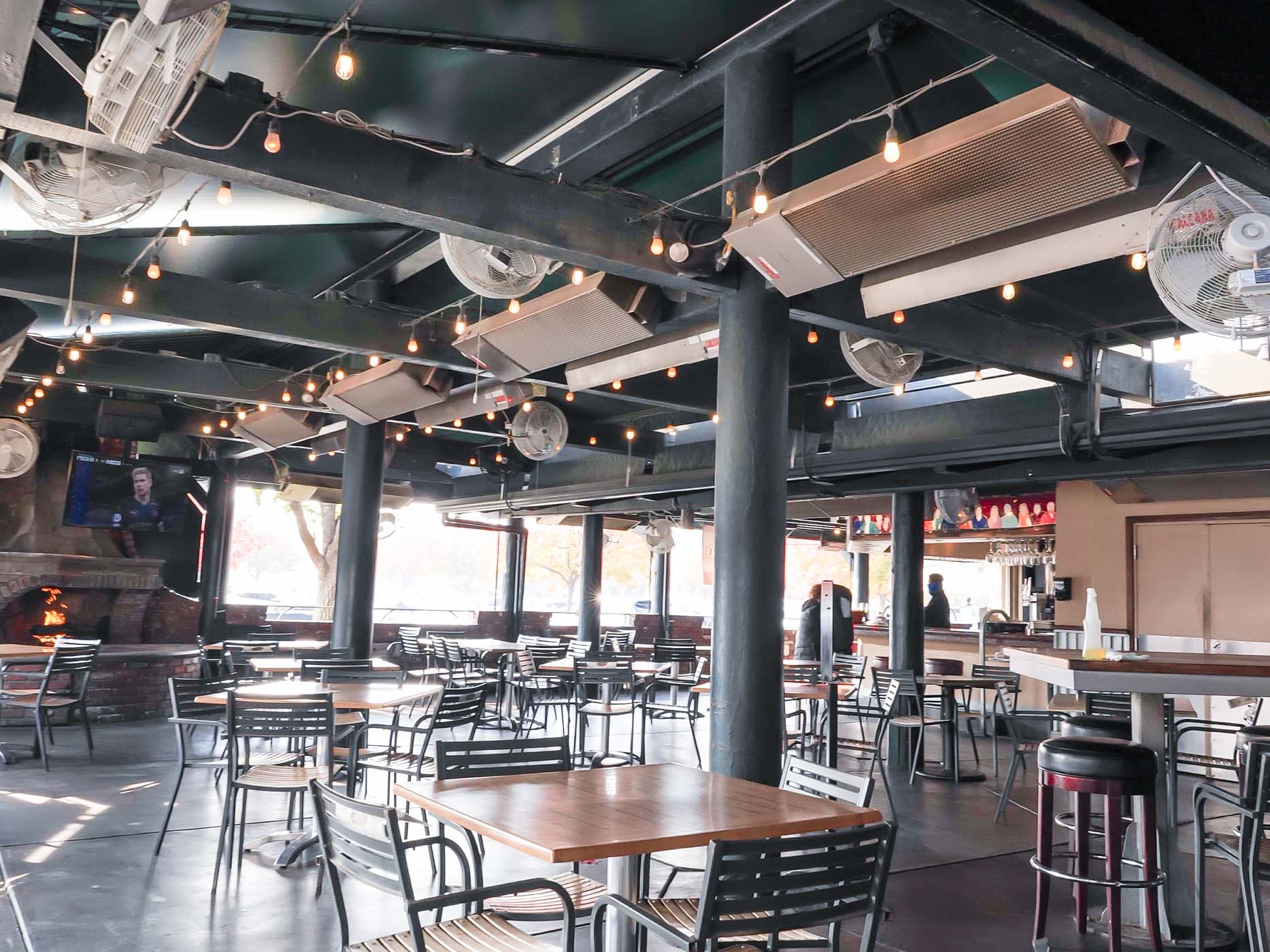
Mounted infrared heaters are designed to be installed overhead, often on ceilings or walls.
This installation method provides several benefits:
-
Keeps the heater safely out of the way
-
Distributes heat evenly across seating areas
-
Maintains clean patio aesthetics
-
Reduces risk of accidental contact
Mounted heaters are especially popular in hospitality settings where both performance and appearance matter.
Why Infrared Heaters Work So Well Outdoors
Outdoor heating is notoriously difficult.
Traditional heating systems struggle because heated air quickly escapes into the surrounding environment. Wind, open spaces, and fluctuating temperatures make it nearly impossible to maintain warmth through convection heating alone.
Infrared heaters solve this challenge by heating people directly instead of the air.
Even when air temperatures are cool, the radiant heat from an infrared heater warms guests and nearby surfaces. Because the energy travels in straight lines, it remains effective even in partially open environments.
This is why infrared heating is widely used for:
-
Restaurant patios
-
Rooftop bars
-
Outdoor lounges
-
Event venues
-
Resort terraces
Guests feel comfortable almost immediately after the heater turns on, creating a more enjoyable outdoor experience.
The Energy Efficiency of Infrared Heating
Energy efficiency is another major advantage of infrared heaters.
Traditional heating systems often waste energy warming air that quickly escapes or rises to ceilings where it’s not needed.
Infrared heaters minimize this waste by directing heat exactly where it’s required.
This targeted heating approach provides several efficiency benefits.
First, infrared heaters often require less time to reach comfortable temperatures, reducing operating costs.
Second, they avoid heating unused areas of a space.
Third, because surfaces retain heat, the warmth can remain even after the heater cycles down.
For businesses and homeowners alike, this efficiency can translate into lower energy consumption and better heating performance.
Infrared Heating for Hospitality Spaces
Restaurants, bars, and hospitality venues have embraced infrared heating because it solves one of their biggest challenges, keeping outdoor guests comfortable.
Patios are valuable real estate for hospitality businesses. When temperatures drop, many establishments are forced to close these spaces, reducing seating capacity and revenue.
Infrared patio heaters allow businesses to extend patio use well beyond the summer months.
Guests can enjoy outdoor dining on cool evenings while remaining comfortable. The result is a lively patio atmosphere that attracts customers and keeps tables full.
Because infrared heaters deliver quiet, consistent warmth, they enhance the overall dining experience without disrupting conversation or ambiance.
Safety & Infrared Heating
One common question people ask is whether infrared heaters are safe.
When designed and installed properly, infrared heaters are extremely safe heating systems.
Most modern units include built-in safety features such as:
-
Temperature regulation
-
Secure mounting systems
-
Durable housing materials
-
Stable combustion systems (for gas models)
Mounted infrared heaters also help keep heating elements safely out of reach, reducing the risk of accidental contact.
In commercial environments, professional installation ensures the heaters meet safety regulations and operate efficiently.
Comfort & the Natural Feel of Radiant Heat
One of the reasons people enjoy infrared heating so much is that it feels natural.
Because radiant heat works similarly to sunlight, it creates a gentle and comfortable warmth rather than the dry blast of hot air produced by some traditional systems.
The heat surrounds people evenly without creating strong drafts or temperature swings.
This leads to a more pleasant environment, especially in social settings like patios, outdoor lounges, and entertainment spaces.
Guests often describe infrared heat as softer and more comfortable than other heating methods.
Infrared Heating in Residential Spaces
Although infrared heaters are widely used in commercial settings, they are also popular in residential environments.
Homeowners often install infrared heaters in:
-
Backyard patios
-
Decks
-
Outdoor kitchens
-
Gazebos
-
Garages
-
Workshops
These heaters allow families to enjoy outdoor living spaces long after summer ends.
Instead of retreating indoors when temperatures cool, homeowners can continue entertaining friends, hosting dinners, or relaxing outside.
Infrared heating transforms outdoor areas into year-round living spaces.
Industrial & Commercial Applications
Infrared heaters are also widely used in industrial and large-scale commercial environments.
Warehouses, factories, and workshops often have high ceilings and large open spaces that make traditional heating inefficient.
Infrared heating works well in these environments because it warms workers and equipment directly.
This allows businesses to maintain comfortable working conditions without wasting energy heating massive volumes of air.
Industries that commonly use infrared heating include:
-
Manufacturing facilities
-
Automotive workshops
-
Aircraft hangars
-
Distribution centers
-
Agricultural buildings
The durability and efficiency of infrared systems make them ideal for demanding environments.
Infrared Heating & Modern Innovation
Heating technology has evolved significantly over the past decade.
Modern infrared heaters incorporate advanced design features that improve performance, efficiency, and user control.
Some innovations include:
-
Modulating heat output
-
App connectivity
-
Improved reflector technology
-
Enhanced safety systems
These improvements allow users to precisely control heating levels and manage multiple heaters across larger spaces.
As technology continues to develop, infrared heating systems are becoming even more efficient and adaptable.
Final Thoughts: Understanding the Power of Infrared Heating
Infrared heaters represent one of the most effective and efficient ways to create warmth in both indoor and outdoor environments.
By using radiant energy to heat people and surfaces directly, these systems deliver fast, comfortable, and targeted heat that traditional heating methods often struggle to provide.
From residential patios to large commercial venues, infrared heaters offer a practical solution for maintaining comfort even when temperatures drop.
Their ability to provide instant warmth, operate efficiently, and perform reliably in open environments has made them a preferred choice for homeowners, business owners, and industrial operators alike.
For businesses looking to extend outdoor seating seasons or homeowners wanting to enjoy their backyard longer, infrared heating provides a simple yet powerful solution.
When designed and installed properly, an infrared heater can transform any space into a warm and welcoming environment, no matter the weather.

Leave a comment
This site is protected by hCaptcha and the hCaptcha Privacy Policy and Terms of Service apply.