

Heating technology has evolved significantly over the past decade. Businesses and homeowners alike are no longer satisfied with heating systems that simply turn on and off at full power. Today, efficiency, comfort control, and energy optimization are top priorities, especially in large indoor environments and outdoor commercial spaces where heating costs can quickly add up.
This is where modulating infrared heating enters the conversation.
Unlike traditional heating systems that operate at fixed output levels, modulating infrared heaters intelligently adjust their heat output based on real-time demand. The result is smoother comfort, improved efficiency, reduced energy waste, and better overall performance.
But what exactly does modulation mean? How does it work? And why is it becoming one of the most important innovations in infrared heating technology?
In this guide, we’ll break down everything you need to know about modulating infrared heating, from the science behind radiant heat to real-world applications across commercial patios, warehouses, garages, hospitality environments, and industrial facilities.
Before exploring modulation, it’s important to understand how infrared heating itself works.
Traditional heating systems rely on convection heating, meaning they warm the air first. Furnaces, forced-air heaters, and HVAC systems push heated air throughout a space in an attempt to raise ambient temperature.
This approach presents several challenges:
-
Warm air rises toward ceilings
-
Heat escapes through drafts or open doors
-
Energy is wasted heating unused space
-
Temperature fluctuates constantly
Infrared heating works differently.
Instead of heating air, infrared heaters emit radiant energy that travels through the air and directly warms:
-
People
-
Floors
-
Furniture
-
Equipment
-
Walls and surfaces
This process closely mirrors how sunlight warms your skin on a cool day.
Because heat is absorbed directly by objects, comfort is achieved faster and maintained longer, even in spaces where air movement would normally reduce heating effectiveness.
What Does “Modulating” Mean in Heating & Why It Improves Efficiency & Comfort
In simple terms, modulation means adjustment.
A modulating heater does not operate at only one power level. Instead, it continuously adjusts its heat output depending on environmental conditions and heating demand.
Think of it like driving a vehicle:
-
A traditional heater behaves like pressing the gas pedal fully down or releasing it entirely.
-
A modulating heater behaves like smooth acceleration, increasing or decreasing power as needed.
Rather than cycling between ON and OFF repeatedly, modulating infrared heaters operate across a range of output levels.
For example, instead of running at 100% capacity constantly, a modulating heater may operate at:
-
50% output
-
70% output
-
100% output
depending on what the space requires.
The Problem With Traditional On/Off Heating
Most conventional heaters use binary operation:
Full power → Shut off → Full power → Shut off
While simple, this creates several problems.
Temperature Swings
Spaces become too warm when heaters run and too cold when they shut off.
Energy Waste
Each restart consumes extra fuel or electricity.
Equipment Wear
Frequent cycling increases mechanical stress.
Uneven Comfort
Occupants feel alternating hot and cold periods.
In commercial or outdoor environments, these fluctuations are especially noticeable.
Modulating infrared heating eliminates these inefficiencies.
How Modulating Infrared Heating Works
A modulating infrared system uses integrated controls and sensors to continuously monitor conditions such as:
-
Ambient temperature
-
Surface temperature
-
Occupancy levels
-
Weather exposure
-
Heat loss rates
Based on this information, the heater automatically adjusts flame intensity or electrical output.
Instead of shutting down once a temperature is reached, the system simply reduces output to maintain comfort.
This results in:
- Stable warmth
- Lower fuel consumption
- Longer equipment lifespan
- Consistent radiant comfort
Types of Modulating Infrared Systems
Gas Modulating Infrared Heaters
Gas-fired infrared heaters modulate by adjusting fuel flow.
The burner automatically increases or decreases gas supply to control radiant output without turning off completely.
Benefits include:
-
Excellent performance in large commercial areas
-
Reduced fuel consumption
-
Stable outdoor heating performance
-
Ideal restaurant and hospitality applications
Electric Modulating Infrared Heaters
Electric infrared heaters achieve modulation through power control systems.
Instead of simple on/off switching, electrical input varies smoothly to regulate heat intensity.
Modern electric modulation allows:
-
Precise temperature management
-
Smart automation integration
-
Reduced electrical demand spikes
-
Quiet operation
Electric modulation is becoming increasingly popular as businesses pursue sustainability goals.
Why Modulating Infrared Heating Is More Energy Efficient
Energy efficiency comes from matching heat output to actual demand.
Traditional heaters frequently produce more heat than necessary. Excess energy is lost as temperatures overshoot comfort levels.
Modulating heaters avoid this problem.
Key Efficiency Advantages
1. Reduced Cycling Losses
Continuous operation prevents repeated startup energy waste.
2. Targeted Heat Delivery
Infrared heating already minimizes air heating losses.
3. Lower Average Output
Most spaces rarely require full heating capacity.
Many facilities see energy savings between 20–40% compared to non-modulating systems.
Comfort Benefits of Modulating Infrared Heating
Efficiency matters, but comfort drives adoption.
Modulating infrared systems provide noticeably improved comfort because radiant output remains steady.
Occupants experience:
-
No sudden blasts of heat
-
No cold recovery periods
-
Even temperature distribution
-
Gentle, natural warmth
This is especially valuable in:
-
Restaurant patios
-
Event venues
-
Warehouses
-
Aircraft hangars
-
Residential outdoor living spaces
Comfort consistency directly impacts customer satisfaction and worker productivity.
Ideal Applications for Modulating Infrared Heating
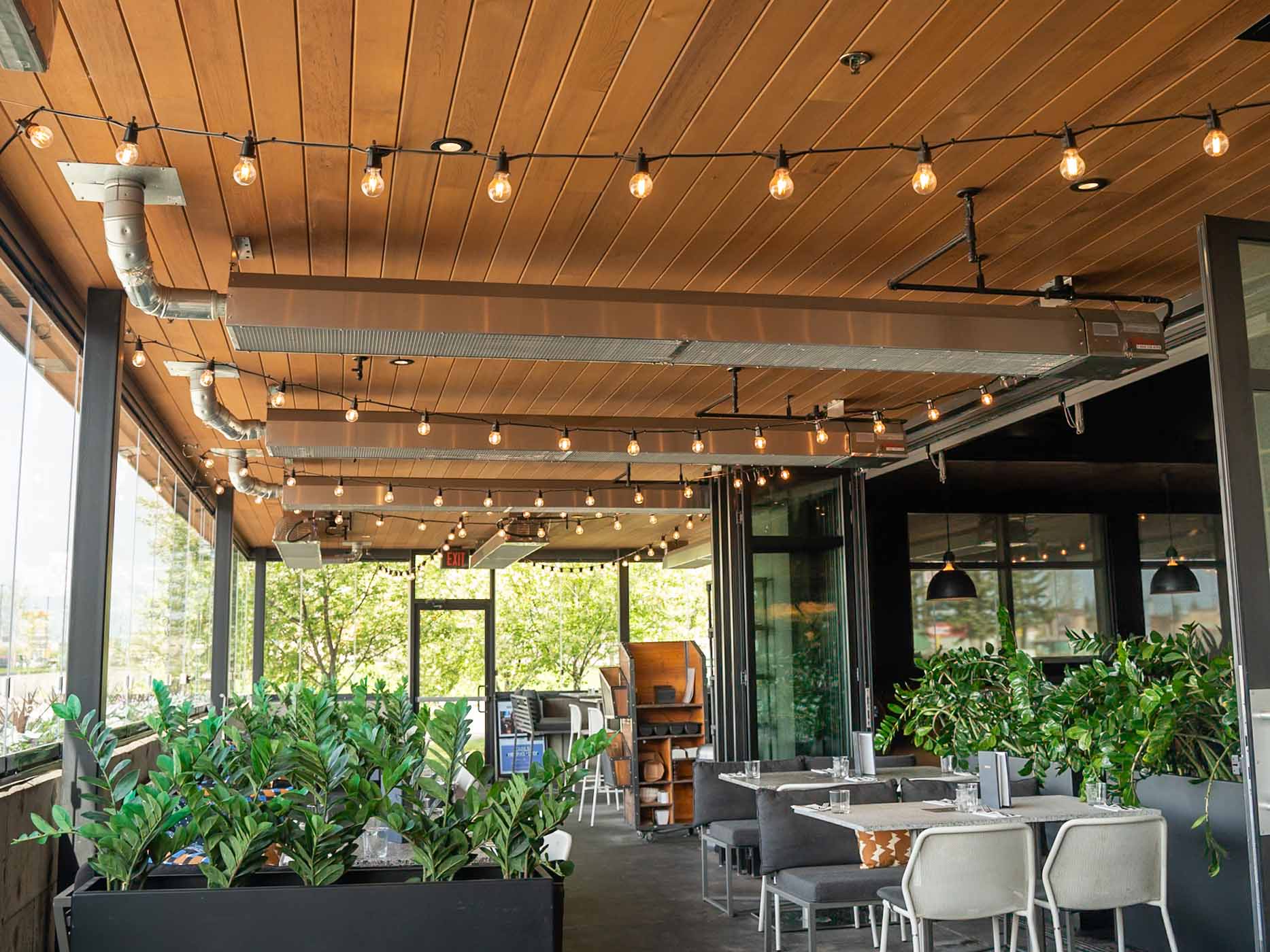
Hospitality & Restaurant Patios
Outdoor dining spaces experience constantly changing conditions.
Wind shifts. Doors open. Guests arrive and leave.
Modulating infrared heaters adapt, maintaining comfort without excessive fuel use.
Restaurants benefit from:
-
Longer patio seasons
-
Reduced operating costs
-
Improved guest experience
Warehouses & Industrial Facilities
Large industrial spaces lose heat rapidly through:
-
High ceilings
-
Loading docks
-
Equipment movement
Modulating infrared heaters maintain consistent worker comfort while avoiding unnecessary energy consumption during lower-demand periods.
Garages & Workshops
Workspaces often require heat only during active use.
Modulating systems adjust output as occupancy or activity levels change, preventing overheating while maintaining productivity.
Event Venues
Event attendance fluctuates constantly.
Modulating heaters adapt seamlessly to crowd density and environmental conditions, ensuring reliable comfort throughout events.
Reduced Operating Costs Over Time
While modulating systems may represent a higher initial investment, operational savings quickly offset upfront costs.
Savings come from:
-
Lower fuel usage
-
Reduced electrical consumption
-
Less maintenance
-
Extended component life
Businesses often recover investment through energy savings alone within several seasons.
Environmental Advantages
Sustainability is becoming central to heating decisions.
Modulating infrared systems support environmental goals by:
-
Reducing fuel consumption
-
Lowering emissions
-
Minimizing wasted energy
-
Supporting electrification trends
Because radiant heat targets occupied areas instead of entire volumes of air, fewer resources are required to achieve comfort.
Safety Advantages of Modulating Systems
Lower operating intensity during maintenance heating improves safety performance.
Benefits include:
-
Reduced surface overheating
-
Controlled combustion cycles
-
Stable operating temperatures
-
Improved equipment longevity
Mounted infrared systems also eliminate floor obstructions common with portable heaters.
Why Modulating Technology Represents the Future of Heating
Heating technology is moving toward systems that are:
-
Intelligent
-
Responsive
-
Efficient
-
Connected
-
Sustainable
Modulation sits at the center of this evolution.
Rather than brute-force heating, modern systems deliver precision comfort.
As energy costs rise and environmental standards tighten, modulating infrared heating will increasingly become the industry standard.
How Calcana Incorporates Advanced Infrared Innovation
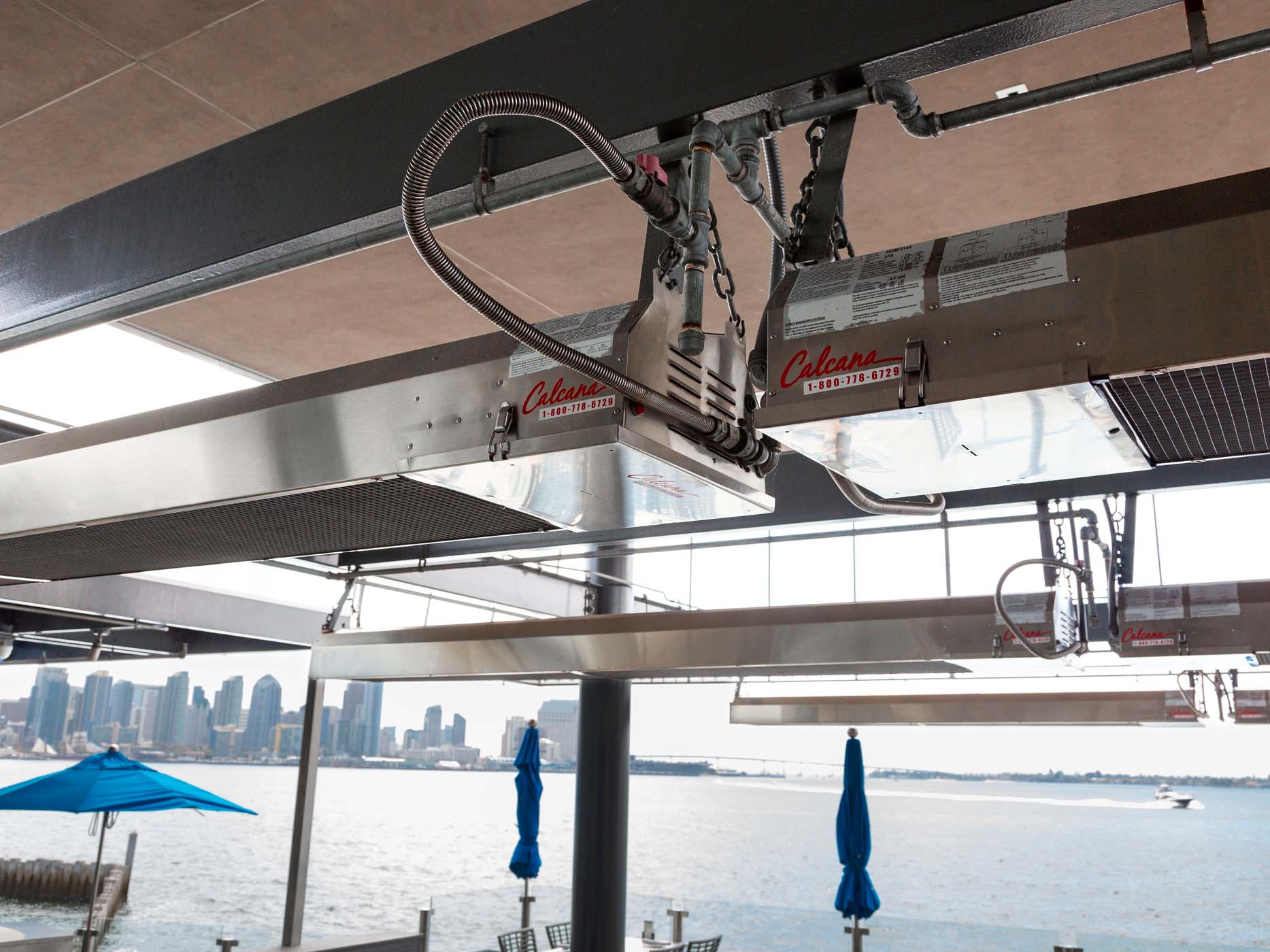
At Calcana, innovation in infrared heating has never been about following industry trends, it has always been about anticipating how heating technology needs to evolve to meet real-world demands. Commercial patios, industrial facilities, hospitality environments, and residential outdoor spaces all face constantly changing heating requirements, which is why adaptability and efficiency have become central to modern heater design.
Calcana’s approach to infrared innovation focuses on delivering consistent radiant performance while improving energy control, operational intelligence, and long-term reliability. By engineering heaters that provide stable heat output across varying environmental conditions, Calcana systems already align closely with the core principles behind modulating infrared heating: delivering only the heat required to maintain comfort rather than operating at unnecessary maximum capacity.
One of the key ways Calcana incorporates advanced innovation is through precision burner design and optimized radiant distribution. Instead of producing uneven heat zones or excessive hot spots, Calcana heaters deliver smooth, balanced warmth across occupied areas. This allows operators to maintain comfort using lower overall energy input, a foundational advantage of modulation-based heating strategies.
Looking ahead, Calcana continues expanding its technology portfolio with the development of next-generation electric infrared heaters, offering greater control flexibility and supporting electrification initiatives across commercial and residential markets. Electric infrared solutions naturally lend themselves to modulation and smart output adjustment, allowing users to fine-tune heating levels based on occupancy, time of day, or changing weather conditions.
Equally important is the introduction of Calcana’s upcoming smart control ecosystem, including app-based system management that allows operators to monitor and adjust heating remotely. These intelligent controls move infrared heating closer to fully adaptive operation, where systems respond dynamically to real-world usage patterns.
Calcana also prioritizes durability as part of innovation. Advanced materials such as stainless and marine-grade construction ensure heaters maintain consistent performance year after year, even in demanding outdoor environments. Long-lasting equipment supports sustainable heating practices by reducing replacement cycles and minimizing lifecycle environmental impact.
By combining radiant efficiency, intelligent controls, durable construction, and forward-looking electric technology, Calcana continues to push infrared heating toward a smarter, more responsive future, one where comfort, efficiency, and innovation work seamlessly together.
Choosing the Right Modulating Infrared Heater
When evaluating systems, consider:
-
Space size and layout
-
Mounting height
-
Fuel type availability
-
Environmental exposure
-
Control requirements
-
Expansion potential
Professional system design ensures optimal modulation performance and comfort coverage.
Final Thoughts: Smarter Heating Starts With Modulation
Modulating infrared heating represents more than just a technological upgrade, it reflects a fundamental shift in how we think about comfort and energy use. Instead of overpowering spaces with constant maximum heat output, modern heating systems are designed to respond intelligently, adjusting performance in real time to maintain ideal conditions with minimal waste.
This smarter approach benefits everyone involved. Businesses gain predictable operating costs and improved customer experiences. Facility managers enjoy simplified control and reduced maintenance demands. Homeowners benefit from stable warmth without energy spikes or temperature fluctuations. Most importantly, occupants experience consistent comfort that feels natural rather than forced.
As energy efficiency standards continue tightening and sustainability becomes an increasingly important priority, heating systems must evolve beyond traditional on/off operation. Modulating infrared technology answers that challenge by delivering precision warmth exactly when and where it is needed.
Manufacturers like Calcana are helping lead this transition by integrating smarter controls, expanding electric infrared solutions, and engineering heaters capable of adapting to modern environments. From restaurant patios operating through changing weather conditions to industrial facilities requiring dependable performance across massive spaces, adaptive radiant heating ensures comfort remains reliable without unnecessary energy consumption.
The future of heating lies in responsiveness, efficiency, and intelligent design. Modulation allows heating systems to work with the environment instead of against it, maintaining comfort while reducing operational impact.
Simply put, smarter heating doesn’t come from producing more heat. It comes from producing heat intelligently. And with continued innovation in infrared technology, modulation is quickly becoming the benchmark for efficient, sustainable comfort in both indoor and outdoor spaces.
Leave a comment
This site is protected by hCaptcha and the hCaptcha Privacy Policy and Terms of Service apply.