
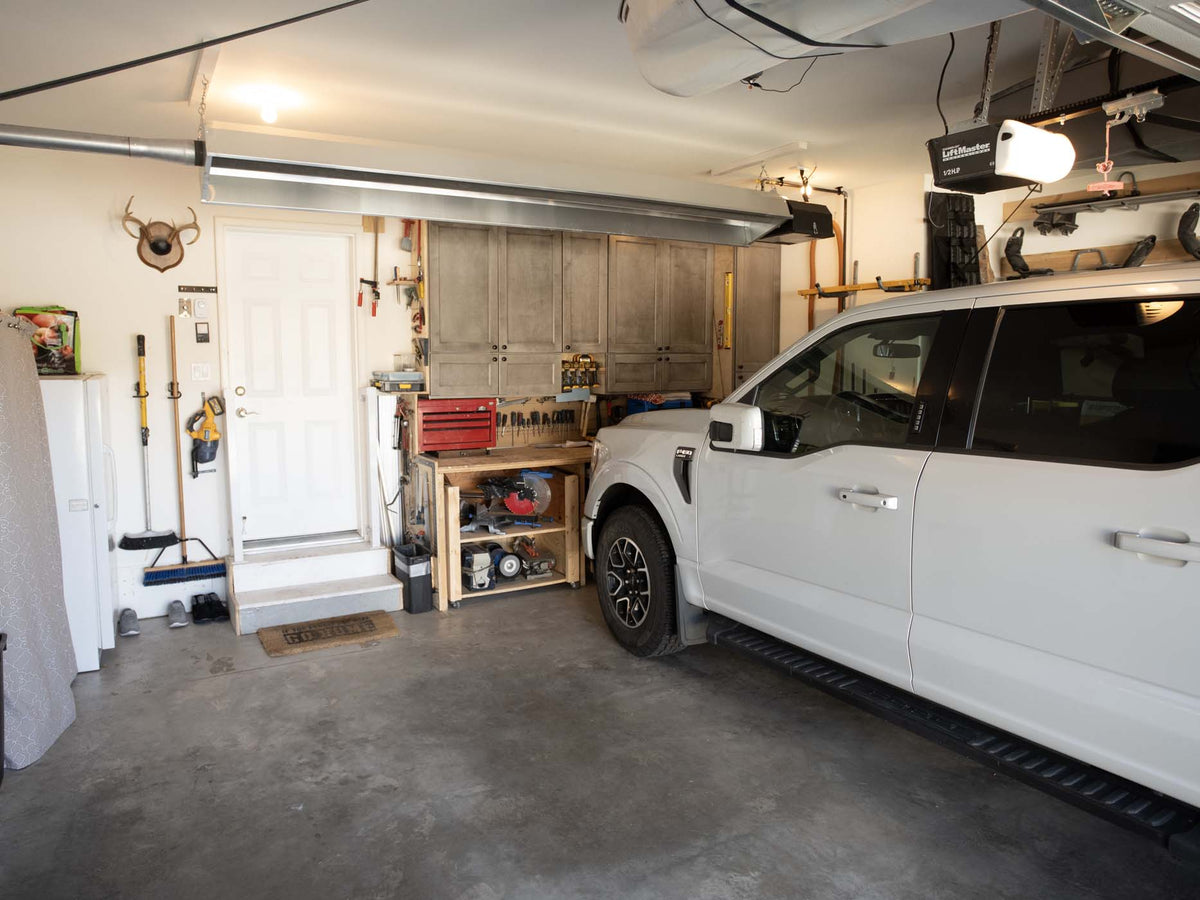
Garages are often used for much more than parking vehicles. For homeowners, they can become workshops, home gyms, hobby rooms, storage areas, or extensions of the living space. For professionals, they may serve as automotive service areas, maintenance bays, or dedicated workspaces. Regardless of how a garage is used, maintaining comfortable temperatures during colder weather can be a challenge.
Large overhead doors, concrete floors, limited insulation, and frequent temperature changes can make conventional heating difficult to manage. In spaces where floor area is already limited, the size and placement of heating equipment can create additional challenges. Choosing a heater that delivers effective warmth while accommodating the layout of the building is an important part of creating a practical garage environment.
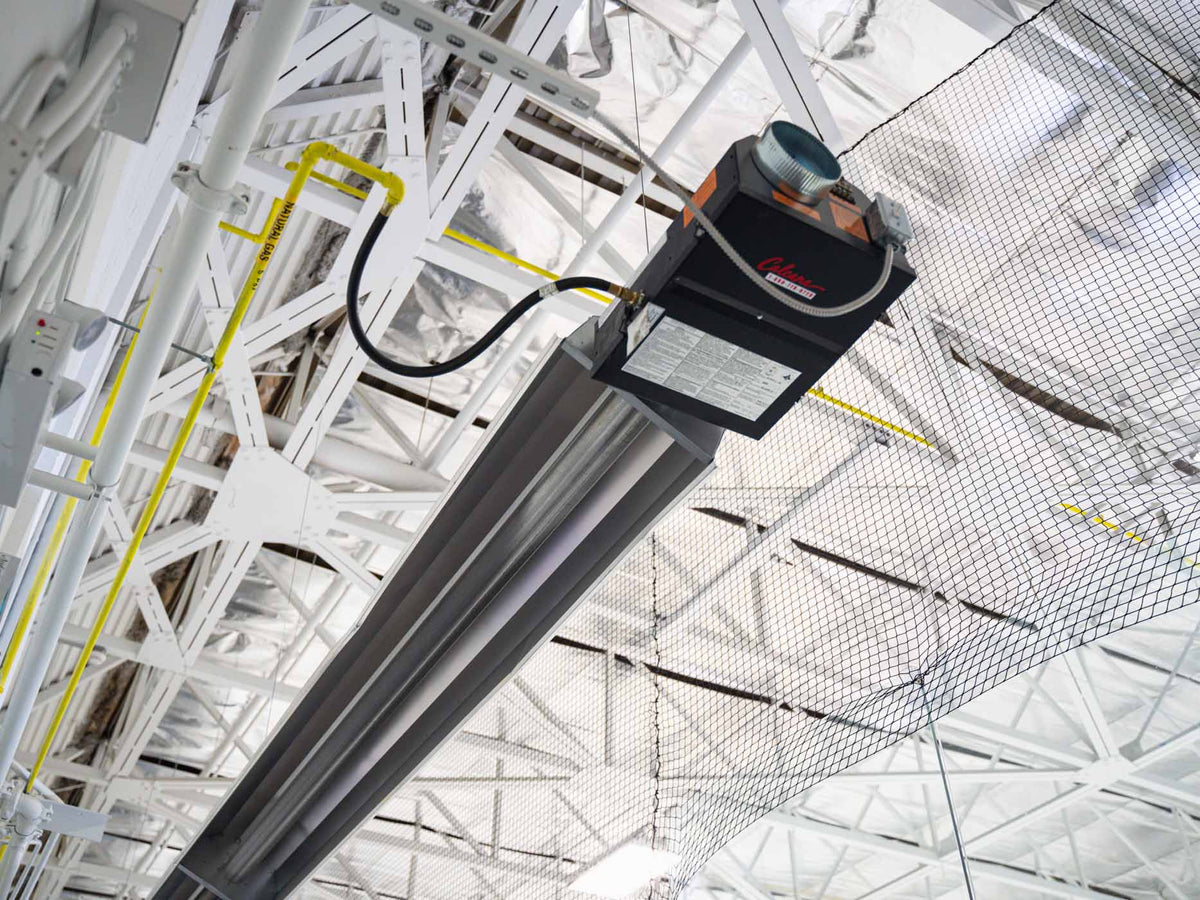
Calcana's CAL Series gas-fired infrared garage heaters are designed to address these needs through targeted radiant heating, low-clearance installation options, and flexible ventilation connections. With features intended to accommodate garages with limited mounting space, the CAL Series offers a heating solution for homeowners and businesses looking to make better use of their indoor spaces throughout the year.
From understanding how infrared heating works to exploring clearance requirements, protective screen options, and fresh-air and exhaust connections, this overview explains the key features of Calcana's CAL Series and the considerations involved in choosing a garage heating system.
What Is the Calcana CAL Series? An Overview of Gas-Fired Infrared Garage Heaters
The CAL Series is Calcana's line of gas-fired infrared heaters designed for garages and similar indoor applications. These heaters use radiant energy to provide warmth directly to people, vehicles, tools, workbenches, floors, and other surfaces within the heating area.
Unlike conventional forced-air systems that primarily heat and circulate air, infrared heaters transfer energy directly to objects and surfaces. This approach can be particularly useful in garages, where cold concrete floors, large doors, and changing air conditions can make it difficult to maintain a comfortable working environment.
The CAL Series is designed with practical installation considerations in mind. Garages frequently have limited ceiling height, overhead storage, lighting, garage door tracks, and other structural features that influence where a heater can be installed. A heating system must accommodate these elements while maintaining the clearances and ventilation required for safe operation.
Calcana's CAL Series combines infrared heating technology with low-clearance design features and fresh-air and exhaust connection options. These features can help make the system suitable for a range of residential garages, workshops, and other spaces where installation flexibility is important.
The appropriate heater and configuration will depend on the size of the space, its construction, the available mounting locations, the fuel supply, and applicable installation requirements.
How Does Infrared Garage Heating Work?
Understanding how infrared heating works helps explain why it can be effective in garage environments.
Traditional forced-air heaters warm the air and distribute it throughout a room. This can be an effective approach in many buildings, but garages often present conditions that make maintaining warm air more challenging. Overhead doors may open frequently, drafts can enter through gaps, and warm air can rise toward the ceiling.
Infrared heating uses a different method.
A gas-fired infrared heater produces radiant energy that travels from the heater to surfaces within its coverage area. When that energy is absorbed, those surfaces become warmer. Depending on the installation and heating pattern, the surfaces receiving radiant energy may include the floor, workbench, vehicle, tools, equipment, and people using the space.
This makes infrared heating particularly relevant for garages where people may spend time working in a specific area rather than simply occupying the entire room.
For example, a homeowner working at a workbench may benefit from radiant warmth directed toward the work area. Someone using a garage as a home gym may appreciate comfortable warmth without the continuous airflow associated with a forced-air system. In an automotive workspace, targeted heating can help make a designated service area more comfortable during colder weather.
Infrared heating does not eliminate the effects of drafts or poor insulation, and the overall performance of any system depends on proper sizing and placement. However, its ability to deliver warmth directly to surfaces makes it a useful option for many garage applications.
Designed for Garages With Limited Clearance
One of the defining features of the CAL Series is its low-clearance installation capability.
Garages are not always designed with heating equipment in mind. Ceiling heights can be limited, and the available mounting space may be affected by garage door tracks, openers, lighting, shelving, storage systems, and structural framing. A heater that requires substantial clearance above or below the unit may be difficult to accommodate in these situations.
Low-clearance design can provide additional flexibility when planning an installation.
Calcana provides different minimum floor-clearance specifications for the United States and Canada. These requirements reflect the applicable product configurations and installation guidance for each market, so it is important to consult the correct documentation when selecting and installing a CAL Series heater.
The specified minimum floor clearance is measured from the finished floor to the bottom of the heater's reflector. Understanding exactly where this measurement begins and ends helps installers evaluate the available space accurately.
Although low-clearance options can make it easier to work with restricted ceiling heights, they do not remove the need to assess the entire installation. The heater's position relative to combustible materials, nearby objects, walls, ceilings, and other building features must still comply with the manufacturer's instructions and applicable codes.
United States Installation Clearances
For the United States, Calcana's stated CAL Series minimum floor clearance is 6 feet from the floor to the bottom of the reflector.
Protective screen customization options are available for installations below 8 feet, providing additional flexibility for certain lower-height applications.
The specified clearance above the heater is as low as 4 inches, subject to the applicable model and installation requirements.
These features can be useful in garages where ceiling height is limited and the space above the heater needs to be considered carefully. Rather than assuming that every installation must have the same amount of unused ceiling space, homeowners and installers can review the available CAL Series configurations against the actual building layout.
The minimum floor clearance and clearance above the heater address different parts of the installation. Both must be evaluated, along with any additional side, end, or combustible-material clearances specified for the selected model.
Canadian Installation Clearances
For Canada, Calcana's stated CAL Series minimum floor clearance is also 6 feet from the floor to the bottom of the reflector.
Protective screen customization options are available for installations below 7 feet. These options are intended to accommodate certain lower-height installation scenarios while maintaining the applicable product requirements.
The specified clearance above the heater is as low as 4 inches, subject to the applicable model and installation requirements.
The difference between the U.S. and Canadian installation-height thresholds is important. A configuration that may be suitable for a particular installation in one market should not automatically be assumed to meet the requirements in the other.
Installers should use the documentation intended for the country where the heater will be installed. Local building, gas, electrical, and fire-safety requirements may also affect what is permitted in a specific garage.
Why Low-Clearance Options Matter
The ability to accommodate limited mounting space can make a meaningful difference in garage planning.
For example, a garage with a relatively low ceiling may have limited room between the heater and the floor. A workshop may have overhead storage or equipment that restricts possible mounting locations. A residential garage may also have a garage door track or opener occupying part of the ceiling.
Low-clearance options can help installers assess whether a suitable location is available without immediately ruling out the use of an overhead heating system.
Protective screen customization may provide additional flexibility for installations below the specified height thresholds, where the applicable configuration allows it. However, these options should not be treated as permission to install a heater at any height or in any location. The approved configuration, required clearances, and installation instructions must always be confirmed before work begins.
Protective Screen Options for Lower Installations
In some garages, the available installation height is one of the main factors determining which heating system can be used.
Protective screen customization options for the CAL Series are available for installations below the stated height thresholds in the United States and Canada. These options provide another consideration for projects where the heater needs to be installed in a space with limited vertical clearance.
When evaluating a lower installation, it is important to look at the entire environment rather than focusing only on the distance between the heater and the floor. Vehicles may be parked beneath or near the unit, garage doors move through defined paths, and storage items can change the amount of open space around the heating equipment.
The installation also needs to account for the materials surrounding the heater and the way the garage will be used. A garage used primarily for vehicle storage may have different layout considerations from one used for woodworking, equipment maintenance, or regular physical activity.
Protective screen availability should be discussed as part of selecting the appropriate CAL Series configuration. The screen option, mounting height, and clearances must follow the relevant manufacturer documentation and local requirements.
A qualified installer can help determine whether a particular low-height configuration is appropriate for the intended application.
Fresh-Air & Exhaust Connections for Installation Flexibility
Clearance is only one part of installing a gas-fired garage heater. Fresh-air and exhaust requirements are also essential considerations.
Gas-fired heating equipment needs an appropriate supply of combustion air and a suitable method of managing exhaust, depending on the selected model and installation configuration. These requirements must be evaluated alongside the building's construction, ventilation arrangements, and local codes.
The CAL Series offers fresh-air and exhaust connection options designed to help installers adapt the system to the requirements of different buildings and local jurisdictions.
This flexibility can be useful because garages vary significantly in their design. Some are attached to homes, while others are detached. Some have limited exterior wall space, and others have more options for routing the required connections. Existing mechanical systems, structural framing, and the location of other building services may also influence the installation plan.
Fresh-air and exhaust connections provide a way to consider these requirements during the design stage rather than treating ventilation as an afterthought.
The exact arrangement will depend on the heater model, the building, and the applicable installation instructions. The required connection sizes, routing, termination locations, and other specifications should be confirmed using the relevant technical documentation.
Adapting to Local Building Codes
Building and mechanical requirements can vary by jurisdiction. Even when two garages have similar dimensions, their permitted installation arrangements may differ depending on the local code requirements and the characteristics of the building.
The CAL Series' fresh-air and exhaust connection options can help accommodate these differences when the system is designed and installed correctly.
Before installation, the project should be reviewed for the applicable requirements governing combustion air, exhaust venting, gas connections, electrical supply, clearances, and any other relevant conditions. Attached garages may have additional considerations because they connect to a residential structure.
The objective is to ensure that the heater operates in accordance with its intended design while meeting the requirements for the location.
Calcana's manuals and technical resources provide important information for this process. Where required, a qualified gas fitter or other appropriately licensed professional should assess and complete the installation.
Natural Gas or Propane: Choosing the Right Fuel
Fuel availability is another consideration when selecting a garage heater.
Calcana's garage heating lineup includes natural gas and propane options. The appropriate choice depends on the services available at the property, the selected model, and the requirements of the installation.
Natural gas may be a practical option for a home or commercial building with an existing natural gas connection. Propane may be considered for properties where natural gas is unavailable or where the building uses a propane supply for other equipment.
The decision should account for more than convenience alone. Fuel supply, appliance compatibility, gas pressure, connection requirements, installation costs, and ongoing operating costs can all influence the choice.
A heater designed for one fuel type should not be assumed to be suitable for another without the correct approved configuration. Confirming the fuel requirements before purchasing helps avoid unnecessary complications during installation.
The right approach is to match the CAL Series model to the building's fuel supply and have the system installed according to the manufacturer's specifications and local requirements.
Where Can CAL Series Garage Heaters Be Used?
The CAL Series is intended for garage environments where dependable warmth and practical installation options are important. Its potential applications extend beyond a space used solely for parking a vehicle.
Residential Garages
For homeowners, a garage can become an extension of everyday living. It may serve as a place to complete repairs, organize equipment, work on hobbies, or carry out projects that are difficult to manage inside the home.
Cold conditions can make these activities uncomfortable, particularly during the winter months. A properly selected infrared heater can help make the garage more usable by providing radiant warmth to the areas where people spend their time.
Low-clearance options can be particularly relevant in residential garages where ceiling height and overhead equipment restrict mounting locations.
Home Workshops & Hobby Spaces
Workshops often contain workbenches, tools, storage cabinets, and equipment arranged around specific tasks. Instead of simply heating a room that is not always occupied, infrared heating provides an opportunity to direct warmth toward the working area.
Quiet operation can also be beneficial when people want to concentrate on detailed projects without the constant sound of a fan-driven heating system.
The heater's position should be planned around the workbench, equipment, materials, and other objects in the space. Appropriate clearances remain essential, especially where combustible materials, dust-producing activities, or heat-sensitive products are present.
Automotive & Maintenance Areas
Garages used for vehicle maintenance need to accommodate vehicles, tools, lifting equipment, and people moving around the work area. Keeping the floor clear of unnecessary equipment can be a practical advantage when planning the space.
A properly positioned overhead infrared heater can deliver radiant warmth toward selected areas without occupying the floor in the way a portable heater might.
In automotive environments, placement must account for vehicle height, overhead doors, exhaust connections, and any equipment that may move through the heating area. The heater must not interfere with vehicle operation or maintenance procedures, and the installation must follow all applicable safety requirements.
Garage Gyms & Multipurpose Spaces
Some homeowners use their garages as home gyms or multipurpose rooms. During colder months, low temperatures can make it less appealing to exercise, work on projects, or spend extended periods in the space.
Infrared heating offers a way to provide warmth without relying on a constant stream of forced air. The radiant heat can be directed toward the occupied area, while overhead installation can help preserve floor space for exercise equipment, storage, and other activities.
The installation should still be designed around the room's layout and the manufacturer's clearances. Exercise equipment, mats, stored items, and any other objects must remain appropriately positioned relative to the heater.
Regardless of the intended use, the correct CAL Series configuration depends on the dimensions, construction, ventilation requirements, and operating conditions of the individual garage.
Installation Planning: Choosing the Right CAL Series Configuration
Selecting a garage heater involves more than matching the unit to the square footage of the room.
The ceiling height, insulation, size of the overhead door, frequency of door use, building location, and desired comfort level all affect heating requirements. The position of vehicles, workbenches, storage, lighting, and garage door tracks can also influence where the heater should be installed.
Start by identifying the areas that need the most warmth. A garage used for occasional vehicle storage may have different heating priorities from a workshop occupied for several hours each day.
Next, assess the building's physical limitations. Measure the available mounting height and consider the distance between the proposed heater location and the floor, ceiling, walls, combustible materials, and nearby objects. The 6-foot minimum floor-clearance specification and the applicable overhead clearance requirements should be treated as part of this assessment, not as substitutes for the complete clearance schedule.
The appropriate low-clearance and protective screen options should then be confirmed for the installation's country and selected model.
Fresh-air and exhaust connections must also be incorporated into the plan. Their placement and routing should be considered before the heater is mounted, particularly where structural features or existing building services may limit the available options.
Finally, determine the required heating capacity and fuel type. A qualified professional can help assess the building and establish a configuration that meets the heating requirements while complying with the manufacturer's instructions and local codes.
Careful planning can help avoid installation conflicts and support reliable performance over the long term.
Maintenance & Long-Term Performance
A garage heating system should be inspected and maintained according to its manufacturer's instructions. Even when a heater is permanently installed, it remains important to check its condition and ensure that surrounding areas remain suitable for operation.
Over time, garages can accumulate dust, debris, and stored materials. Items may be moved closer to the heater, or changes to shelving and overhead storage may affect previously clear areas. Periodically reviewing the space can help identify potential obstructions or clearance concerns.
The heater's fresh-air and exhaust connections should also remain in appropriate condition. Any signs of damage, obstruction, corrosion, or other concerns should be addressed by a qualified professional.
Routine servicing should follow the requirements for the specific model. Gas-fired heating equipment should not be modified or serviced by unqualified individuals, and any maintenance involving gas connections, combustion components, or exhaust systems should be performed by appropriately qualified personnel.
A well-planned installation, combined with appropriate inspection and maintenance, can help support dependable heating performance and extend the useful service life of the equipment.
Why Consider Calcana's CAL Series for Garage Heating?
Choosing a garage heater means balancing comfort, installation requirements, available space, fuel supply, and long-term practicality.
Calcana's CAL Series brings several garage-specific considerations together. Its gas-fired infrared technology provides targeted radiant warmth, while its low-clearance installation options help address the restricted mounting heights found in some garages. Protective screen customization is available for certain lower installations, and fresh-air and exhaust connection options help accommodate the ventilation requirements of different projects.
The result is a heating solution designed around the practical challenges of residential garages, workshops, and similar environments.
However, no single heater configuration is appropriate for every building. The correct model, output, mounting location, fuel type, and connection arrangement should be determined by evaluating the actual space and its intended use.
Reviewing the technical specifications and installation documentation before selecting a heater helps ensure that these details are considered from the beginning.
A Practical Approach to Comfortable Garage Heating
A cold garage does not have to remain a space used only when necessary. With the right heating system, it can become a more comfortable place to work on projects, maintain vehicles, exercise, organize equipment, or pursue hobbies throughout the year.
Calcana's CAL Series gas-fired infrared garage heaters are designed to support these applications with targeted radiant heat, low-clearance installation options, protective screen customization for certain lower-height installations, and fresh-air and exhaust connections that help accommodate local building requirements.
Whether you're planning a residential garage upgrade or heating a dedicated workspace, understanding these features is an important first step toward choosing the right system.
Explore Calcana's CAL Series garage heaters, review the available specifications and installation resources, and consult a qualified professional to determine the configuration that best suits your space.
Leave a comment
This site is protected by hCaptcha and the hCaptcha Privacy Policy and Terms of Service apply.