
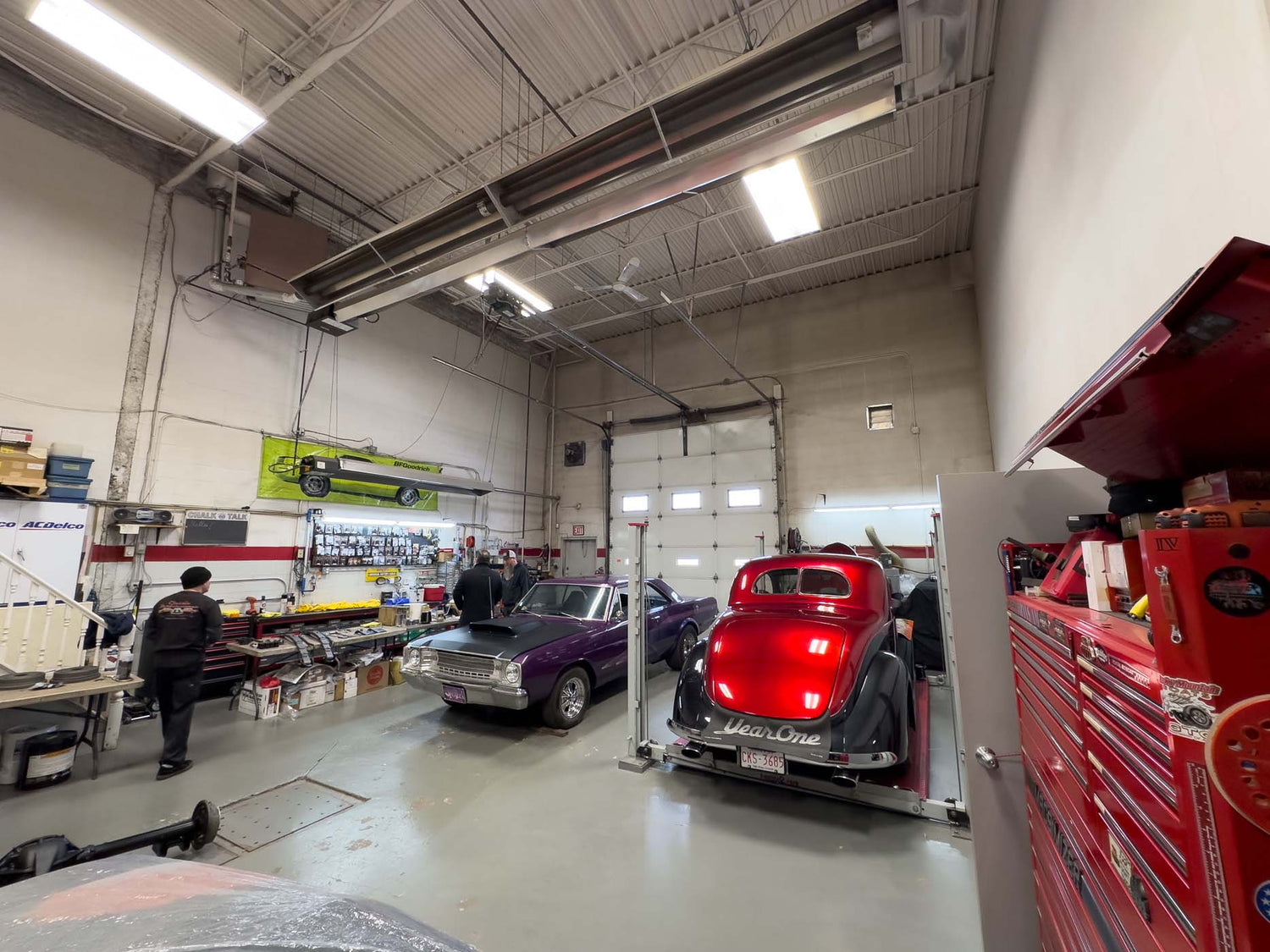
Metal is everywhere. From industrial machinery and warehouse equipment to outdoor furniture, vehicles, tools, railings, workbenches, and structural components, countless objects in commercial and residential spaces are made from metal. When temperatures drop, these surfaces can become extremely cold, making an already chilly environment feel even less comfortable.
This raises an important question for businesses and property owners considering infrared heating: Can infrared heat warm metal objects effectively?
The answer is yes. Infrared heating is particularly well suited to warming solid objects, including many types of metal. Rather than relying on heated air to circulate throughout a building, infrared systems transfer radiant energy directly to surfaces within their heating range. When infrared energy reaches a metal object, the object absorbs some of that energy and its surface temperature increases.
This fundamental difference is one of the reasons infrared heating can perform so well in warehouses, workshops, manufacturing facilities, garages, loading areas, outdoor patios, and other spaces containing substantial amounts of metal.
However, not every metal surface responds to infrared energy in exactly the same way. Factors such as the metal's surface finish, colour, angle, temperature, distance from the heater, and surrounding environment can influence how effectively it absorbs and retains radiant energy.
Understanding how infrared heat interacts with metal can help you determine whether this technology is appropriate for your application and how to position your heating system for the best possible results.
Understanding How Infrared Heating Works: How Radiant Energy Warms Metal Objects & Industrial Spaces
Before examining how infrared heat warms metal, it helps to understand the basic science behind radiant heating.
Traditional forced-air heating systems primarily warm the air. A furnace or heater raises the temperature of air, and a fan or blower distributes that warm air throughout the space. The heated air then transfers some of its energy to people, equipment, walls, floors, and other objects.
Infrared heating takes a different approach.
An infrared heater produces electromagnetic radiation within the infrared portion of the spectrum. This radiant energy travels through the air until it encounters a surface capable of absorbing it. When the energy is absorbed, it increases the thermal energy of that surface.
In simple terms, infrared heat warms objects rather than needing to heat the entire volume of air first.
This is similar to the experience of standing in sunlight on a cool day. The surrounding air may remain chilly, but your skin can still feel warm when exposed to sunlight.
The same basic principle allows an infrared heater to transfer energy to floors, equipment, walls, furniture, vehicles, people, and metal objects.
This can be especially useful in large facilities where heating every cubic foot of air is inefficient or difficult.
Radiant Heat Does Not Depend on Air Movement
One of the major advantages of infrared heating is that radiant energy can travel through the air without relying on fans or ductwork.
That distinction matters in spaces containing large metal objects.
Imagine a warehouse with a 30-foot ceiling and several large pieces of steel equipment positioned throughout the facility. A forced-air system must heat a substantial volume of air before that heat reaches the equipment and employees working at floor level.
Warm air also naturally rises, which can result in considerable heat accumulating near the ceiling.
An infrared heater mounted overhead can instead direct radiant energy toward the floor and the objects beneath it. When the infrared energy reaches a metal machine or steel surface, that surface can absorb the energy and warm.
This allows the heating system to focus energy where it is needed rather than attempting to condition the entire air volume equally.
Why Metal Is Important in Industrial Heating
Metal objects can play a significant role in how a space feels and how heat moves throughout it.
Warehouses, manufacturing plants, garages, automotive facilities, workshops, and agricultural buildings often contain substantial quantities of steel, aluminum, iron, and other metals.
These materials are useful because of their strength and durability, but they can also become extremely cold.
A steel workbench, for example, can feel much colder to the touch than the surrounding air during winter. A large piece of machinery that has been sitting in an unheated facility overnight may reach temperatures close to the surrounding environment.
When workers interact with these surfaces, the cold metal can make the environment feel uncomfortable even if the air temperature has increased.
Infrared heating can help address this problem by directly delivering radiant energy to those surfaces.
Instead of only heating the air around the workbench, an appropriately positioned infrared heater can transfer energy directly to the workbench itself.
As the surface warms, it can contribute to a more comfortable environment around the object.
How Infrared Heat Interacts With Metal
When infrared radiation reaches a metal object, several things can happen.
Some of the radiation may be absorbed by the surface. Some may be reflected. Depending on the material and its surface characteristics, the balance between absorption and reflection can vary considerably.
The portion of the infrared energy that is absorbed contributes to increasing the object's thermal energy.
The surface temperature can then rise depending on the amount of energy being absorbed, the object's mass, its thermal properties, its surroundings, and how quickly heat is lost.
This means that saying infrared "heats metal" is accurate, but the process is more nuanced than simply pointing a heater at any metal surface and expecting it to become hot immediately.
The characteristics of the metal matter.
Surface Finish Can Affect Infrared Absorption
One of the most important considerations when heating metal with infrared energy is the surface finish.
Different surfaces can interact with infrared radiation differently.
A highly polished or reflective metal surface may reflect a greater portion of incoming radiation than a darker, less reflective surface. A painted or coated metal surface may interact with infrared energy differently from bare, polished steel.
This does not mean polished metal cannot be heated with infrared radiation. It simply means that the efficiency of energy absorption can vary depending on the surface.
For commercial and industrial applications, this distinction can be useful when determining heater placement.
If a facility contains large amounts of highly reflective metal, a professional heating designer can consider the surfaces, angles, mounting heights, and coverage patterns when developing the heating layout.
The goal is to make sure the radiant energy reaches the areas where it can provide the greatest benefit.
Darker Metal Surfaces & Radiant Energy
Dark or coated metal surfaces can often be effective targets for infrared radiation because their surface characteristics may allow them to absorb a significant amount of radiant energy.
Consider a painted steel machine sitting underneath an infrared heater.
As radiant energy reaches the machine, the surface absorbs some of that energy and becomes warmer. The heat can then conduct through the material and transfer into surrounding areas through convection and radiation.
The machine itself effectively becomes part of the heated environment.
This is one reason infrared heating can be particularly useful in industrial facilities where equipment and structures occupy significant portions of the heating area.
Can Infrared Heat Large Metal Objects?
Yes, infrared heating can effectively warm large metal objects, but the result depends on several factors.
Large objects have more mass and therefore require more energy to experience a significant temperature increase.
A thin metal panel may warm relatively quickly because there is less material to heat. A massive steel machine weighing several thousand pounds may require considerably more energy and time to reach a noticeable temperature increase.
However, the objective of an infrared heating system does not always need to be making an enormous metal object extremely hot.
In many commercial applications, the goal is simply to raise surface temperatures enough to improve comfort, reduce cold surfaces, or provide targeted warmth in an occupied zone.
Proper system sizing is therefore critical.
A professional heating assessment can determine how much heating capacity is appropriate for the space and what objects need to receive radiant energy.
Infrared Heating for Metal Machinery
Industrial machinery represents one of the most practical applications for infrared heating.
Manufacturing facilities often contain large machines made primarily from steel, iron, or aluminum.
These machines can become cold during periods when the facility is unoccupied or operating at reduced capacity.
When workers return, the cold equipment can make the work area uncomfortable.
Infrared heaters can provide targeted radiant energy to these work zones.
For example, a heater mounted above a production area can direct radiant heat toward machinery, flooring, workstations, and employees.
Rather than waiting for a forced-air system to heat the entire building, workers can begin experiencing radiant warmth as soon as the heater operates.
This makes infrared heating particularly useful for facilities where workers spend their time in specific zones rather than throughout the entire building.
Warming Metal Workbenches & Tools
Workbenches are another common source of cold surfaces in garages and workshops.
Metal workbenches are durable and practical, but they can become uncomfortable during winter.
An infrared heater positioned appropriately above or near the work area can warm the bench surface and surrounding objects.
Tools can also absorb radiant energy when they are positioned within the heater's effective coverage area.
While the purpose should not be to make tools excessively hot, warming cold surfaces can make the work environment more comfortable.
This can be especially beneficial for mechanics, fabricators, hobbyists, maintenance workers, and other professionals who spend long periods working with metal equipment.
Infrared Heating in Automotive Facilities
Automotive shops are filled with metal.
Vehicles themselves contain extensive metal surfaces, while lifts, toolboxes, workbenches, equipment, and machinery can also be made from steel or aluminum.
These environments can be challenging to heat because garage doors frequently open and close.
Every time a large overhead door opens, heated air can escape and cold outdoor air can enter.
A forced-air system must continually replace that lost heat.
Infrared heating offers another approach.
Radiant energy can continue warming people and objects within its coverage area even when air movement occurs.
If a garage door opens, the air temperature may change rapidly, but surfaces that have absorbed radiant energy can continue releasing some of that stored thermal energy.
This does not eliminate heat loss, but it can make targeted heating more effective in spaces where doors frequently open.
Warming Metal Vehicles With Infrared Heat
Vehicles are another interesting example of how infrared heating interacts with metal.
A vehicle parked outside on a cold winter day can become extremely cold.
Its metal body, frame, wheels, and other components can reach low temperatures.
If the vehicle is brought into a heated garage or shop, warming the surrounding air will gradually raise its temperature.
Infrared heating can provide a more targeted approach by directing radiant energy toward the vehicle and surrounding work area.
The metal surfaces can absorb some of the radiation, increasing their surface temperature.
For automotive businesses, this can make infrared heating useful for maintaining comfort around service bays and workstations.
However, it is important to distinguish between warming the surface of a vehicle and rapidly heating the entire vehicle or its mechanical components. The latter depends on numerous factors and may require specialized equipment or procedures.
Infrared heating should be viewed as part of the overall environmental heating strategy rather than a replacement for purpose-built vehicle heating systems.
Can Infrared Heat Steel?
Steel can absorb infrared radiation and become warmer when exposed to an infrared heater.
Steel is one of the most common materials found in commercial and industrial buildings, making this an important consideration.
Structural steel beams, machinery, shelving, workstations, doors, railings, and equipment can all potentially receive radiant energy.
However, the effectiveness of heating a particular steel object depends on its surface properties and exposure.
A steel beam directly beneath a heater may receive significantly more radiant energy than a beam positioned behind equipment or outside the heater's line of sight.
This highlights one of the most important principles of infrared heating:
Radiant heat needs a path to the target.
Line of Sight Matters
Infrared radiation travels outward from its source.
Objects positioned directly within the heater's effective coverage area can receive radiant energy.
Objects blocked by walls, equipment, shelving, or other structures may receive less.
This is why heating layout is so important in industrial environments.
Consider a warehouse with tall pallet racks.
If infrared heaters are mounted in locations where the racks block the radiation from reaching workers, some areas may remain colder.
Instead, installers can evaluate the layout and position heaters to maximize exposure to occupied areas.
This may involve adjusting mounting height, angle, spacing, or the number of heating units.
Professional system design can help prevent cold spots and maximize the benefits of radiant heating.
Infrared Heat Can Warm Floors Too
Although this topic focuses on metal objects, floors are another important target for infrared energy.
Concrete floors are especially common in warehouses, garages, manufacturing plants, and sports facilities.
Concrete can become extremely cold during winter.
When an infrared heater directs energy toward the floor, the surface can absorb radiant energy and become warmer.
The warmed floor can then contribute to overall comfort through secondary heat transfer.
This is one of the reasons radiant heating can feel comfortable even when the air temperature is not as high as it would need to be with certain forced-air systems.
The combination of warmed people, equipment, floors, and other surfaces can create a more comfortable thermal environment.
Metal & Thermal Mass
Metal objects can have substantial thermal mass, particularly when they are large.
Thermal mass describes the ability of a material to absorb and store thermal energy.
A large steel machine, for instance, contains a significant amount of material that must absorb energy before its temperature changes substantially.
This can initially make large metal objects slower to warm.
However, once warmed, those objects can retain thermal energy and gradually release it.
This characteristic can complement infrared heating.
Rather than relying entirely on constantly heated air, the heating environment can benefit from surfaces that have absorbed radiant energy.
The specific thermal behaviour depends on the object's size, material, temperature, surrounding conditions, and other physical properties.
What Happens When the Heater Turns Off?
One of the useful characteristics of radiant heating is that the surfaces receiving the energy do not instantly return to their original temperature when the heater shuts off.
A metal object that has absorbed heat will gradually lose that energy to its surroundings.
The rate of cooling depends on the object's temperature, size, material, airflow, and surrounding environment.
This can create a residual warming effect after the heater stops operating.
However, it is important not to interpret this as meaning that infrared heaters can be switched off for long periods without affecting comfort.
The surrounding environment continues losing heat, especially during cold weather.
The benefit is that the thermal energy absorbed by objects can help moderate temperature changes.
Infrared Heating vs. Forced-Air Heating for Metal Objects
The differences between infrared and forced-air heating become especially noticeable when large metal objects are involved.
Forced-air systems primarily heat the air.
The heated air then transfers energy to metal surfaces.
Infrared systems can transfer energy directly to the metal surface.
This eliminates one step in the heat-transfer process.
That distinction can be valuable in large spaces.
Imagine a manufacturing facility with a 25-foot ceiling.
A forced-air heater may need to heat a large volume of air before enough energy reaches the machinery below.
Meanwhile, warm air naturally rises.
An infrared heater mounted overhead can direct radiant energy toward the machinery and work areas without requiring the entire building's air volume to reach the same temperature.
This targeted approach can make radiant heating particularly attractive for large industrial facilities.
Why High-Ceiling Buildings Benefit From Radiant Heating
High ceilings are common in warehouses and industrial buildings.
Unfortunately, they can also make conventional heating challenging.
Warm air rises, meaning a significant portion of heated air can accumulate near the ceiling.
Workers, equipment, and machinery remain much closer to the floor.
Infrared heating bypasses much of this issue by sending radiant energy toward the occupied zone and surfaces below.
The heater does not need to make the air at ceiling height comfortable before workers begin experiencing radiant warmth.
This makes infrared systems particularly well suited to large-volume spaces.
Heating Metal in Warehouses
Warehouses frequently contain steel shelving, racks, forklifts, loading equipment, conveyors, and structural components.
These surfaces can become cold during winter.
Infrared heaters can be positioned to provide radiant energy to occupied areas and equipment.
However, warehouse layouts must be carefully considered.
Storage racks can create obstructions.
Products may also have specific temperature requirements.
For these reasons, warehouse heating design should account for:
-
Ceiling height
-
Rack configuration
-
Door locations
-
Worker zones
-
Equipment placement
-
Product sensitivity
-
Ventilation
-
Heater mounting locations
-
Required heating capacity
-
Local building and safety requirements
A professional assessment can help determine how many heaters are appropriate and where they should be installed.
Heating Metal in Garages
Garages present a particularly strong case for infrared heating.
They often contain:
-
Steel vehicle lifts
-
Metal workbenches
-
Tool cabinets
-
Vehicles
-
Garage doors
-
Shelving
-
Automotive equipment
They also frequently have poor insulation and large openings.
Infrared heaters can provide targeted warmth without requiring the entire garage to reach a high temperature.
For homeowners, this can make a garage more comfortable for hobbies, projects, vehicle maintenance, and storage.
For commercial automotive shops, targeted heating can help keep technicians comfortable around service bays.
Heating Metal in Manufacturing Facilities
Manufacturing facilities can have highly specialized heating requirements.
Workers may operate around metal machinery for several hours at a time.
Some areas may require more warmth than others.
Infrared systems can create heating zones that correspond with operational areas.
For example, one zone might cover an assembly line while another covers a maintenance station.
This approach can reduce the need to heat unoccupied areas to the same temperature.
It can also help accommodate changing production layouts.
As equipment moves or production areas change, the heating strategy can potentially be adjusted accordingly.
Outdoor Metal Objects & Infrared Heating
Infrared heating is not limited to indoor environments.
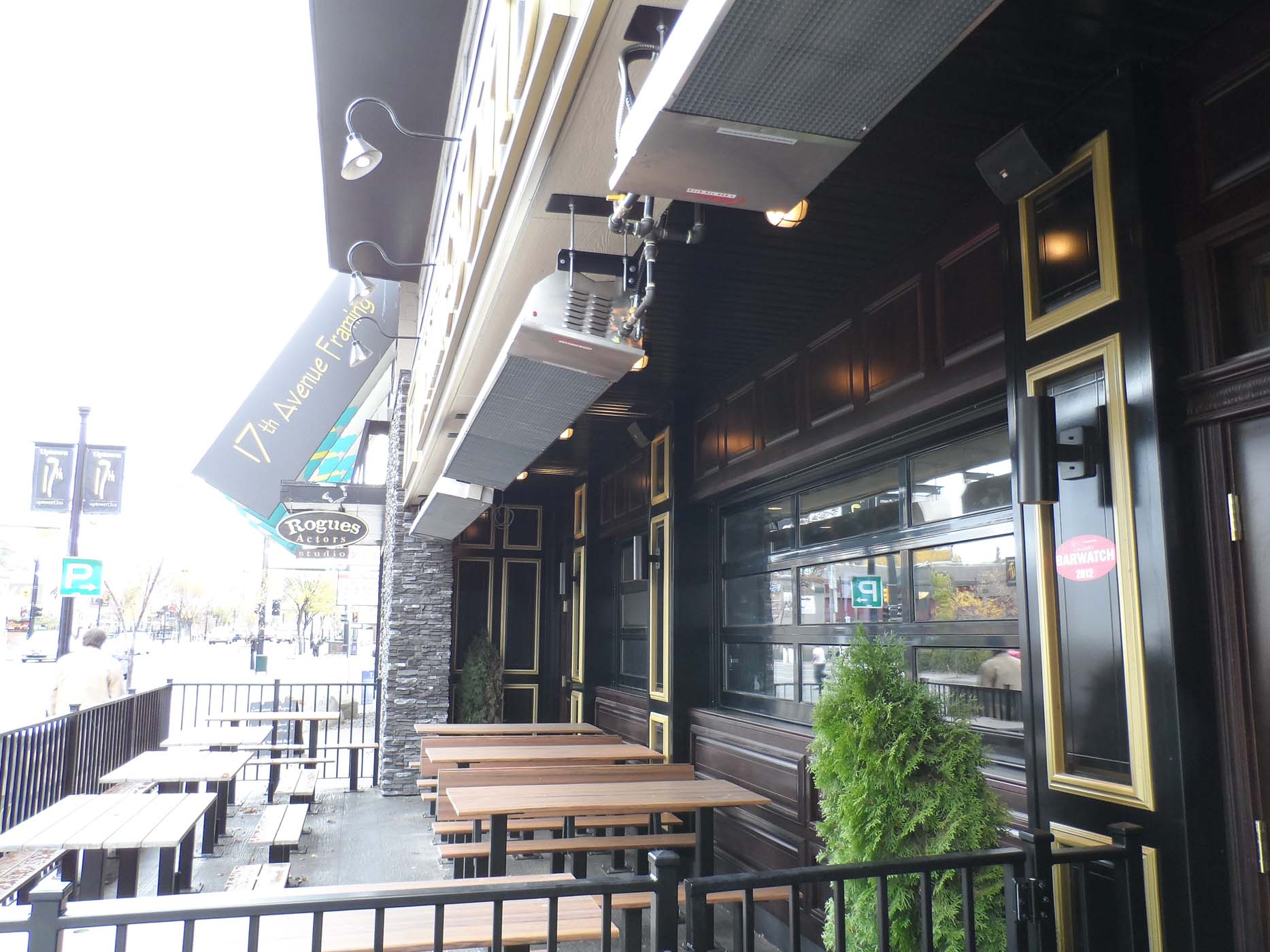
Outdoor patios, restaurants, hospitality spaces, event venues, and other open-air environments frequently contain metal furniture and structures.
Metal chairs, tables, railings, architectural elements, and outdoor equipment can all receive radiant energy.
Outdoor infrared heaters are particularly effective because they do not need to heat the entire outdoor air volume.
Instead, they focus radiant energy on people and nearby surfaces.
This makes them useful for extending the comfortable use of patios and other outdoor spaces during cooler weather.
Does Wind Affect Infrared Heating of Metal?
Wind can significantly affect how quickly a heated metal object loses energy.
Infrared radiation itself is not blown away by wind in the same way that warm air can be displaced.
However, once a metal surface has been warmed, moving air can increase heat loss from that surface.
This is why outdoor heating design still needs to consider wind.
Strategic placement, sheltered areas, mounting position, and appropriate heater selection can all help improve performance.
Infrared heating does not make outdoor spaces immune to weather conditions, but it can provide a more targeted source of warmth than attempting to heat outdoor air.
Can Infrared Heat Reach Metal Behind Glass?
Infrared radiation can interact with glass differently depending on the wavelengths involved and the type of glass.
This is an important consideration for enclosed patios, storefronts, greenhouses, and other spaces containing glazing.
Some infrared wavelengths can pass through certain types of glass more readily than others, while other wavelengths may be absorbed or reflected.
As a result, the specific heater technology and glazing configuration matter.
If a project involves heating through glass or targeting objects behind glazing, consult the heater manufacturer or a qualified heating professional to determine whether the application is appropriate.
What About Stainless Steel?
Stainless steel is commonly used in restaurants, commercial kitchens, manufacturing environments, food-processing facilities, and outdoor applications.
Like other metals, stainless steel can absorb infrared radiation.
Its surface finish matters, however.
Highly polished stainless steel may reflect more incoming radiation than a darker or less reflective finish.
Brushed, coated, or textured surfaces may behave differently.
This means infrared heating can still be effective around stainless steel equipment, but system placement and the nature of the surface should be considered.
Can Infrared Heat Aluminum?
Aluminum can also absorb infrared radiation, although its reflective properties can influence how much radiation it absorbs.
Bright, polished aluminum can reflect a significant amount of radiant energy.
Painted or treated aluminum may have different characteristics.
Again, this does not mean aluminum cannot be heated with infrared technology.
It simply reinforces the importance of understanding the target surfaces when designing a heating system.
For applications involving substantial amounts of reflective aluminum, professional system planning can help determine the most effective heater placement and configuration.
Metal Objects Can Help Distribute Heat
A useful aspect of heating solid objects is that they can become secondary sources of warmth.
Once a metal object absorbs radiant energy, the surface can transfer some of that energy to nearby air and surrounding surfaces.
This means an infrared heating system can influence the thermal environment beyond the exact point where the radiation lands.
The effect varies based on the object's size, temperature, geometry, and surrounding conditions.
Nevertheless, it demonstrates why radiant heating should not be viewed solely as "heating the person."
The heater can warm an entire collection of surfaces within its coverage area.
Infrared Heating & Worker Comfort
One of the primary reasons businesses install infrared heating is to improve worker comfort.
Workers often spend time touching or working around metal equipment.
Cold surfaces can make the work environment uncomfortable even if the air temperature is technically within an acceptable range.
Radiant heat can warm employees directly while simultaneously warming surrounding surfaces.
This creates a more comfortable experience than relying solely on heated air in certain applications.
The goal should always be a properly designed heating system that provides appropriate conditions for the specific facility.
Heating Metal Does Not Mean Making It Hot
It is important to clarify what "warming metal" means in an infrared heating application.
The goal is generally not to make metal objects extremely hot.
Instead, the objective is to raise their temperature enough to contribute to a comfortable and functional environment.
An industrial machine might simply need to be less cold.
A metal workbench may need to be comfortable for workers to use.
A warehouse floor may need to be warmer to reduce cold discomfort.
An outdoor table may absorb radiant energy and become more comfortable to sit around.
The appropriate temperature depends entirely on the application.
Factors That Determine How Effectively Infrared Heats Metal
Several variables influence performance.
Distance
The distance between the heater and target affects how much radiant energy reaches the surface.
As distance increases, radiant energy spreads over a larger area.
Proper mounting height is therefore important.
Angle
The angle between the heater and target also matters.
A properly positioned heater can direct energy toward the desired work zone.
Surface Finish
Polished and reflective surfaces may behave differently from darker, matte, or coated surfaces.
Object Size
Large objects generally require more energy to experience substantial temperature changes.
Environmental Conditions
Wind, ventilation, ambient temperature, and surrounding surfaces all affect heat loss.
Heater Capacity
The output of the infrared heater must be appropriate for the application.
Coverage Area
The system must be designed so that target areas receive adequate radiant energy.
Why Professional Heater Placement Matters
Even an excellent infrared heater can perform poorly if it is installed incorrectly.
The objective is not simply to mount a heater somewhere on the ceiling and turn it on.
Professional installation considers the entire environment.
Installers can evaluate the facility's:
-
Dimensions
-
Ceiling height
-
Occupied zones
-
Equipment
-
Structural elements
-
Doors
-
Windows
-
Ventilation
-
Heating requirements
-
Electrical or fuel infrastructure
-
Safety clearances
This allows the system to be positioned for effective coverage.
For facilities containing large amounts of metal, this assessment is especially important because equipment and structural components can influence radiant heat paths.
Using Infrared Heating to Create Zones
One of the biggest advantages of infrared heating is the ability to establish heating zones.
Instead of maintaining the same temperature throughout an entire warehouse or garage, businesses can focus heat on areas where people actually work.
For example, a manufacturing facility could establish separate heating zones for:
-
Assembly
-
Shipping
-
Maintenance
-
Loading
-
Employee break areas
Each zone can receive appropriate radiant coverage.
This approach can help reduce energy waste while improving comfort where it matters most.
Metal & Temperature-Sensitive Equipment
Businesses should also consider whether equipment or stored products have specific temperature requirements.
Some products may need to remain within particular temperature ranges.
Metal equipment can also have operational limitations at extremely low temperatures.
Infrared heating may help maintain more stable conditions in targeted areas, but businesses should always determine the exact environmental requirements of their products and equipment.
If a process requires precise temperature control, infrared heating should be integrated into a broader environmental control strategy rather than treated as a one-size-fits-all solution.
Infrared Heating & Condensation
Cold metal surfaces can also contribute to condensation problems.
When warm, moist air encounters a cold surface, moisture can condense.
This can be problematic in warehouses, garages, workshops, and industrial environments.
By warming certain metal surfaces, infrared heating may help reduce the temperature difference between those surfaces and the surrounding environment.
However, heating alone does not solve all moisture problems.
Ventilation, humidity control, insulation, and building envelope management remain important.
Businesses dealing with persistent condensation should investigate the underlying cause rather than relying exclusively on heating.
Protecting Metal Equipment From Cold Environments
Cold temperatures can affect more than employee comfort.
Depending on the equipment and environment, low temperatures can influence:
-
Lubricants
-
Batteries
-
Hydraulic systems
-
Mechanical components
-
Electronic equipment
-
Stored materials
-
Paints and coatings
Maintaining an appropriate environment can help businesses protect valuable assets.
Infrared heating provides a targeted option for facilities where only certain areas or equipment need additional warmth.
Infrared Heating for Sports Facilities
Sports facilities can also contain substantial amounts of metal.
Ice arenas, for example, may contain steel structures, railings, seating components, equipment, and other metal surfaces.
Heating must be carefully designed because the facility may need to balance human comfort with the requirements of the ice surface.
Infrared systems can provide targeted warmth in appropriate spectator or work areas without necessarily attempting to heat the entire building equally.
Similar considerations apply to tennis and pickleball facilities, golf facilities, and other large recreational spaces.
Infrared Heating for Restaurants & Patios
Restaurants with outdoor patios frequently use infrared heating to extend outdoor seating into cooler seasons.
Metal chairs and tables can absorb radiant heat, while guests also receive direct warmth.
This can contribute to a more comfortable dining environment.
Unlike forced-air systems, infrared patio heaters do not need to heat the entire outdoor air volume.
Instead, they focus energy on the occupied area.
This is particularly valuable for restaurants that want to maximize patio use during spring, fall, and cooler summer evenings.
The Role of Reflectors
Many infrared heaters use reflectors to direct radiant energy toward the intended area.
Reflector design can influence how effectively energy is distributed.
A properly designed reflector helps focus radiant output rather than allowing energy to disperse unnecessarily.
This becomes particularly important when the objective is to heat specific work zones containing people and metal equipment.
The exact design depends on the heater.
Why Infrared Heating Is Useful in Open Buildings
Open buildings can be challenging for traditional heating systems.
Large doors, ventilation systems, high ceilings, and frequent air exchanges all contribute to heat loss.
Infrared systems offer an alternative because radiant energy can continue reaching people and objects without depending entirely on the air remaining stationary.
Metal objects can serve as additional surfaces that absorb radiant energy.
This makes infrared heating particularly valuable in industrial spaces with large equipment and frequent airflow changes.
A Practical Example: The Heated Workshop
Imagine a workshop with:
-
A 20-foot ceiling
-
Two large overhead doors
-
A steel workbench
-
Several metal tool cabinets
-
A vehicle lift
-
Concrete flooring
-
Three employees
A traditional forced-air system would need to heat the entire volume of air.
Every time an overhead door opens, heated air escapes.
An infrared system could instead target the primary work areas.
Radiant energy could reach employees, the concrete floor, workbench, vehicle lift, and other surfaces.
The system could provide localized warmth even when doors occasionally open.
This does not mean the workshop has no heat loss. Rather, the system's energy is directed toward surfaces and people rather than relying solely on maintaining a uniform air temperature.
A Practical Example: The Warehouse
Now consider a large warehouse with a 30-foot ceiling and several loading docks.
The building contains steel racks, forklifts, conveyor systems, and hundreds of pallets.
Workers primarily occupy specific aisles and loading zones.
Heating the entire air volume to the same temperature could be inefficient.
An infrared heating design could instead focus on occupied zones.
Metal racks and equipment within the radiant coverage areas can absorb energy, while workers receive direct radiant warmth.
This targeted approach can help the business create a more comfortable working environment without treating every part of the building as equally occupied.
Choosing the Right Infrared Heater
Not all infrared heaters are identical.
When selecting a system, businesses should consider:
-
Fuel type
-
Heating output
-
Mounting requirements
-
Ceiling height
-
Coverage area
-
Indoor or outdoor application
-
Ventilation requirements
-
Control options
-
Safety features
-
Local regulations
-
Manufacturer specifications
For commercial and industrial installations, professional guidance can help determine the most appropriate configuration.
Why Calcana Infrared Heating Can Be a Strong Solution
Calcana has experience developing infrared heating solutions for commercial, industrial, and outdoor applications.
The company's systems are designed to provide radiant heat that can target people, objects, and surfaces.
This makes them suitable for environments where heating the entire volume of air is difficult or inefficient.
From warehouses and garages to restaurants, workshops, and sports facilities, infrared technology provides a flexible approach to maintaining comfortable environments.
The key is matching the heater and installation strategy to the space.
Maintaining Infrared Heating Systems
Once an infrared heating system is installed, regular maintenance is important.
Inspect heaters periodically for:
-
Dust
-
Debris
-
Damage
-
Corrosion
-
Loose mounting hardware
-
Electrical issues
-
Ventilation problems
-
Blocked components
For gas-fired systems, qualified professionals should inspect relevant fuel and venting components according to applicable requirements.
Keeping the system clean and properly maintained can support reliable performance and extend equipment life.
Common Misconceptions About Infrared Heating Metal
There are several misconceptions worth addressing.
"Infrared only heats people."
False.
Infrared radiation can warm people and solid objects, including metal, concrete, wood, furniture, and equipment.
"Metal reflects all infrared radiation."
Not necessarily.
Metal surface properties vary significantly. Some surfaces are highly reflective, while others absorb substantial amounts of infrared energy.
"Infrared only works in enclosed spaces."
False.
Infrared heating is particularly useful outdoors because it can deliver radiant energy without attempting to heat the surrounding outdoor air.
"The entire metal object gets hot immediately."
Not necessarily.
Surface temperature changes depend on the object's mass, material, exposure, and environmental conditions.
How to Get the Most From Infrared Heating
If your facility contains significant amounts of metal, consider these best practices:
Evaluate the surfaces. Determine what materials and finishes are present.
Map the occupied areas. Identify where workers actually spend their time.
Consider obstructions. Tall equipment and shelving can interfere with radiant coverage.
Use appropriate mounting heights. Follow manufacturer specifications.
Create heating zones. Focus energy where it provides the greatest benefit.
Maintain clearances. Follow all safety requirements.
Schedule maintenance. Keep the equipment operating properly.
Consult professionals. Complex commercial and industrial applications benefit from professional system design.
Frequently Asked Questions About Infrared Heating Metal
Can infrared heaters heat steel?
Yes. Steel surfaces can absorb infrared radiation and become warmer. The degree of heating depends on the surface finish, heater output, distance, angle, and environmental conditions.
Can infrared heat aluminum?
Yes. Aluminum can absorb infrared radiation, although highly reflective aluminum surfaces may reflect more radiant energy than darker or coated surfaces.
Does infrared heat metal faster than air?
Infrared can transfer energy directly to a metal surface rather than requiring heated air to transfer energy to the metal first. However, the actual heating rate depends on the material, object size, surface characteristics, heater output, distance, and other factors.
Can infrared heaters warm machinery?
Yes. Industrial machinery can absorb infrared energy and become warmer. This makes infrared heating useful in many manufacturing and industrial environments.
Will infrared heat work around metal shelving?
Yes, but shelving can affect radiant coverage. Heater placement should account for racks and other obstructions to minimize cold spots.
Does shiny metal reduce infrared heating?
Highly reflective surfaces can reflect more infrared radiation than darker or less reflective surfaces. This can influence heating efficiency and should be considered when designing a system.
Can infrared heating reduce cold metal surfaces?
Yes. By directing radiant energy toward metal surfaces, infrared heaters can increase their surface temperature and reduce the sensation of cold associated with those surfaces.
The Bottom Line: Can Infrared Heat Warm Metal Objects Effectively?
Yes, infrared heating can effectively warm metal objects.
In fact, the ability to transfer energy directly to solid surfaces is one of the defining characteristics of infrared heating.
Metal machinery, workbenches, vehicles, shelving, structural components, tools, furniture, and other objects can absorb radiant energy when they are positioned within the heater's effective coverage area.
The effectiveness of that heating depends on factors such as the metal's surface finish, size, temperature, distance from the heater, angle of exposure, and surrounding environment.
This makes proper system design essential.
For garages, warehouses, manufacturing facilities, automotive shops, restaurants, sports facilities, and other spaces containing significant amounts of metal, infrared heating can provide a targeted alternative to traditional forced-air heating.
Rather than spending energy attempting to heat every cubic foot of air, infrared systems can direct radiant energy toward the people, equipment, floors, and surfaces that matter most.
At Calcana USA, our infrared heating solutions are designed to provide reliable radiant warmth for a wide range of commercial, industrial, and outdoor applications. Whether you're looking to warm a busy warehouse, improve comfort around machinery, extend your restaurant patio season, or create a more comfortable garage or workshop, the right infrared heating system can help you put heat exactly where you need it.
If your space contains a lot of metal, don't assume that makes infrared heating less effective. In many applications, those metal surfaces can actually become valuable targets for radiant heat. Contact Calcana USA to explore an infrared heating solution designed around your space, your equipment, and your heating requirements.
Leave a comment
This site is protected by hCaptcha and the hCaptcha Privacy Policy and Terms of Service apply.