
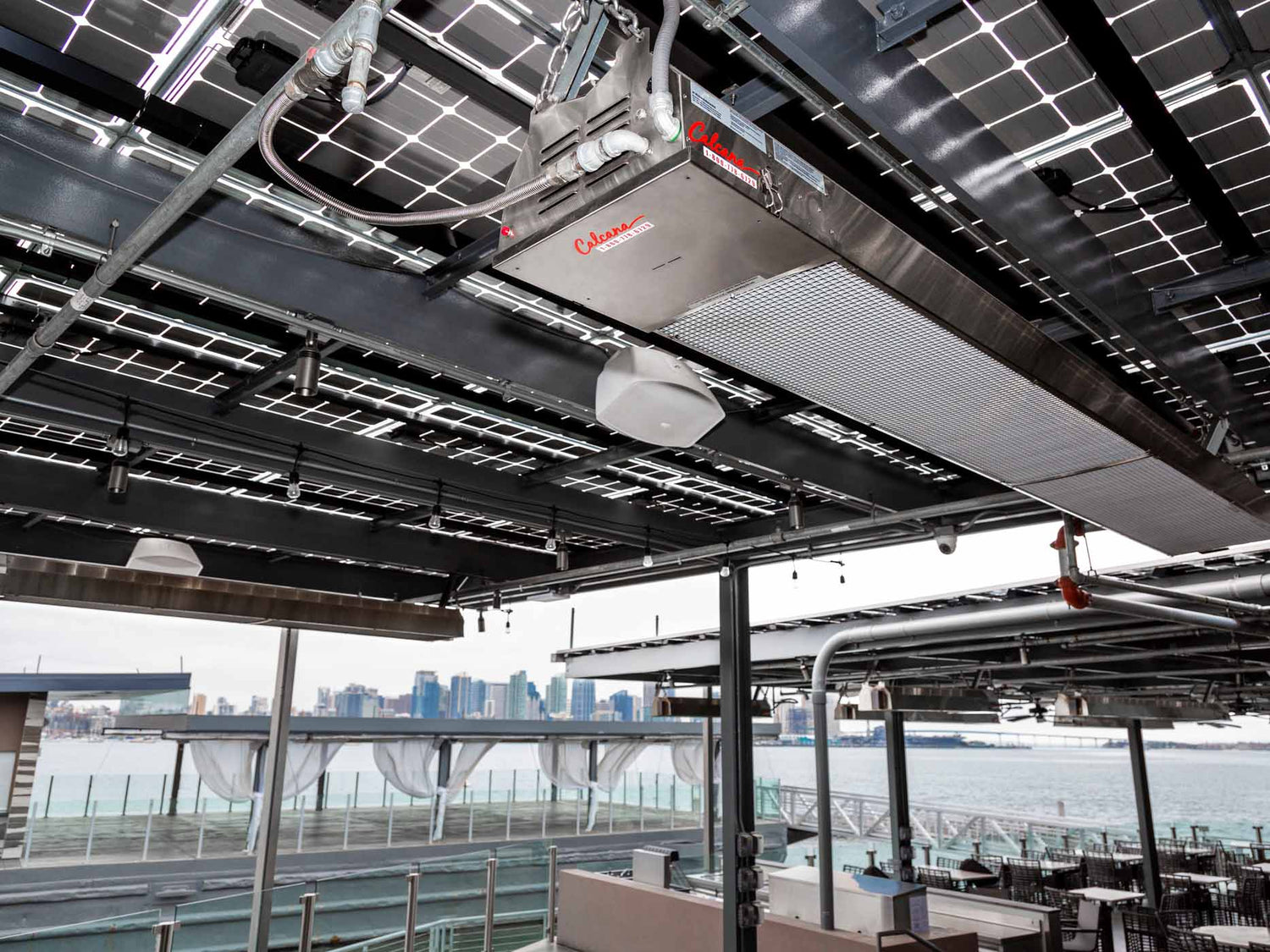
Outdoor spaces don’t stop being valuable just because the weather turns gloomy. Restaurants still want to seat guests, homeowners still want to enjoy their patios, and commercial facilities still need functional outdoor work areas, even when rain, mist, or damp conditions roll in. That naturally raises an important question for anyone considering radiant heating:
Can infrared heaters be safely and effectively used outdoors in rainy weather?
The short answer is yes, when the right type of infrared heater is installed correctly and used as intended. However, not all outdoor heaters are created equal, and understanding how infrared heating works, how weather affects performance, and what safety considerations matter most is essential before installing one in an exposed environment.
In this guide, we’ll break down everything you need to know about using infrared heaters outdoors in rainy conditions, from how radiant heat behaves in moisture-heavy environments to safety certifications, installation best practices, and why fixed, overhead infrared heaters are often the most reliable option for wet-weather outdoor heating.
To understand why infrared heaters perform well in rainy weather, it helps to understand how they work in the first place.
Unlike conventional forced-air heaters, infrared heaters do not heat the air. Instead, they emit infrared energy, similar to the warmth you feel from the sun, which travels through the air and directly heats people, surfaces, floors, furniture, and structures. Those warmed objects then retain and radiate heat back into the space.
This distinction is critical outdoors.
Why Heating the Air Fails Outdoors
Traditional outdoor heaters that rely on warming air struggle in open or semi-open environments. Wind, drafts, and precipitation quickly disperse heated air, making it inefficient and inconsistent.
Rain only makes the problem worse by:
-
Cooling the surrounding air
-
Increasing moisture levels
-
Accelerating heat loss through convection
Why Infrared Heat Excels in Outdoor Conditions
Infrared heat, on the other hand:
-
Is not blown away by wind
-
Is unaffected by rain or humidity
-
Continues to warm objects and people directly, even in damp conditions
This makes infrared heaters uniquely suited for outdoor use, including patios, covered walkways, loading areas, restaurant terraces, and commercial outdoor spaces where weather conditions are unpredictable.
Does Rain Affect Infrared Heater Performance? What You Need to Know for Reliable Outdoor Heating
A common misconception is that rain somehow “blocks” infrared heat. In reality, rain does not prevent infrared energy from reaching its target.
Infrared waves pass through moisture in the air with minimal interference. While rain can cool surfaces more quickly, infrared heaters continuously reheat those surfaces, maintaining comfort even during light to moderate rainfall.
That said, performance depends on several factors:
-
Heater placement
-
Mounting height
-
Coverage area
-
Degree of exposure to the elements
When installed properly, infrared heaters remain effective and comfortable even when it’s raining.
Are Infrared Heaters Safe to Use in Rain?
Safety is the most important consideration when operating any electrical or gas-powered equipment outdoors.
Weather-Rated Outdoor Infrared Heaters
Outdoor-rated infrared heaters are specifically engineered to withstand:
-
Moisture
-
Rain
-
Humidity
-
Temperature fluctuations
These units feature:
-
Sealed burner or heating compartments
-
Durable housings resistant to corrosion
-
Electrical components protected against water intrusion
-
Certifications confirming outdoor suitability
It’s critical to ensure that any heater used outdoors carries the appropriate outdoor or wet-location rating, depending on the environment.
Why Fixed, Overhead Heaters Are Safer
Wall-mounted and ceiling-mounted infrared heaters are inherently safer in rainy conditions than portable units because:
-
They remain elevated and out of standing water
-
They are permanently secured
-
They avoid trip hazards caused by wet surfaces
-
They keep heat sources away from foot traffic
This is one reason many commercial and professional installations rely on fixed infrared systems rather than freestanding heaters.
Certifications & Ratings to Look For
When using infrared heaters outdoors, especially in wet or rainy environments, certifications matter.
Look for heaters that are:
-
CSA certified (Canada)
-
AGA or ANSI certified (United States)
-
Approved for outdoor or commercial use
-
Rated for damp or wet locations, depending on exposure
These certifications ensure the heater has been tested for safety, performance, and durability under real-world conditions, including moisture exposure.
Covered vs. Uncovered Outdoor Spaces
While many infrared heaters are designed for outdoor use, the degree of exposure matters.
Covered Outdoor Areas
Infrared heaters perform exceptionally well in:
-
Covered patios
-
Pergolas
-
Awnings
-
Canopies
-
Overhangs
-
Roofed outdoor dining areas
In these environments, heaters are protected from direct rainfall while still delivering consistent warmth to open-air spaces.
Uncovered or Partially Exposed Areas
In fully exposed areas, heater selection and placement become even more important. Units must be:
-
Specifically rated for wet locations
-
Mounted at proper heights
-
Installed with appropriate clearances
In many cases, adding even minimal overhead coverage dramatically improves heater longevity and performance.
Why Infrared Heaters Are Ideal for Rainy Patio Dining
For restaurants, cafes, breweries, and hospitality venues, rainy weather doesn’t have to mean empty patios.
Infrared heaters allow businesses to:
-
Maintain outdoor seating during light rain
-
Keep guests comfortable without enclosing the space
-
Avoid the inefficiencies of forced-air heating
-
Extend seasonal patio use by months
Because infrared heat warms people and surfaces directly, guests feel comfortable even if the surrounding air feels cool or damp.
Moisture, Humidity, & Comfort
Rain often increases humidity, which can make cool temperatures feel even colder. Infrared heating helps counteract this effect by:
-
Warming the body directly
-
Reducing the “chill” caused by damp air
-
Creating a dry, sun-like warmth sensation
This is why infrared heat feels more comfortable than conventional heating in wet environments.
Installation Best Practices for Rainy Environments
To ensure safe and reliable performance, proper installation is essential.
Key Installation Considerations:
-
Mount heaters overhead whenever possible
-
Follow manufacturer clearance guidelines
-
Avoid directing heaters toward pooling water
-
Ensure secure mounting to structural surfaces
-
Use weather-rated electrical connections
-
Position heaters to maximize coverage where people gather
Professional installation ensures compliance with local codes and long-term performance in outdoor conditions.
Durability & Longevity in Wet Conditions
High-quality infrared heaters are built for long-term outdoor use. Features that enhance durability include:
-
Stainless steel or corrosion-resistant materials
-
Sealed burner boxes
-
Powder-coated finishes
-
Minimal moving parts
Because infrared heaters have fewer mechanical components than forced-air systems, they generally require less maintenance, even in challenging environments.
Energy Efficiency in Rainy Weather
Rainy conditions often tempt people to turn up heat unnecessarily. Infrared heaters reduce energy waste by:
-
Heating only occupied areas
-
Eliminating heat loss from moving air
-
Delivering nearly instant warmth without warm-up time
This targeted approach makes infrared heating one of the most efficient solutions for outdoor spaces, regardless of weather.
Common Myths About Infrared Heaters & Rain
Myth 1: Rain Cancels Out Infrared Heat
False. Infrared energy continues to reach people and objects even in rain.
Myth 2: Outdoor Infrared Heaters Are Unsafe in Wet Conditions
False, when properly rated and installed.
Myth 3: You Need Enclosures for Infrared Heaters to Work
False. Infrared heaters are specifically designed to work in open-air environments.
Residential Use: Enjoying Your Patio Even When It Drizzles
Homeowners can also benefit from infrared heating during rainy weather. Whether it’s:
-
A covered deck
-
A backyard pergola
-
An outdoor seating area
Infrared heaters make it possible to enjoy outdoor living without worrying about a light drizzle or cool, damp evenings.
Commercial & Industrial Applications
Beyond patios, infrared heaters are widely used in:
-
Loading docks
-
Outdoor workstations
-
Agricultural facilities
-
Warehouses with open bays
-
Manufacturing environments
In these settings, rain and moisture are unavoidable, but infrared heating keeps workers comfortable and productive.
Maintenance Tips for Rainy Climates
While infrared heaters are low maintenance, rainy environments benefit from:
-
Periodic inspection of mounting hardware
-
Cleaning reflectors to maintain output
-
Checking seals and connections annually
-
Ensuring drainage prevents standing water nearby
These simple steps help maximize heater lifespan.
Choosing the Right Infrared Heater for Rainy Conditions
When selecting a heater, consider:
-
Outdoor certification
-
Mounting options
-
Heat output (BTUs)
-
Control features
-
Manufacturer support and warranty
Working with a trusted manufacturer ensures you choose a heater built for real-world outdoor use.
Why Fixed Infrared Heaters Outperform Portable Options
Portable heaters often struggle in rain due to:
-
Exposure to water
-
Stability issues
-
Safety concerns
-
Limited coverage
Fixed infrared heaters eliminate these issues entirely, offering consistent, reliable warmth regardless of conditions.
Final Thoughts: Reliable Outdoor Comfort, Rain or Shine
Rainy weather doesn’t have to signal the end of outdoor comfort. When designed specifically for exterior environments, infrared heaters offer a dependable, efficient heating solution that performs consistently, even when conditions are less than ideal. Unlike traditional heating methods that struggle with moisture, wind, and temperature fluctuations, infrared technology delivers warmth directly to people and surfaces, not the surrounding air. That distinction is what makes it so effective outdoors, regardless of the forecast.
High-quality outdoor infrared heaters are built with weather resistance in mind. From corrosion-resistant materials and sealed electrical components to protective housings engineered to handle moisture exposure, these systems are designed to operate safely and reliably in rainy conditions. When properly installed and maintained, they provide uninterrupted comfort without sacrificing performance or safety.
For commercial businesses, especially restaurants, bars, hospitality venues, and event spaces, this reliability translates directly into extended seasons, increased revenue opportunities, and a better guest experience. Rain no longer means closing patios early or turning customers away. Instead, businesses can confidently offer warm, inviting outdoor spaces that remain usable through unpredictable weather.
Ultimately, choosing a professionally engineered infrared heating system is about peace of mind. It’s an investment in consistency, comfort, and long-term performance. With the right heater, rain becomes just another part of the atmosphere, not an obstacle to outdoor enjoyment.

Leave a comment
This site is protected by hCaptcha and the hCaptcha Privacy Policy and Terms of Service apply.