
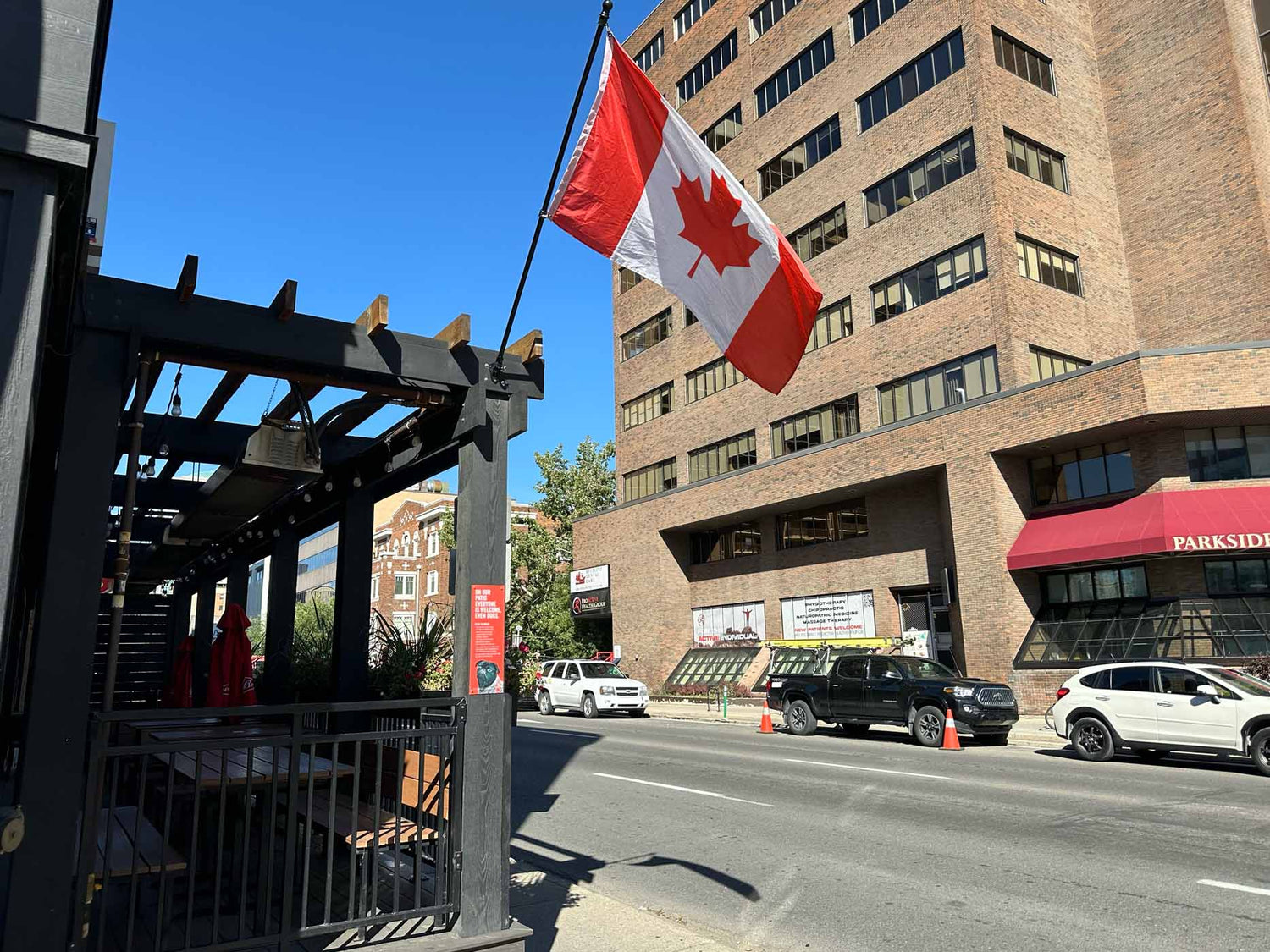
Every company has a story. Some begin in a boardroom, others in a garage or workshop. Calcana's story began during one of the most exciting moments in Canadian history.
In 1988, the world's attention turned toward Calgary, Alberta, as the city welcomed thousands of athletes, coaches, volunteers, officials, media members, and spectators for the XV Olympic Winter Games. For sixteen unforgettable days, Calgary became the center of the sporting world. The Games introduced millions of viewers to Canadian hospitality, showcased world-class athletic competition, and forever changed the future of winter sports in Canada. They also became the backdrop for the beginning of a company that would grow into one of North America's most respected infrared heating manufacturers.
That same year, Calcana was founded in Calgary, Alberta, with a vision of creating dependable, efficient infrared heating solutions capable of performing in Canada's harshest climates. While the world watched athletes compete for Olympic glory, Calcana's heating technology was already doing something equally important behind the scenes, helping keep Olympic facilities warm, comfortable, and operational throughout one of the largest sporting events ever held in Canada.
Unlike the medals, records, and television broadcasts that became part of Olympic history, heating systems rarely receive recognition. Yet every successful sporting event depends on countless pieces of infrastructure working flawlessly. Athletes need warm preparation areas. Officials need comfortable workspaces. Volunteers spend long hours outdoors before returning to heated facilities. Maintenance crews require dependable temperatures to perform their jobs efficiently. Spectators appreciate warm gathering spaces before and after competitions, while service personnel keep venues operating around the clock.
Heating may not determine who wins a gold medal, but it certainly influences the experience of everyone involved.
More than three decades later, Calcana continues to manufacture innovative infrared heating systems that warm restaurants, warehouses, manufacturing facilities, commercial patios, garages, sports complexes, golf facilities, industrial buildings, and hospitality venues throughout North America. Although the company has grown tremendously since 1988, its roots remain firmly planted in Calgary, the city where it all began.
As Canada continues to build upon its reputation as a global leader in winter sports, it's worth looking back at where that journey started. The 1988 Winter Olympics weren't simply another sporting event. They represented a defining moment for Calgary, for Canada, and for companies like Calcana that helped support one of the largest international events ever hosted on Canadian soil.
Calgary in 1988: A City Ready To Welcome the World & Set the Stage for a New Era of Winter Sports
Today, Calgary is recognized as one of Canada's fastest-growing metropolitan centers, known for its thriving energy sector, entrepreneurial spirit, and proximity to the Rocky Mountains. In the early 1980s, however, Calgary was still proving itself on the world stage.
Winning the bid to host the 1988 Winter Olympics was far more than an opportunity to organize an international sporting event. It was a chance to demonstrate that Western Canada could successfully host athletes and visitors from every corner of the globe.
After several unsuccessful Olympic bids in previous decades, Calgary was finally awarded the Games in 1981. The years that followed involved one of the largest construction and planning efforts in Canadian sporting history. Entire venues were built from the ground up, transportation networks expanded, thousands of volunteers were recruited, and countless businesses prepared for an influx of international visitors.
The investment transformed Calgary.
Canada Olympic Park emerged on the city's western edge, featuring ski jumps, bobsleigh and luge tracks, freestyle skiing facilities, and alpine venues that would later become home to generations of Canadian Olympians.
The Olympic Oval opened at the University of Calgary as the first fully enclosed 400-metre speed skating oval in the world, allowing athletes to compete without battling Alberta's unpredictable Chinook winds. Meanwhile, the Olympic Saddledome became home to figure skating and ice hockey competitions, while Canmore Nordic Centre welcomed cross-country skiing and biathlon events west of the city.
Each venue represented far more than concrete, steel, and glass.
They symbolized Canada's ambition.
Hosting nearly 1,500 athletes from 57 nations required an enormous amount of planning beyond the sporting competitions themselves. Temporary villages, athlete accommodations, maintenance buildings, hospitality spaces, equipment storage, transportation hubs, dining facilities, and operations centers all needed to function efficiently throughout two weeks of winter competition.
February in Calgary is beautiful, but it is also unpredictable.
Temperatures can fluctuate dramatically within hours. Snowstorms can arrive unexpectedly. Chinook winds may rapidly raise temperatures before another cold front moves through the city.
These changing conditions presented unique challenges for Olympic organizers.
Maintaining comfortable environments inside facilities while athletes continuously moved between indoor and outdoor venues required dependable heating systems capable of performing regardless of weather conditions.
Infrastructure wasn't merely important.
It was absolutely essential.
The Founding of Calcana
While Olympic organizers were putting the finishing touches on one of the largest sporting events in Canadian history, another story was quietly beginning.
In 1988, Calcana was founded in Calgary, Alberta.
The company's mission from the very beginning was straightforward: develop reliable gas-fired infrared heating systems capable of delivering exceptional performance in demanding Canadian environments.
That mission reflected life in Alberta.
Anyone who has experienced a Prairie winter understands that heating is far more than a convenience. Long winters, freezing temperatures, sudden weather changes, and strong winds demand heating equipment that performs consistently without sacrificing efficiency.
Calcana focused on infrared technology because it solved many of the shortcomings associated with traditional heating systems.
Instead of wasting energy attempting to heat massive volumes of moving air, infrared heating transfers radiant energy directly to people, equipment, floors, furniture, and work areas.
The principle is remarkably similar to standing in sunlight during a cold winter day.
The surrounding air may still feel cool, yet the warmth from the sun is immediately noticeable on your skin.
Infrared heaters create this same comfortable sensation by delivering radiant heat exactly where it is needed.
That approach offered tremendous advantages for commercial facilities, warehouses, industrial buildings, sports venues, outdoor patios, agricultural operations, aircraft hangars, and manufacturing facilities.
Even in 1988, Calcana recognized that effective heating wasn't simply about producing more heat.
It was about producing smarter heat.
This philosophy became the foundation upon which the company would continue growing for decades.
Today, Calcana heaters are installed across North America in restaurants, hotels, breweries, warehouses, manufacturing plants, sports facilities, loading docks, golf ranges, tennis clubs, pickleball facilities, garages, and countless other commercial applications. Yet every innovation traces its roots back to Calgary in 1988.
Why Heating Mattered During the Olympics
When people think about the Winter Olympics, they naturally focus on competition.
Gold medals.
World records.
National pride.
Historic performances.
Behind every unforgettable Olympic moment, however, exists an enormous support system that allows athletes to perform at their very best.
Heating plays a surprisingly significant role within that system.
Unlike summer sporting events, Winter Olympics present entirely different environmental challenges.
Athletes frequently transition between freezing outdoor conditions and indoor preparation areas.
Officials spend hours managing competitions in cold weather.
Volunteers assist spectators throughout the day before returning to heated operations centers.
Medical teams require comfortable treatment facilities.
Equipment technicians service highly specialized gear that often performs best within controlled temperatures.
Broadcast crews work around expensive electronic equipment sensitive to extreme cold.
Hospitality staff prepare meals around the clock.
Maintenance personnel continuously move between indoor and outdoor responsibilities.
Every one of these people benefits from dependable heating.
Comfort also influences performance.
Muscles perform better when properly warmed.
Recovery becomes more effective in comfortable environments.
Cold hands reduce dexterity for technicians, officials, and maintenance personnel.
Equipment becomes easier to inspect, repair, and prepare inside properly heated facilities.
Even spectators enjoy a dramatically improved Olympic experience when gathering areas remain warm and welcoming before and after competitions.
Heating therefore becomes part of the event itself, not visible to television audiences, but essential to making everything function smoothly.
How Calcana Helped Keep Olympic Facilities Comfortable
Although spectators remember the medals and memorable finishes, thousands of people experienced another side of the Calgary Olympics.
They experienced comfort.
As Calcana was founded in Calgary during the same remarkable year the city hosted the Winter Olympics, its infrared heating technology was utilized at Olympic facilities to help maintain comfortable environments for athletes and support personnel during the Games. Those installations reflected exactly what the company was created to do: provide dependable, efficient heat in demanding Canadian conditions.
Unlike portable heaters that occupy valuable floor space or forced-air systems that constantly chase fluctuating temperatures, infrared heating offered a practical solution for large facilities where comfort needed to be delivered quickly and efficiently.
Rather than attempting to heat every cubic foot of air inside expansive spaces, infrared systems focused warmth where people actually gathered and worked.
That approach made particular sense in Olympic environments.
Large doors frequently opened and closed.
Athletes and equipment continuously moved between venues.
Cold outdoor air regularly entered buildings.
Traditional heating systems often struggled to recover after every door opening because heated air escaped almost immediately.
Radiant heat behaved differently.
Instead of warming air that could quickly disappear, infrared energy warmed surrounding surfaces, equipment, and occupants directly. This allowed facilities to recover comfort levels efficiently despite constant activity throughout the Games.
For Olympic organizers, reliability mattered just as much as warmth.
Every venue operated on strict schedules. Every delay affected athletes, broadcasters, officials, volunteers, and spectators.
Heating systems needed to perform without interruption.
Calcana's commitment to dependable infrared heating aligned perfectly with those expectations.
Although few spectators realized it at the time, dependable heating quietly supported countless Olympic operations behind the scenes. It helped create welcoming environments where athletes could prepare, staff could perform their duties effectively, and visitors from around the world could experience the warmth of Canadian hospitality, even during the middle of a Calgary winter.
For Calcana, there could hardly have been a more fitting beginning.
The company was born in the very city that welcomed the world, and from its earliest days, its technology contributed to keeping people comfortable during one of Canada's most celebrated international events.
That legacy continues today.
More than thirty-five years later, every Calcana heater installed in a restaurant patio, industrial warehouse, sports complex, brewery, hotel, golf facility, or commercial building carries forward the same philosophy established in Calgary in 1988: dependable infrared heat, engineered for demanding environments, and proudly rooted in Canada.
The Biggest Moments of the 1988 Winter Olympics: Stories That Defined Calgary & Captured the World
The 1988 Winter Olympics were about much more than medals. While the Games showcased some of the greatest athletic performances of the era, Calgary became known for something even more memorable: the personalities, unexpected outcomes, and emotional moments that brought the world together.
For 16 days in February 1988, Calgary became the centre of winter sports. Athletes from 57 nations competed across alpine skiing, bobsleigh, figure skating, hockey, speed skating, ski jumping, and more. The Games introduced new approaches to Olympic presentation, created unforgettable sporting rivalries, and produced stories that continued to inspire generations long after the Olympic flame was extinguished.
For Calcana, a Calgary-founded company entering its first year of operation, these Games represented the same values that continue to define the company today: innovation, reliability, and creating comfortable environments where people can perform at their best. Behind every Olympic moment was a network of facilities, teams, and support systems designed to help athletes focus on what mattered most, competition.
From the ice at the Olympic Oval to the slopes of Canada Olympic Park, the 1988 Winter Olympics demonstrated the importance of having world-class infrastructure capable of supporting elite performance. These venues needed to protect athletes from Calgary’s unpredictable winter conditions while maintaining precise environments where every fraction of a second mattered.
Among all the incredible stories from Calgary 1988, several moments became permanently connected with Olympic history.
The Battle of the Brians: One of Figure Skating’s Greatest Rivalries
Few Olympic competitions have ever created as much anticipation as the men’s figure skating event at Calgary 1988. The world watched as two athletes with the same first name, Canada’s Brian Orser and America’s Brian Boitano, faced off in what became famously known as the “Battle of the Brians.”
The rivalry was the perfect example of what makes the Olympics so captivating. Both skaters arrived in Calgary as established stars with impressive careers, different styles, and enormous expectations placed upon them.
Brian Orser entered the Games as Canada’s hometown favourite. Born in Belleville, Ontario, Orser had already become one of Canada’s most successful figure skaters. He was a two-time world champion and had won Olympic silver at the 1984 Winter Olympics in Sarajevo.
Competing in front of a Canadian crowd created a unique atmosphere. Thousands of fans packed the arena hoping to witness a historic home-country victory. Orser carried not only his own Olympic dreams but also the expectations of an entire nation.
Across the ice stood Brian Boitano, an American skater known for his athletic power, technical precision, and innovative approach to the sport. Boitano had developed a reputation as one of the strongest competitors in the world and entered Calgary determined to claim Olympic gold.
The competition was incredibly close. Both athletes delivered memorable performances, with each showcasing different strengths. Orser brought elegance, artistry, and technical consistency, while Boitano delivered powerful jumps and a commanding presence on the ice.
In the end, Boitano captured the gold medal, while Orser earned silver. Although Canada did not receive the gold medal many fans hoped for, Orser’s performance became one of the defining achievements of Canadian Olympic history.
The Battle of the Brians represented everything great about Olympic competition: two elite athletes pushing each other to perform at their highest level while earning respect from competitors and fans around the world.
It also demonstrated the importance of the environment surrounding elite athletes. Figure skating requires incredible precision, concentration, and consistency. The athletes relied on carefully designed facilities where temperature control, ice conditions, and spectator comfort all played important roles.
For a Calgary-based company like Calcana, seeing world-class athletes compete in carefully maintained venues reinforced the importance of creating reliable heating solutions. Whether supporting an Olympic facility, a commercial space, or an outdoor gathering area, maintaining comfortable conditions allows people to focus on the experience itself.
Eddie the Eagle: The Underdog Who Won the Hearts of the World
While Olympic champions often become remembered for their victories, Calgary 1988 proved that winning medals is not the only way to leave a legacy.
Few athletes embodied the Olympic spirit more than Michael Edwards, better known as “Eddie the Eagle.”
The British ski jumper arrived in Calgary without the traditional background of an Olympic favourite. He had limited experience compared to the dominant ski jumping nations and faced overwhelming odds against competitors from countries with decades of training programs and established winter sport cultures.
However, Eddie’s determination and personality made him one of the most recognizable athletes of the Games.
Edwards competed in both the 70-metre and 90-metre ski jumping events, finishing last in each competition. From a traditional competitive perspective, his results were far from medal-winning performances. Yet his courage, enthusiasm, and willingness to pursue an almost impossible dream captured the attention of fans worldwide.
The crowd embraced Eddie because his story represented the heart of the Olympic movement. He was not competing because he was guaranteed success. He was competing because he believed he belonged.
His appearance in Calgary helped redefine how people viewed Olympic achievement. The Games were not only about the fastest, strongest, or most technically skilled athletes. They were also about dedication, perseverance, and the courage to attempt something extraordinary.
Eddie’s popularity became so significant that he gained international recognition following the Games, eventually becoming one of the most famous non-medal-winning Olympians in history. His story later inspired the 2016 film Eddie the Eagle, introducing his journey to a new generation of fans.
For Calgary, Eddie represented another important aspect of the 1988 Olympics: the ability of the city and its venues to bring people together. Fans did not only celebrate champions. They celebrated athletes who demonstrated passion, determination, and sportsmanship.
That same philosophy connects closely with Calcana’s roots. Since being founded in Calgary in 1988, the company has focused on creating heating solutions that allow people to enjoy important moments comfortably, regardless of the environment around them.
The Jamaican Bobsled Team: A Story That Inspired the World
Another unforgettable story from Calgary 1988 came from a team that entered the Winter Olympics with almost no history in the sport.
The Jamaican bobsled team made its Olympic debut in Calgary, introducing many viewers around the world to a group of athletes competing in one of the coldest and most technically demanding sports despite coming from a tropical nation.
The idea of Jamaica competing in bobsleigh seemed almost impossible. The country had no traditional winter sports background, no long history of bobsled competition, and limited resources compared to established programs from countries like Switzerland, Germany, and the Soviet Union.
However, the athletes embraced the challenge.
The original team included Dudley Stokes, Devon Harris, Michael White, and later Chris Stokes and others who helped establish Jamaica’s Olympic bobsled program. Many of the athletes came from athletic backgrounds that emphasized speed, strength, and determination.
When they arrived in Calgary, they immediately became one of the most popular teams at the Games.
Although they did not achieve a medal performance, their presence represented something much bigger than results. They challenged traditional ideas about who could participate in winter sports and inspired millions of people around the world.
During the four-man event, the team famously crashed during their run. Rather than abandoning the sled, the athletes pushed it across the finish line while spectators cheered them on. That moment became one of the most recognizable images of the Calgary Olympics.
Their story later inspired the popular Disney movie Cool Runnings, which introduced the Jamaican bobsled team’s journey to audiences worldwide.
The legacy of the Jamaican team continues because it reflects one of the most important messages of the Olympics: participation, courage, and determination matter.
The Calgary Games created a platform where athletes from every background could share their stories. From medal favourites to unlikely competitors, every athlete contributed to the spirit of the event.
Canadian Athletes & the Challenge of Competing at Home
Hosting the Olympics creates a unique pressure for the host nation. Canadian athletes entered Calgary 1988 with the support of an entire country behind them, but they also faced enormous expectations.
The results were complicated.
Canada finished the Games with five medals: two silver and three bronze. While Canadian athletes delivered several memorable performances, the country became the first host nation in Winter Olympic history to finish the Games without winning a gold medal.
Although disappointing at the time, the experience became a turning point for Canadian sport.
One of Canada’s strongest performances came from Elizabeth Manley in women’s figure skating. Manley entered the competition as an underdog but delivered a remarkable performance that earned her a silver medal. Her emotional achievement became one of Canada’s favourite moments from the Games.
Canada also earned bronze in ice dance through Tracy Wilson and Rob McCall, marking the country’s first Olympic medal in the event.
In alpine skiing, Karen Percy became one of Canada’s standout performers, earning two bronze medals. Her success demonstrated Canada’s ability to compete internationally across multiple winter sports disciplines.
The absence of a gold medal created national reflection. Rather than viewing the results only as disappointment, Canadian sports organizations used Calgary 1988 as motivation to improve athlete development programs.
The lessons learned from these Games contributed to major changes in Canadian high-performance sport. Over the following decades, Canada invested heavily in athlete development, coaching, facilities, and training systems. These improvements helped Canada achieve unprecedented success at future Olympic Games, including the 2010 Vancouver Winter Olympics.
The Calgary Olympics showed Canada that world-class facilities alone were not enough. Success required a complete ecosystem supporting athletes from development programs through elite competition.
Olympic Innovations That Changed the Games Forever
Beyond the individual stories, Calgary 1988 introduced several innovations that influenced future Olympic Games.
One of the most significant changes was the move toward a 16-day Winter Olympics schedule. Calgary expanded the traditional Olympic timeline to include three weekends, increasing opportunities for spectators and television audiences around the world.
The Games also transformed the fan experience.
Calgary introduced nightly medal ceremonies at Olympic Plaza, creating celebrations where athletes and spectators could share memorable moments together. These events helped bring the Olympics beyond competition venues and into the heart of the city.
The Olympic Oval also represented a major technological advancement. Speed skating was held indoors at the Olympics for the first time, providing athletes with a controlled environment protected from outdoor weather conditions. The facility quickly became known as one of the fastest speed skating venues in the world, with numerous records being set during its early years.
This innovation highlighted the importance of environmental control in athletic performance. Temperature, humidity, and facility conditions can dramatically influence results in sports where milliseconds determine victory.
The same principle applies across countless industries today. Whether it is an Olympic venue, manufacturing facility, restaurant patio, or commercial workspace, the environment surrounding people impacts their comfort and performance.
That connection remains central to Calcana’s story.
Founded in Calgary during the same year the world arrived for the Winter Olympics, Calcana began its journey in a city focused on innovation, engineering, and creating solutions for challenging environments.
The 1988 Winter Olympics proved that Calgary could compete on the world stage. It showed the importance of preparation, infrastructure, and technology in creating successful experiences.
For Calcana, it was the beginning of a legacy built around keeping people comfortable, from Olympic facilities filled with athletes from around the world to modern commercial and residential spaces across North America.
The same spirit of innovation that defined Calgary 1988 continues to inspire the company today.
Canada’s Olympic Legacy, Calcana’s Evolution, & the Future of Infrared Heating in Sports Facilities
The 1988 Winter Olympics in Calgary represented much more than a 16-day sporting event. While the Games created unforgettable memories through dramatic competitions, international underdog stories, and historic athletic performances, their greatest impact came through the lasting legacy they created for Canadian sport, infrastructure, and innovation.
For Calgary, the Olympics transformed the city into a global winter sports destination. The facilities built and upgraded for the Games became training grounds for generations of athletes, while the experience of hosting the world’s largest winter sporting event reshaped how Canada approached athlete development. Although the results on the medal table did not meet expectations, the lessons learned from Calgary 1988 helped create the foundation for Canada’s future success at events such as the 2010 Winter Olympics in Vancouver.
For Calcana, the same year marked the beginning of a journey rooted in Canadian innovation. Founded in Calgary, Alberta, in 1988, Calcana entered the market with a mission to develop reliable heating solutions that could provide comfort in demanding environments. From the cold conditions of Western Canada to industrial facilities, commercial spaces, restaurants, and sports venues around the world, Calcana’s infrared heating technology has continued to evolve while staying connected to its original roots.
The same principles that mattered during the 1988 Olympics still matter today. Athletes, coaches, spectators, and facility operators require comfortable environments that support performance, safety, and efficiency. Whether it is an indoor hockey arena, outdoor training facility, golf range, tennis court, or community sports complex, effective heating plays an essential role in creating spaces where people can perform at their best.
Canada’s Long-Term Olympic Legacy
When Calgary won the bid to host the 1988 Winter Olympics, the city took on the challenge of introducing the world to Western Canadian hospitality while creating facilities capable of hosting the greatest winter athletes on the planet.
The result was a transformation that extended far beyond the closing ceremonies.
Before Calgary 1988, Canada had hosted the 1976 Summer Olympics in Montreal, an event remembered for its financial challenges. The Calgary Games provided a different outcome. Through careful planning, sponsorship, community involvement, and strong organization, the Olympics generated approximately $140 million in surplus revenue. This represented a significant achievement and demonstrated that major sporting events could create lasting value when managed effectively.
More importantly, Calgary 1988 left behind world-class infrastructure that continues to serve athletes and communities decades later.
Facilities such as Canada Olympic Park, the Olympic Oval, the Canmore Nordic Centre, and the Olympic Saddledome became permanent reminders of the event’s impact. These venues were not simply designed for two weeks of competition; they became training environments where Canadian athletes could develop their skills year after year.
This approach changed the future of Canadian winter sports.
Before Calgary 1988, many Canadian athletes struggled with limited access to elite training facilities compared to competitors from countries with stronger winter sports traditions. The Olympic legacy helped close that gap by creating dedicated spaces for athletes in hockey, skiing, skating, bobsleigh, luge, and other disciplines.
The Olympic Oval, in particular, became one of the most influential facilities created from the Games. As the first fully enclosed speed skating oval used during an Olympic competition, it provided athletes with a controlled environment where they could train regardless of weather conditions. The facility later became known as one of the fastest speed skating tracks in the world and helped Canadian athletes achieve international success.
The legacy of Calgary 1988 also changed how Canada supported athletes financially. The Games highlighted the need for improved development programs and long-term investment in high-performance sport. The disappointment of leaving the Olympics without a gold medal became a turning point rather than a failure.
A Medal Wake-Up Call That Changed Canadian Sport
One of the most discussed aspects of Calgary 1988 was Canada’s performance on home soil.
Despite having the advantage of hosting the Games, Canada became the first host nation in Winter Olympic history to finish without a gold medal. Canadian athletes earned two silver medals and three bronze medals, but the absence of gold created national disappointment.
However, this result became one of the most important moments in Canadian sporting history.
Rather than accepting the outcome, Canadian sport organizations used the experience as motivation to improve. The country recognized that passion alone was not enough to compete at the highest level. Athletes needed better coaching, improved funding, advanced facilities, and stronger development systems.
The lessons from Calgary directly contributed to future improvements in Canadian winter sports.
By the time Vancouver hosted the 2010 Winter Olympics, Canada had completely transformed its approach. The country invested heavily in athlete preparation, scientific training methods, coaching development, and facility improvements. The result was historic success, with Canada winning 14 gold medals on home soil, the most gold medals ever won by a country at a single Winter Olympics at that time.
The journey from Calgary’s gold medal shutout to Vancouver’s record-setting performance demonstrates the importance of long-term vision. The 1988 Olympics were not defined by what happened during the competitions alone. They were defined by what Canada built afterward.
How Calcana Has Evolved From 1988 to Today
The same year Calgary welcomed athletes from around the world, Calcana was founded in Calgary, Alberta, beginning a story built around solving heating challenges in demanding environments.
From the beginning, Calcana’s focus has been developing infrared heating technology that delivers efficient, targeted warmth. Traditional heating systems often struggle in large or open spaces because they attempt to heat the air itself. In environments such as warehouses, workshops, patios, and sports facilities, this approach can lead to wasted energy and inconsistent temperatures.
Infrared heating provides a different solution.
Instead of relying on heated air circulation, infrared heaters produce radiant energy that travels through the space and warms objects, surfaces, and people directly. This approach creates immediate comfort while reducing energy waste.
Over the decades, Calcana has continued improving its technology to meet the changing needs of businesses, homeowners, and facility operators.
Modern sports facilities face increasingly complex heating challenges. Operators must maintain comfortable temperatures while controlling energy consumption. They need solutions that support athletes, spectators, and staff without interfering with the activities taking place.
This is especially important in facilities where air movement can affect performance.
For example, sports such as pickleball, tennis, golf, and other precision-based activities depend on consistent environmental conditions. Forced-air heating systems can create unwanted drafts that influence ball movement, impact accuracy, and create inconsistent playing conditions.
Infrared heating avoids many of these challenges because it warms people and surfaces without creating strong air currents.
This makes infrared technology particularly valuable for modern athletic environments where comfort and performance must work together.
Infrared Heating in Modern Sports Facilities
Today’s sports facilities are designed with year-round use in mind. Whether it is an indoor training centre, outdoor recreation space, professional arena, or community facility, maintaining comfortable conditions is essential.
Heating is not simply about keeping people warm, it is about protecting the quality of the experience.
Golf Ranges & Training Facilities
Golf facilities often operate throughout colder months, especially in regions like Canada where winter conditions can limit outdoor activities.
Traditional forced-air systems can create challenges because moving air affects both player comfort and the flight of golf balls. Even small environmental changes can influence trajectory, especially for professional players or individuals practicing precise shots.
Infrared heaters provide warmth without disrupting the surrounding environment. Players can focus on improving their technique rather than adjusting to uncomfortable temperatures or inconsistent conditions.
Outdoor golf ranges, covered hitting bays, and training facilities can benefit from strategically placed infrared heaters that create comfortable zones where golfers spend their time.
Pickleball & Tennis Facilities
Pickleball and tennis have experienced tremendous growth in popularity across North America. As more facilities expand indoor and outdoor playing opportunities, maintaining proper heating has become increasingly important.
These sports rely heavily on ball movement, timing, and accuracy. Forced-air heating systems can introduce unwanted airflow that changes the movement of lightweight balls.
For professional and competitive players, even small environmental factors can affect performance.
Infrared heaters offer an advantage by providing warmth without disturbing the playing environment. Players can enjoy comfortable temperatures while maintaining consistent court conditions.
This allows facilities to extend their seasons, increase court availability, and improve the overall experience for athletes.
Hockey Arenas & Ice Facilities
Hockey has always been deeply connected to Canadian culture, and Calgary’s Olympic history reflects that connection.
Modern hockey arenas require careful temperature management. While the ice surface must remain cold enough for optimal playing conditions, spectators, coaches, and staff need comfortable environments.
Infrared heating can help address comfort needs in specific areas such as:
-
Player benches
-
Training areas
-
Locker rooms
-
Maintenance spaces
-
Spectator zones
-
Outdoor viewing areas
Rather than overheating an entire facility, targeted infrared heating allows operators to provide warmth exactly where it is needed.
Outdoor Sports & Recreation Spaces
One of the biggest advantages of infrared heating is its ability to extend the usable season of outdoor spaces.
Restaurants, golf courses, sports clubs, and recreation facilities increasingly use outdoor areas as valuable revenue opportunities. However, colder temperatures can limit how long these spaces remain comfortable.
Infrared heaters allow businesses and organizations to maximize their investments by creating warm, inviting environments even during cooler seasons.
This approach supports community engagement, increases facility usage, and improves customer experiences.
Why Sports Venues Around the World Continue To Choose Calcana
Since its founding in Calgary in 1988, Calcana has remained focused on developing heating solutions that perform in challenging environments.
That commitment has allowed the company to support a wide range of applications, from industrial facilities and commercial patios to sports venues and recreation spaces.
Sports organizations choose heating systems based on several important factors:
Reliable Performance
Sports facilities cannot afford unreliable equipment. Heating systems must perform consistently through changing conditions, heavy usage, and demanding environments.
Calcana infrared heaters are designed to provide dependable warmth when facilities need it most.
Energy Efficiency
Large sports facilities often face significant energy costs. Traditional systems can waste energy by heating unused areas or constantly compensating for heat loss.
Infrared technology provides targeted heating that helps reduce unnecessary energy consumption.
Minimal Air Disruption
For sports requiring precision and control, maintaining consistent conditions is essential.
Infrared heating provides warmth without creating excessive airflow, helping preserve the environment athletes need to perform.
Flexible Installation Options
Every facility has unique requirements. Ceiling heights, layouts, seating arrangements, and usage patterns all influence heating needs.
Calcana offers mounting solutions and installation options designed to integrate seamlessly into different environments.
Conclusion: A Canadian Legacy Built Around Innovation
The story of Calcana and the 1988 Winter Olympics begins in the same place: Calgary, Alberta.
In 1988, the world came together in Calgary to celebrate winter sports, competition, and international achievement. The Games created unforgettable memories through athletes like Brian Boitano, Brian Orser, Eddie the Eagle, and the Jamaican bobsled team. They also created a legacy that transformed Canadian sport for generations.
That same year, Calcana began its own journey.
Founded in Calgary during one of the most important moments in Canadian winter sports history, Calcana has spent decades developing heating solutions that help people stay comfortable in some of the most challenging environments.
From Olympic facilities in Calgary to modern sports venues around the world, the need for reliable heating remains the same. Athletes need comfortable spaces to train. Fans need enjoyable environments to watch events. Facility operators need efficient solutions that support their goals.
Infrared heating continues to provide that solution.
By delivering targeted warmth, reducing energy waste, and maintaining comfortable conditions without unnecessary airflow, Calcana infrared heaters help sports facilities create better experiences for everyone involved.
The legacy of Calgary 1988 was not only about the athletes who competed, it was about the infrastructure, innovation, and ideas that continued long after the Olympic flame went out.
For Calcana, that legacy continues today.
Built in Calgary. Inspired by Canadian winters. Designed to keep people comfortable wherever they gather.

Leave a comment
This site is protected by hCaptcha and the hCaptcha Privacy Policy and Terms of Service apply.