

Creating a comfortable outdoor space is about more than choosing the right furniture and décor. Whether you have a residential patio, a backyard entertaining area, or a commercial outdoor dining space, having a reliable source of warmth can make a significant difference in how often you use it. As temperatures begin to drop, outdoor heating options such as infrared patio heaters and fire pits offer ways to make cooler evenings more enjoyable.
Both options can add warmth and atmosphere to an outdoor space, but they work in very different ways. Fire pits create a central gathering point with an open flame, while infrared heaters provide radiant warmth directed toward people and objects within their coverage area. Each has its own advantages depending on the size of your patio, how you plan to use it, and the type of experience you want to create.
So, when comparing infrared heaters vs. fire pits, which is the better choice for your patio?
The answer depends on your priorities. If you want a traditional outdoor gathering space with the visual appeal of a fire, a fire pit may be a good fit. If you are looking for targeted warmth, flexible placement, and a heating solution that can be mounted overhead or along a wall, an infrared patio heater may be the more practical option.
Understanding how each system works, along with its benefits and limitations, will help you choose the right heating solution for your outdoor space.
Infrared patio heaters use radiant energy to provide warmth directly to people, objects, and surfaces within their effective coverage area. Rather than relying primarily on heating the surrounding air, they emit infrared energy that travels outward and is absorbed by the surfaces it reaches.
This approach is particularly useful in outdoor environments because warm air can move away from an open patio, especially when wind is present. Instead of depending entirely on maintaining a pocket of warm air around the seating area, infrared heaters provide radiant warmth directly to guests and nearby objects.
Gas-fired infrared heaters, such as Calcana's PH Series, use a gas burner to generate heat that is transferred to a radiant surface. The heated surface then emits infrared energy toward the intended area. These systems are designed for outdoor heating applications, including residential patios, restaurant patios, and other hospitality spaces.
One of the main advantages of infrared patio heaters is their ability to provide targeted warmth. Depending on the model, installation height, output, and placement, multiple heaters can be positioned to serve different seating areas or zones.
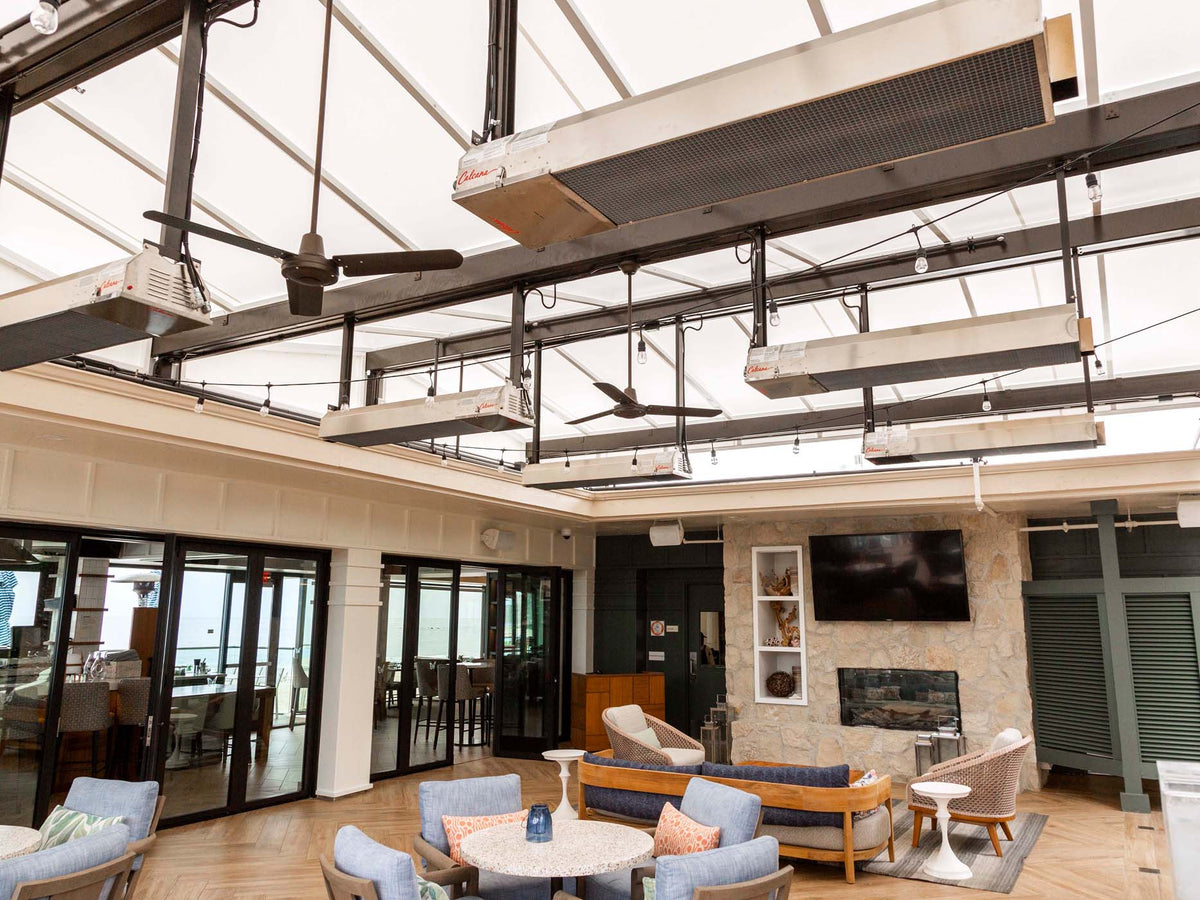
Infrared heaters can also be installed in different configurations. Wall-mounted and ceiling-mounted options help keep equipment off the ground, leaving more room for furniture, walkways, and guests. This can be especially beneficial for smaller patios or commercial spaces where every square foot matters.
However, infrared heating still depends on proper placement and suitable operating conditions. Strong wind, incorrect mounting height, or poorly planned coverage can affect comfort. Choosing a heater that matches the size and exposure of the patio is essential to getting the best results.
Fire pits on the other hand provide warmth through an open flame, creating a traditional outdoor fire experience. They are available in several styles and fuel types, including wood-burning, natural gas, and propane models.
Wood-burning fire pits produce heat through the combustion of wood. As the fire burns, it releases radiant heat that can be felt by people sitting nearby. The flames also produce light, movement, and the familiar crackling sounds associated with an outdoor fire.
Gas fire pits operate using natural gas or propane and typically produce a controlled flame at the centre of the unit. They offer the visual appeal of a fire without requiring users to continually add wood or manage burning logs. Depending on the design, gas fire pits may be built into a permanent outdoor feature or used as standalone units.
Unlike an overhead infrared heater, a fire pit generally creates a central gathering point. Guests sit around the flame and receive warmth from the fire, making the arrangement naturally suited to smaller groups and social settings.
The amount of warmth a fire pit provides depends on its size, fuel source, flame characteristics, surrounding conditions, and the distance between the fire and the people sitting nearby. Guests closer to the flame may feel considerably warmer than those farther away. Wind can also affect how heat and smoke move through the seating area.
Fire pits are often selected as much for their atmosphere as their heating capabilities. They can become a focal point for outdoor entertaining, adding a visual feature that encourages guests to gather around and spend time together.
Infrared Heaters vs. Fire Pits: Comparing Heating Performance, Heat Distribution, & Outdoor Comfort
When choosing between an infrared heater and a fire pit, one of the most important considerations is how effectively each option provides warmth to the people using your patio.
Although both produce radiant heat, their designs and typical applications are different.
Targeted Heating vs. Centralized Warmth
Infrared patio heaters are designed to direct radiant energy toward a designated area. When installed in the right locations, they can provide warmth over tables, seating arrangements, or specific sections of a patio.
This makes them useful for spaces where people are spread across multiple seating areas. Rather than asking everyone to gather around one central source of heat, restaurant owners and homeowners can position heaters to serve different parts of the patio.
Fire pits, on the other hand, typically provide warmth around a central point. They work well when the goal is to create a gathering area where people can sit together and enjoy the fire.
For a small backyard seating arrangement, this may be exactly what you want. However, a single fire pit may not provide sufficient warmth for guests seated farther away or across a larger patio.
Performance in Outdoor Conditions
Outdoor heating presents challenges that are different from heating an enclosed room. Wind, open surroundings, temperature changes, and the arrangement of furniture can all influence how comfortable a patio feels.
Infrared heating can be advantageous because it delivers radiant energy directly to people and objects rather than relying primarily on heating the air. This can make it a practical option for outdoor seating areas where moving air would otherwise carry warmth away.
Fire pits also produce radiant heat, but their open-flame design can make the experience more dependent on where guests are sitting and how the wind moves through the area. Smoke from wood-burning fires can also become an issue when wind changes direction.
Neither option is completely unaffected by outdoor conditions. Strong winds and very cold temperatures can reduce comfort regardless of the heating system. The layout, exposure, and positioning of the heating equipment should always be considered.
Heating Larger Patio Areas
For larger patios, infrared heaters can offer greater flexibility because multiple units can be installed throughout the space. Each heater can be positioned to serve a particular seating zone, helping restaurant owners and homeowners create a more distributed heating arrangement.
A single fire pit is generally better suited to a defined gathering area. While larger fire features are available, increasing the size of a fire does not necessarily provide even warmth throughout an expansive patio.
If you regularly entertain larger groups or operate a commercial patio with multiple tables, infrared heaters may be a more practical primary heating solution. Fire pits can still be incorporated as an additional feature in designated gathering areas.
Comfort & Guest Experience
Heating performance is important, but the overall experience matters just as much. The right outdoor heating solution should complement the way you use your patio and help create an environment where guests want to spend time.
The Atmosphere of a Fire Pit
One of the biggest advantages of a fire pit is its atmosphere. An open flame creates a natural focal point that can make an outdoor space feel inviting and relaxing.
Fire pits are particularly popular for backyard entertaining. They provide a place for friends and family to gather, share conversations, roast marshmallows, and enjoy an evening outdoors. The flickering flames and warmth create an experience that many people associate with camping, outdoor gatherings, and cooler evenings around a fire.
For homeowners who prioritize ambience and the traditional experience of an outdoor fire, a fire pit can be an excellent addition.
Restaurants and hospitality businesses may also use fire features to create an attractive outdoor setting. A well-designed fire pit can add visual interest to a lounge area or designated gathering space.
However, the layout needs to account for the space required around an open flame, as well as the applicable safety requirements. Fire pits are not always practical around tightly arranged dining tables or high-traffic service areas.
The Practicality of Infrared Heating
Infrared heaters focus on providing warmth without requiring guests to gather around a central feature. This can make them a more practical option for patios where people want to continue their usual activities, whether that means dining, entertaining, relaxing, or moving between different seating areas.
For restaurant owners, this is particularly useful. Guests can remain seated at their tables and enjoy their meals while receiving warmth from overhead or wall-mounted heaters. Staff can also move around the patio without having to work around a fire pit in the middle of the seating area.
For homeowners, infrared heaters can help make existing outdoor spaces more comfortable without significantly changing the layout. Wall-mounted and ceiling-mounted models can be positioned above seating areas, leaving the floor available for furniture and other outdoor features.
The equipment can also be integrated into the design of covered patios, pergolas, and other suitable structures, provided the installation meets the heater's requirements and applicable codes.
Installation & Placement: What Works Best for Your Patio?
Installation is another important difference between infrared patio heaters and fire pits. The best option depends on the available space, existing structures, fuel supply, and how permanent you want the heating feature to be.
Mounting Infrared Patio Heaters
One of the main advantages of many infrared patio heaters is their mounting flexibility. Depending on the model, they may be installed on suitable walls, ceilings, or overhead structures.
Wall-mounted heaters are useful when you want to direct warmth toward a particular seating area without placing equipment on the ground. They can be installed along the perimeter of a patio or near designated seating zones.
Ceiling-mounted heaters are a good option for covered outdoor spaces. Positioning equipment overhead keeps the floor clear and allows warmth to be directed toward tables and seating below.
For commercial patios, this can help maintain a clean and organized layout while preserving space for staff and guests. For residential patios, overhead mounting can also help keep the heating equipment out of the way of furniture and everyday activities.
Installation requirements vary by heater model. Mounting height, orientation, structural support, clearances, fuel connections, combustion air, exhaust, and ventilation must all be considered for gas-fired systems. A qualified professional should assess the site and complete the installation in accordance with manufacturer instructions and local requirements.
Installing a Fire Pit
Fire pits are available in portable and permanent designs. Portable models can be moved around a patio when not in use, while built-in fire pits are generally incorporated into a permanent outdoor living area.
A portable fire pit may be a convenient option for homeowners who want flexibility. However, it still needs to be positioned on a suitable surface and kept at the required distance from combustible materials, furniture, structures, and other potential hazards.
Permanent fire pits require more planning. Their placement should account for seating arrangements, access, surrounding materials, wind exposure, and fuel supply. Gas models may require a dedicated gas connection, while wood-burning options need appropriate space for storing fuel and managing ash.
The open flame also means that furniture and walkways must be arranged carefully. In a commercial environment, restaurant owners need to consider guest movement, staff access, and the additional safety procedures associated with operating an open-flame feature.
Before installing either option, check local building, fire, gas, and outdoor-burning regulations. Some municipalities and properties have restrictions on wood-burning fires or specific requirements for permanent gas installations.
Energy Use and Operating Costs
The cost of operating an outdoor heating system is another factor to consider. Both infrared heaters and fire pits require fuel, but the amount used depends on the equipment, operating schedule, output, and outdoor conditions.
Operating Costs of Infrared Heaters
Gas-fired infrared patio heaters use natural gas or propane to generate radiant warmth. Their fuel consumption varies depending on the model and its rated output.
One advantage of infrared heating is the ability to direct warmth toward designated seating areas. This can help avoid relying on a heating system that attempts to warm the entire outdoor environment.
Some models also offer adjustable heat output or control options, allowing operators to manage heating based on the conditions and how the patio is being used. Where zoning or individual controls are available, different sections of a patio can be operated according to demand.
Restaurant owners should consider how long heaters will operate during each service period and whether all outdoor seating areas need to be heated simultaneously. Homeowners should think about whether the patio will be used occasionally or throughout the week.
Comparing the rated fuel consumption of different models is a useful starting point when estimating operating costs. Installation expenses, maintenance, and fuel availability should also be included when evaluating the overall investment.
Operating Costs of Fire Pits
Fire pit operating costs depend heavily on the fuel type. Wood-burning fire pits require a steady supply of firewood, and the cost can vary depending on the type of wood, local availability, and how frequently the fire is used.
Gas fire pits use natural gas or propane. Their operating costs depend on fuel consumption, flame output, and the length of time the fire is running.
A decorative flame may be used primarily for atmosphere, while a larger fire pit intended to provide more warmth may consume more fuel. Restaurant owners and homeowners should review the manufacturer's specifications to understand expected fuel requirements.
It is also worth considering the additional work associated with wood-burning models. Purchasing, transporting, storing, and preparing firewood all contribute to the time and effort required to operate the fire pit.
The most economical option will depend on how often you use your patio, the size of the area, and the specific heating equipment. Comparing fuel requirements and operating schedules is more useful than assuming one technology will always cost less than the other.
Maintenance & Long-Term Durability
Outdoor heating equipment is exposed to the elements, so maintenance should be part of your decision.
Infrared patio heaters generally require periodic inspection and cleaning in accordance with the manufacturer's recommendations. For gas-fired models, this may include checking gas connections, burner components, reflectors, and other parts of the system to confirm that everything is operating correctly.
The amount of maintenance required depends on the heater's design and the environment in which it is installed. Patios in coastal regions, for example, may expose equipment to moisture and salt air, making material selection and regular inspections particularly important.
Calcana's PH Series patio heaters are constructed using standard 304 stainless steel, with optional 316 marine-grade stainless steel available for applications where additional corrosion resistance may be beneficial.
Fire pits also require regular care. Wood-burning models need ash removal, cleaning, and inspection of the fire bowl or surrounding materials. Gas fire pits require checks of the burner, fuel connections, and other components according to the manufacturer's instructions.
Permanent fire pits may also require attention to surrounding stone, concrete, or other construction materials over time. Weather exposure, heat, and regular use can affect these surfaces.
Both options can provide long-term value when properly selected and maintained. However, restaurant owners and homeowners should consider how much ongoing care they are willing to manage before making a decision.
Safety Considerations: Infrared Heaters vs. Fire Pits
Safety should always be part of the planning process when introducing heating equipment to an outdoor space. Both infrared heaters and fire pits generate heat and require proper installation, operation, and maintenance.
Infrared heaters must be installed with the clearances specified by the manufacturer. Wall-mounted and ceiling-mounted units need suitable structural support and must be positioned away from combustible materials and other objects that could interfere with safe operation.
Gas-fired infrared heaters also require appropriate fuel connections, combustion air, exhaust, and ventilation. These requirements vary by model and installation environment, so professional installation is important.
Fire pits have the additional consideration of an exposed flame. Guests, children, pets, furniture, and nearby combustible materials must be kept at appropriate distances. Wood-burning fire pits also produce sparks, smoke, and hot ash, which require careful handling.
For commercial patios, restaurant operators should consider the effect of open flames on guest movement, staff activities, and emergency access. Local fire regulations and property requirements may restrict where fire pits can be installed or whether certain types of outdoor fires are permitted.
Neither heating option should be left unattended or operated outside the manufacturer's instructions. Regular inspections, suitable placement, and clear operating procedures help reduce the risks associated with outdoor heating.
Which Is Best for Your Patio?
After comparing infrared heaters and fire pits, it becomes clear that the best choice depends on what you want your outdoor space to accomplish.
A fire pit is a strong option when atmosphere and social gathering are the main priorities. It creates a central feature that encourages people to sit together, enjoy the flames, and spend time outdoors. For smaller residential patios, lounge areas, or designated gathering spaces, this traditional experience can be difficult to replace.
Infrared heaters are often the more practical choice when consistent, targeted warmth and flexible seating arrangements are important. They can be positioned to serve multiple areas, mounted overhead or along walls, and incorporated into patios where floor space needs to remain open.
For restaurants, infrared heaters can be particularly useful because guests can remain comfortably seated at their tables without having to gather around a central fire feature. They also offer greater flexibility when planning heating coverage across larger outdoor dining areas.
Some patios may benefit from using both. A restaurant or homeowner could install infrared heaters as the primary heating solution and include a fire pit in a separate lounge or gathering area. This approach combines practical heating with the atmosphere of an outdoor flame, provided the layout and installations meet all applicable safety requirements.
Before making a decision, consider the following questions:
-
How large is your patio? Larger spaces or patios with multiple seating zones may benefit from several strategically placed infrared heaters.
-
How will you use the space? Dining areas, walkways, and lounge spaces have different heating and layout requirements.
-
Is atmosphere or targeted warmth your priority? Fire pits create a visual focal point, while infrared heaters focus on delivering warmth to designated areas.
-
How exposed is the patio? Wind, temperature, and surrounding structures can influence the performance of both options.
-
How much maintenance are you comfortable with? Wood-burning fire pits require ongoing ash and fuel management, while gas-fired equipment requires inspections and servicing.
-
What installation options are available? Existing walls, overhead structures, fuel connections, and local regulations may influence which option is suitable.
Taking the time to assess these factors will help you choose a heating solution that fits your patio rather than selecting equipment based on appearance alone.
Find the Right Outdoor Heating Solution With Calcana
Both infrared patio heaters and fire pits can improve the experience of spending time outdoors. Fire pits offer the traditional appeal of an open flame and create a natural gathering point, while infrared heaters provide targeted radiant warmth that can be incorporated into a variety of outdoor layouts.
For homeowners and restaurant operators looking to make better use of their patios, infrared heating offers a practical way to add warmth without taking up valuable floor space. Wall-mounted and ceiling-mounted configurations can help keep equipment out of the way while directing heat toward the areas where guests spend their time.
Calcana's PH Series gas-fired infrared patio heaters are designed for outdoor heating applications, including residential patios, restaurants, and hospitality environments. With stainless steel construction and different mounting options, the PH Series offers solutions for a range of outdoor spaces and installation requirements.
Look up and feel the heat. Explore Calcana's range of infrared patio heaters and discover how infrared heating can help make your outdoor space more comfortable. Contact Calcana USA to discuss your patio, review your heating requirements, and find the right solution for your application.
Leave a comment
This site is protected by hCaptcha and the hCaptcha Privacy Policy and Terms of Service apply.