
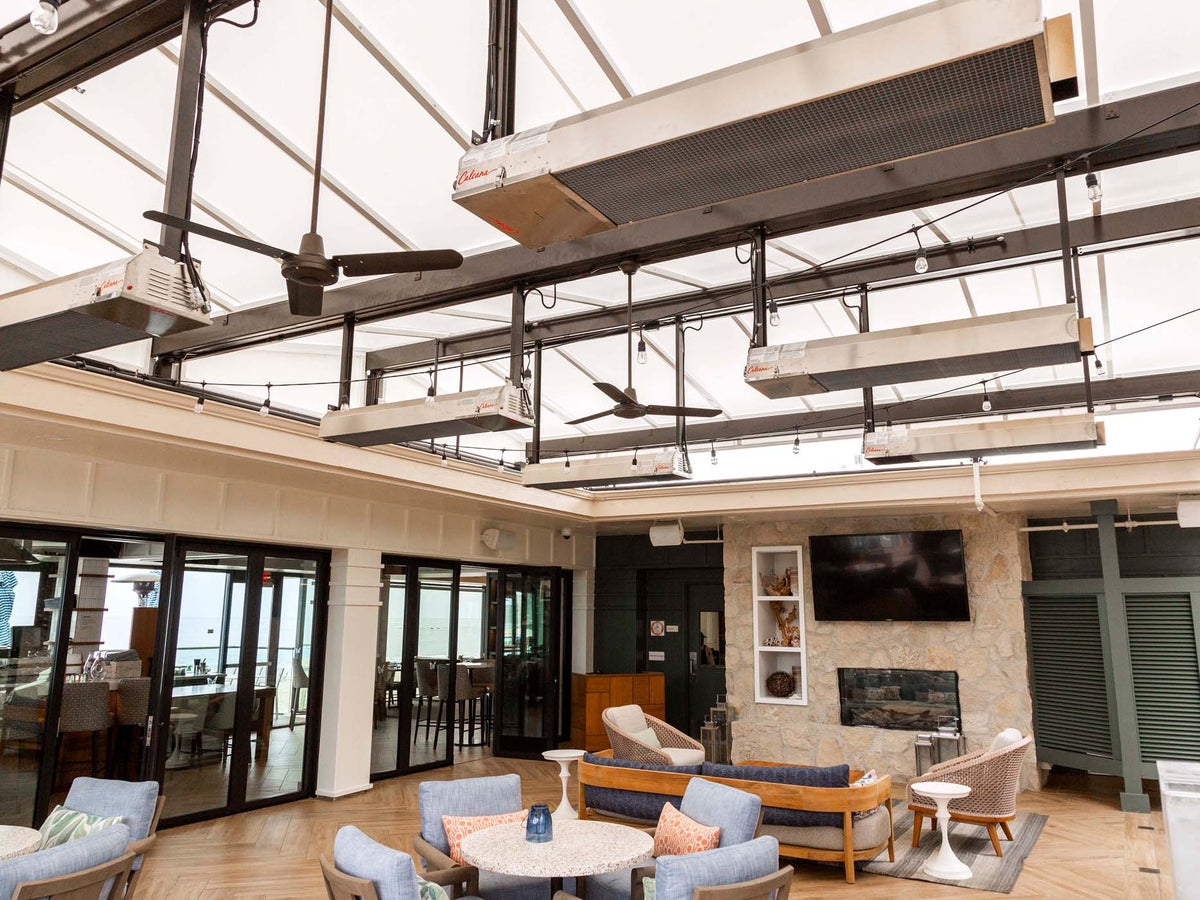
Canada is known for its changing seasons and diverse climates. From the long, cold winters of Alberta and Saskatchewan to the milder coastal conditions of British Columbia, homes and businesses across the country face different heating challenges throughout the year. Whether it's a restaurant trying to keep its patio open in the fall, a homeowner looking to make better use of their garage, or an industrial facility maintaining comfortable working conditions, having the right heating solution can make a noticeable difference.
For Canadian businesses, outdoor spaces and work areas are often affected by more than just the temperature. Wind, rain, snow, humidity, and fluctuating seasonal conditions can all influence how comfortable a space feels and how effectively a heating system performs. A solution that works well in one region may require a different configuration in another.
This is where infrared heating offers an important advantage. By delivering radiant energy directly to people, objects, and surfaces within its coverage area, infrared heaters provide a different approach to heating than conventional systems that primarily warm and circulate air. This makes them worth considering for a variety of applications, including outdoor patios, garages, workshops, warehouses, and commercial facilities.
Founded in Calgary, Alberta, in 1988, Calcana has spent decades developing infrared heating solutions for residential, commercial, and industrial environments. With heaters used in locations across Canada and North America, Calcana understands that heating requirements can vary considerably depending on where a system is installed and how the space is used.
From colder prairie conditions to the coastal environments of British Columbia, Calcana offers heating solutions designed to accommodate a wide range of applications and operating conditions.
Proudly Canadian: Heating Solutions Built on Experience, Innovation, & Decades of Industry Knowledge
Calcana's Canadian roots are an important part of its story. Founded in Calgary, Alberta, the company began developing heating solutions with an understanding of the conditions that Canadian homeowners and businesses experience throughout the year.
Alberta's climate presents some obvious challenges for heating equipment. Winters can bring extended periods of freezing temperatures, snow, strong winds, and significant temperature fluctuations. Outdoor spaces that are comfortable during the summer can become difficult to use as soon as cooler weather arrives.
Over the years, Calcana has continued to develop its infrared heating technology to serve a variety of applications, from residential garages and commercial patios to larger industrial environments. The company's product range includes the CAL Series for garages, the PH Series for patios, and the SR Series for industrial and commercial heating applications.
Each series is designed around different heating requirements, allowing customers to consider the size, layout, and intended use of their space when selecting a solution.
Today, Calcana heaters can be found in a wide range of environments, including restaurants, breweries, residential properties, golf courses, workshops, and industrial facilities. This variety reflects the flexibility of infrared heating and the different ways it can be incorporated into Canadian spaces.
Rather than approaching every installation with the same equipment and expectations, the goal is to find a heating solution that makes sense for the specific environment.
Heating Through Alberta's Cold Winters
Alberta is a natural starting point when discussing heating performance in Canada. With its cold winters, unpredictable weather, and significant temperature swings, the province provides plenty of opportunities to understand the importance of selecting the right heating equipment.
For restaurants and hospitality businesses, one of the biggest challenges is maintaining comfortable outdoor seating when temperatures begin to drop. A patio may be an important part of a restaurant's overall customer experience, but without an appropriate heating solution, its usefulness can become limited during spring and fall.
Infrared patio heating offers a practical approach for these environments. Instead of trying to heat all the surrounding outdoor air, infrared heaters direct radiant energy toward people, furniture, and surfaces within the heating area. This can help provide warmth in covered and partially enclosed patios where conventional heated air would be difficult to contain.
Calcana's PH Series patio heaters are designed for these types of applications, with multiple models and configurations available to accommodate different patio layouts and heating requirements.
Alberta also provides an example of how a properly planned patio heating installation can help businesses make better use of their outdoor space.
In one of Calcana's published case studies, an Alberta gastropub installed five PH-75 patio heaters over a 1,200-square-foot patio. Before the installation, the restaurant's outdoor space was generally usable for approximately five months of the year. With the heaters in place, the business was able to operate its patio from March through November.
This example demonstrates how a suitable heating system can help extend the amount of time a commercial patio remains usable. While results will vary depending on location, weather exposure, patio design, and operating conditions, it illustrates the potential value of planning an outdoor heating system around the needs of the business.
For homeowners and businesses across Alberta, the same principle applies to other spaces. A garage, workshop, or industrial facility may have different heating requirements, but the objective remains similar: provide warmth where it is needed while accounting for the realities of the building and its environment.
From the Prairies to British Columbia's Coastal Conditions
As you move west from Alberta into British Columbia, the climate begins to change. Coastal communities generally experience milder winters than many prairie locations, but that does not mean heating is any less important.
In areas such as Vancouver, Victoria, and other coastal communities, rain, damp conditions, cool evenings, and exposure to marine air can all influence outdoor comfort and equipment selection.
For restaurants, hotels, breweries, and residential properties, patios remain an important part of enjoying the outdoors. However, even when temperatures are relatively mild, a cool evening or persistent breeze can make an uncovered or partially enclosed space less comfortable.
Infrared heating can help address this challenge by directing radiant warmth toward the people and surfaces within the intended heating area. Rather than depending entirely on warming the surrounding air, the system provides targeted heat that can be useful in outdoor environments.
British Columbia also includes a wide range of climates beyond the coast. Communities in the Interior, northern regions, and mountainous areas can experience substantial snowfall and freezing winter temperatures. Locations such as Kelowna, Kamloops, and the Kootenays have different seasonal conditions from Vancouver Island or the Lower Mainland.
This variety makes it important to look beyond provincial averages when choosing a heating system. A restaurant patio in downtown Vancouver may have very different requirements from a covered deck in the Okanagan or a commercial workshop in northern British Columbia.
Calcana's range of heating solutions provides options for different applications, but each installation should be planned around the actual conditions of the site.
Designed for Changing Outdoor Conditions
Outdoor heating comes with challenges that are not always present in enclosed buildings. Wind can carry heat away from the area, temperatures can fluctuate throughout the day, and rain or snow can affect how a patio is used.
Traditional heating systems that rely on warm air can have difficulty maintaining comfort in open environments because heated air can disperse into the surrounding atmosphere.
Infrared heating takes a different approach. The radiant energy travels from the heater and is absorbed by people and objects within its coverage area. This can make it a practical option for patios and other outdoor spaces where heating the surrounding air alone would be less effective.
However, outdoor infrared heating is not unaffected by weather. Strong winds, low temperatures, heater placement, mounting height, and the amount of enclosure all influence the experience. A well-designed installation accounts for these conditions rather than assuming one heater configuration will work equally well everywhere.
Calcana's PH Series is designed for outdoor patio applications, with different output levels and configurations available to suit a variety of layouts. Depending on the model, the series offers heating outputs of up to 75,000 BTU and is certified for use in temperatures as low as 5°F (-15°C).
This provides an important reference point for Canadian customers considering outdoor heating. The appropriate model still needs to be selected according to the space, expected weather conditions, and desired level of comfort.
Built to Handle Coastal Environments
British Columbia's coastal climate introduces another consideration for outdoor heating equipment: moisture and exposure to salt air.
Properties located near the ocean can experience conditions that are harder on exterior materials and equipment. Salt in the air, persistent moisture, and changing temperatures can contribute to corrosion over time, particularly when equipment is not suited to its installation environment.
When selecting a patio heater for a coastal property, the construction materials should be part of the decision.
Calcana offers stainless steel construction options for its PH Series, including standard 304 stainless steel and optional 316 marine-grade stainless steel on applicable models. Marine-grade stainless steel can provide improved corrosion resistance in certain coastal and high-moisture applications, making it an option worth considering for patios closer to the water.
The right material depends on the specific installation location and its exposure. Not every coastal property will have the same requirements, and even marine-grade materials benefit from appropriate care and maintenance.
For restaurants, resorts, waterfront properties, and residential patios throughout British Columbia, selecting equipment with the right construction and mounting configuration can help support long-term performance.
One Heating Approach, Multiple Applications
While outdoor patios are an important part of Calcana's product offering, the company's heating solutions extend well beyond hospitality environments.
Different spaces require different approaches, and a heating system should be selected according to the purpose of the building rather than simply its location.
Calcana's product range includes options for residential garages, commercial patios, and larger industrial facilities. This allows homeowners and businesses to consider infrared heating across a variety of applications.
Residential Garages & Workshops
Garages and workshops are often used throughout the year, but they can become uncomfortable during colder months. Whether the space is used for vehicle storage, woodworking, equipment maintenance, or personal projects, cold temperatures can make it difficult to spend extended periods working indoors.
The CAL Series is designed for residential garage applications, providing gas-fired infrared heating for suitable spaces. By directing radiant energy toward people and objects, these heaters offer an alternative to systems that primarily heat and circulate air.
Overhead mounting can also help preserve valuable floor space, leaving more room for vehicles, tools, storage, and equipment.
For homeowners in Alberta, Saskatchewan, Manitoba, and other colder regions, garage heating can be especially important during winter. In milder areas of British Columbia, the same type of system may provide additional comfort during cooler mornings, evenings, and seasonal temperature changes.
Industrial & Commercial Facilities
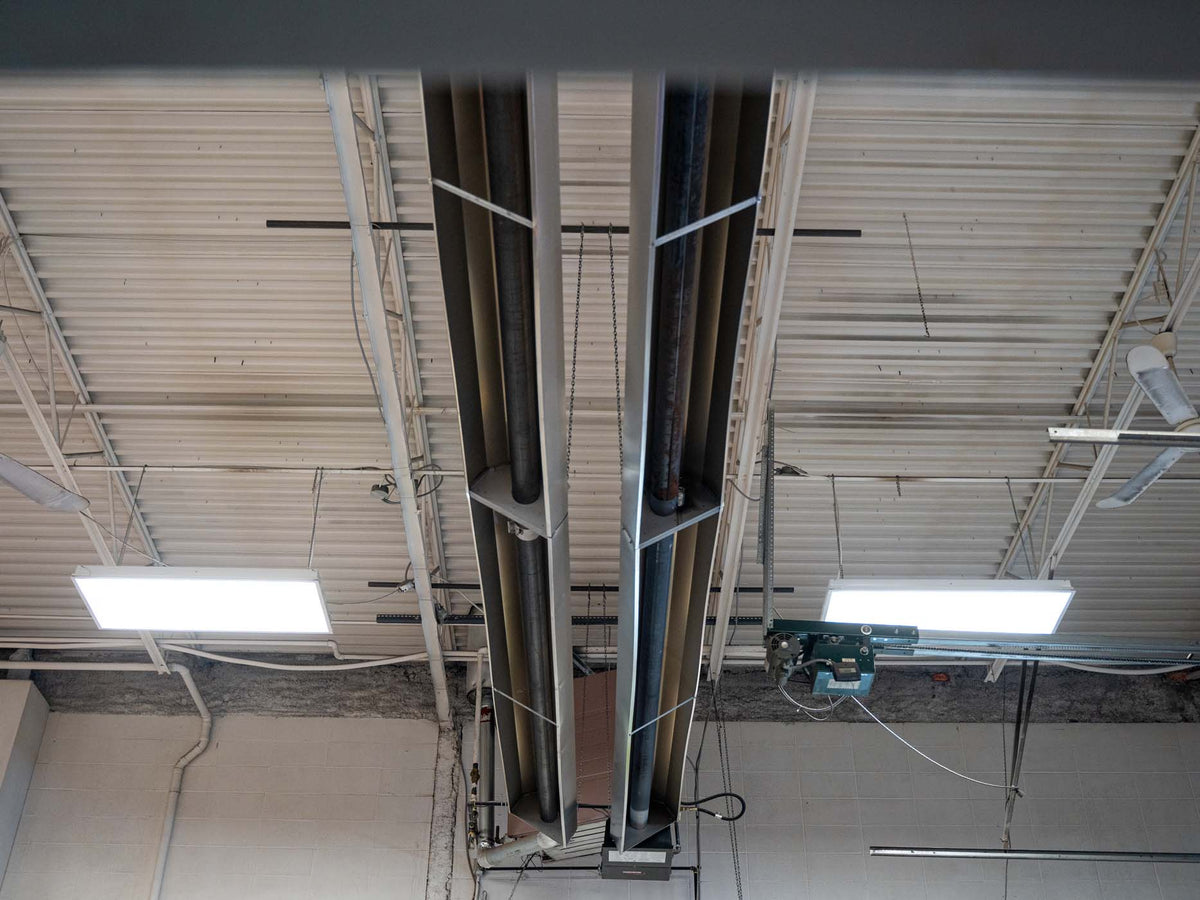
Large industrial facilities present a different set of challenges. Warehouses, manufacturing plants, agricultural buildings, and workshops often have high ceilings, expansive floor plans, and areas that are difficult to heat evenly.
The SR Series is designed for commercial and industrial applications where a more substantial heating solution may be required. Infrared heating can be useful in suitable facilities because it provides radiant warmth to people and surfaces within its coverage area, rather than relying entirely on heating the full volume of indoor air.
This can be particularly relevant in high-ceiling environments or facilities with designated work areas. For example, a manufacturing plant may have specific workstations that require additional warmth, while other sections of the building are used primarily for storage.
The right installation depends on the building's heating load, insulation, ceiling height, ventilation, fuel supply, and operating requirements. Industrial facilities must also consider the safety requirements associated with their activities and the equipment being used.
Finding the Right Heater for Your Region
Although Calcana heaters are used across different climates, choosing the right model involves more than knowing whether a property is located in Alberta or British Columbia.
Two buildings in the same city can have very different heating requirements depending on their construction, exposure, and intended use.
For outdoor patios, some of the most important considerations include:
Temperature and seasonal use: Consider the typical temperatures during the months when the space will be occupied. A patio used primarily in spring and fall may have different requirements from one intended for use during colder winter conditions.
Wind exposure: Open patios, rooftop spaces, and waterfront locations can experience more wind than protected residential decks or enclosed restaurant patios. Heater placement and coverage should account for these conditions.
Moisture and coastal exposure: Properties near the ocean or in areas with persistent moisture may benefit from evaluating stainless steel construction options, including marine-grade materials where appropriate.
Patio size and layout: The overall dimensions, seating arrangement, ceiling height, and available mounting locations all influence the number and configuration of heaters required.
Enclosure and ventilation: Covered, partially enclosed, and open-air patios have different installation requirements. The appropriate heater model and configuration should be confirmed for the specific environment.
For garage and industrial applications, additional considerations include building insulation, ceiling height, fuel availability, operating schedules, required temperatures, and applicable installation codes.
Taking these factors into account helps ensure that the heating system is selected for the actual conditions of the space, rather than relying on a one-size-fits-all approach.
A Canadian Manufacturer with North American Experience
Calcana's history in Canada is an important part of its identity. Founded in Calgary in 1988, the company has grown from its Alberta roots to serve residential, commercial, and industrial customers across North America.
That experience matters because heating requirements are rarely identical from one customer to the next. A restaurant patio in Alberta, a waterfront resort in British Columbia, and a manufacturing facility in Ontario all have different priorities.
Developing heating solutions for these environments requires an understanding of how people use their spaces, how buildings are constructed, and what conditions the equipment will face.
Calcana's product lineup reflects this variety, with the PH Series for patios, CAL Series for garages, and SR Series for industrial and commercial applications.
The company's focus on infrared technology provides a consistent heating approach across these different products, while model configurations and installation requirements are selected according to the intended application.
For Canadian customers, working with a manufacturer that understands the country's changing conditions can also make it easier to begin evaluating the right solution. Product selection, installation planning, and ongoing maintenance all play a role in achieving the desired results.
Heating That Works with the Way Canadians Live & Work
Canada's climate is anything but predictable. A business in Alberta may be planning around extended periods of winter cold, while a restaurant in coastal British Columbia may be more concerned with damp evenings, wind, and keeping outdoor seating comfortable through the shoulder seasons.
Further inland, communities across British Columbia can experience winter conditions that are just as demanding as those found in other parts of Western Canada.
The important thing is not finding one heater that promises to solve every challenge. It is choosing equipment that matches the space, the local conditions, and the way people intend to use it.
From extending a restaurant patio season to creating a more comfortable garage or supporting heating requirements in an industrial facility, infrared heating offers a flexible approach for a variety of applications.
Calcana has been developing infrared heating solutions in Canada since 1988, with products designed to serve customers across different environments and climates. Its experience in Alberta and its presence in markets throughout Canada reflect the versatility of its heating solutions and the importance of selecting the right equipment for each installation.
Look up and feel the heat. From the colder prairie conditions of Alberta to the coastal environments of British Columbia and communities across the country, discover how Calcana infrared heating can help make patios, garages, and workspaces more comfortable throughout the year. Explore the Calcana heater lineup to find a solution suited to your space.
Leave a comment
This site is protected by hCaptcha and the hCaptcha Privacy Policy and Terms of Service apply.